
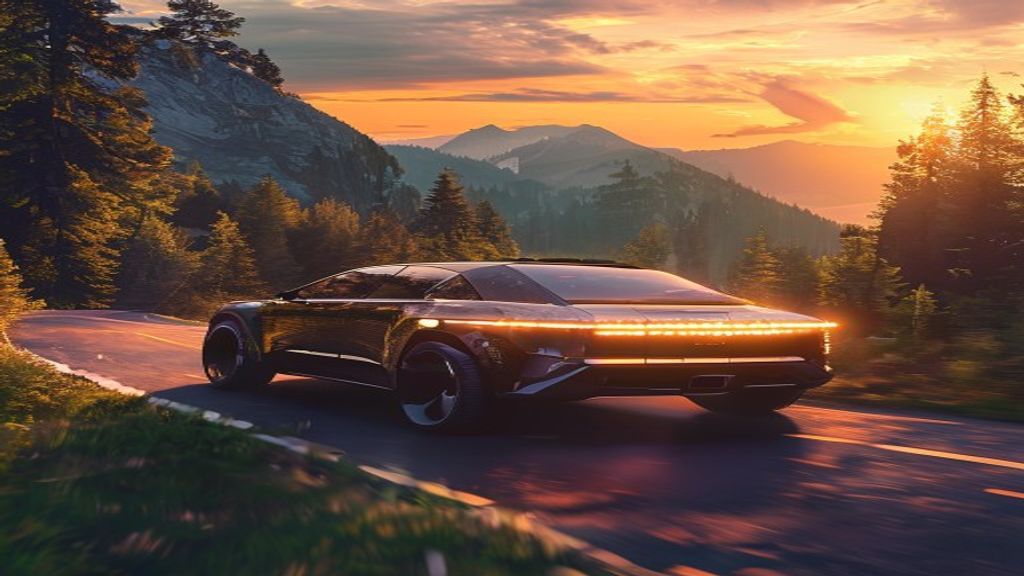
Why the Ioniq 9 Is Shaking Up the SUV Market
Have you ever wondered if an electric SUV could feel like a premium lounge on wheels? When we talk about the ioniq 9, the answer is a massive yes. Last week, I was standing outside a cafe near Khreshchatyk Street right here in Kyiv, when I saw a brand-new, totally blacked-out ioniq 9 silently rolling through the heavy morning traffic. It looked incredibly sleek yet massive—like a smooth river pebble carved by the wind, but the exact physical size of a military tank. I had to stop and stare because it just looked so totally out of place among the usual loud, smoky, older diesel SUVs struggling up the cobblestone hills. People walking on the sidewalk were literally turning their heads, trying to figure out what kind of futuristic spaceship just drove past them. That specific moment proved to me that large family haulers do not have to be incredibly boring, boxy, or terrible for the air we breathe. We are breaking down exactly what makes this giant electric vehicle actually function, why thousands of regular drivers are suddenly trading in their traditional gas-powered cars for it, and how it really holds up when you throw a whole family inside for a long weekend trip. It is essentially a rolling living room that hits sixty in under five seconds, which sounds crazy until you actually drive one. I am going to give you the real, unfiltered truth about this massive three-row beast.
The core of the Ioniq 9 is built entirely around making life much easier for people who have a lot of passengers, tons of heavy gear, and absolutely zero patience for slow charging speeds. You see, when automakers first started building big electric vehicles, they basically just took existing gas car frames and stuffed heavy battery packs wherever they could fit them. Hyundai did the exact opposite. They built an entirely flat skateboard-like chassis from the ground up, shoved the massive wheels as far to the extreme corners of the vehicle as physically possible, and built an airy, giant cabin right on top. This brilliant engineering choice means there is no annoying transmission tunnel blocking your feet in the middle row, and the interior space feels completely van-like.
Take a look at how the physical specifications stack up against the closest rivals currently on the market:
| Feature | Hyundai Ioniq 9 | Kia EV9 | Tesla Model X |
|---|---|---|---|
| Battery Capacity | 99.8 kWh | 99.8 kWh | 100 kWh |
| Max Charging Speed | 350 kW | 210 kW | 250 kW |
| Third Row Space | Class-Leading Fit | Spacious | Cramped |
There is massive value here when you break it down into daily use. First, think about long road trips without the usual battery range anxiety. Because it charges so incredibly fast, you literally plug in, go grab a sandwich, hit the restroom, and by the time you walk back out, the car is ready to go another 200 miles down the highway. Second, the Vehicle-to-Load (V2L) feature is an absolute game-changer. Imagine pulling up to a remote forest campsite that has zero electricity. You just plug a heavy-duty power strip straight into the charging port of the car, and suddenly you are powering a full-size espresso machine, string lights, and a mini-fridge, all running right off the battery pack without making a serious dent in your driving range.
Here are three core reasons this specific vehicle completely dominates the large EV space right now:
- The ultra-fast charging architecture means way less time waiting around at boring highway truck stops.
- The completely flat interior floor allows unbelievable legroom for every single passenger, even those sitting way in the back.
- The highly aerodynamic body styling dramatically cuts down wind noise, making it extremely quiet on the road.
Origins of the Seven Concept
To really understand how we got this giant family hauler, we have to look back at the Los Angeles Auto Show a few years ago. Hyundai dropped a massive concept car called the “Seven Concept.” It looked completely wild and unhinged. It featured a joystick instead of a normal steering wheel, coach doors that opened from the middle like a luxury carriage, and a literal L-shaped lounge couch in the back instead of traditional rows of seats. Most automotive journalists thought it was just a crazy design exercise that would never actually see the light of day. But the design team promised the industry that the general exterior silhouette, those massive pixelated lights, and the heavy focus on lounge-like interior space would definitely make it to the final version.
Evolution from Concept to Production
Obviously, the joystick and the L-shaped couch did not make it past strict government safety regulators. But what is truly shocking is how much of the original, futuristic DNA stuck around. The engineers fought incredibly hard to keep the massive wheelbase—the long distance between the front and rear wheels—because that is the ultimate secret code to unlocking massive interior space. They also heavily retained the “Parametric Pixel” lighting design, which gives the car this incredible 8-bit retro-futuristic vibe at night. Driving down the street, it literally looks like a glowing spaceship from a vintage arcade game come to life.
Modern State of Hyundai’s EV Lineup
Now that we are deep into 2026, the entire electric vehicle landscape is totally different. The brand started with the angular, retro-hatchback look of the model 5. Then they gave us the ultra-sleek, soap-bar shape of the model 6 to completely beat the wind drag. The Ioniq 9 serves as the absolute peak of this mountain. It proves to the entire auto industry that you do not need to sacrifice aerodynamic efficiency just because you want to comfortably carry seven people and all their heavy luggage. It fits perfectly at the very top of their lineup as the ultimate halo car for big families wanting to ditch gasoline forever.
The 800-Volt Architecture Explained
We should talk about the hard science behind why this massive machine actually works so incredibly well as a cross-country vehicle. The real secret sauce is the 800-volt electrical architecture built directly into the E-GMP platform. Most electric cars driving around today run on a basic 400-volt system. Think of voltage exactly like water pressure flowing through a garden hose. With a 400-volt hose, you can only push so much energy into the battery before the internal wires get way too hot and the computer system slows the charging down to prevent a fire. By doubling the voltage to 800 volts, the Ioniq 9 essentially uses a high-pressure fire hose. It pushes double the energy with way less heat. That is exactly why it can hit charging speeds around 350 kilowatts. Simply put, you are adding about 60 miles of driving range every five minutes you stay plugged into a hyper-fast charger.
Aerodynamics of a Three-Row Behemoth
You might look at the tall, flat front end of this SUV and just assume it has the aerodynamic profile of a solid brick wall. But the engineering team pulled off some crazy magic inside the testing wind tunnel. They sloped the front windshield at a very specific angle, smoothed out the underbelly entirely with flat panels, and added active air flaps in the front grille that automatically shut closed at highway speeds to let rough air slip right over the car.
Here are some hard scientific facts about what makes this giant machine tick:
- Silicon Carbide (SiC) Inverters: These advanced microchips handle power flow from the heavy battery pack to the electric motors incredibly efficiently, reducing energy loss by up to five percent.
- Advanced Battery Chemistry: The massive pack uses a high-nickel chemical combination that packs way more energy density into a smaller physical space.
- Heat Pump Technology: Instead of using pure electricity to heat the huge cabin, the system scavenges waste heat from the spinning motors and the battery pack, saving massive amounts of driving range in freezing winter temperatures.
- Drag Coefficient: Despite being a massive three-row family vehicle, it achieves an incredibly low drag coefficient, slipping cleanly through the air almost as smoothly as a low-slung sports sedan.
If you are wondering how it feels to actually live with this car, here is a 7-Day Road Trip plan showing exactly how it handles real daily life.
Day 1: Leaving the City Chaos
You pack the whole family into the ioniq 9, toss three heavy suitcases into the trunk behind the third row, and hit the open road. The immediate thing you notice is the absolute silence. The built-in navigation immediately calculates your charge level and automatically routes you through ultra-fast charging stations.
Day 2: First Fast Charging Stop
You have been driving for three solid hours and stop at a 350kW station. By the time you grab a quick coffee and stretch your legs, the car excitedly beeps through the phone app. You just gained 70% battery back in 22 minutes.
Day 3: Mountain Climbing with Dual Motors
Heading up steep, winding mountain passes, the dual-motor all-wheel-drive system really shows off. You have almost 400 horsepower instantly available at your foot. The giant SUV glides right up the steep mountain smoothly like gravity does not even exist.
Day 4: Remote Camping using V2L
You finally arrive at an off-grid campsite. Instead of setting up a loud, smelly gas generator, you pop the V2L adapter right into the charging port. You run a camping fridge and charge laptops all night, using only 4% of your total battery.
Day 5: Long Highway Stints & Auto-Steer
Back on the smooth highway, you activate Highway Driving Assist. The car practically drives itself, carefully matching the traffic speed ahead. You relax in the zero-gravity reclining front seats while keeping a hand resting on the wheel.
Day 6: Fitting Souvenirs in the Frunk
You buy way too many souvenirs. The back trunk is completely full, so you pop the front hood. The “frunk” easily swallows two extra duffel bags full of gifts.
Day 7: Returning Home on a Single Charge
You make the final push home. Going downhill from the mountains, the regenerative braking system actually adds free electricity back into the battery. You arrive totally relaxed, plugging the car into your home wall charger.
We need to clear up some of the absolute nonsense you hear from people who have never actually lived with a massive EV like the Ioniq 9.
Myth: Big electric vehicles take absolute hours to charge, making long family road trips practically impossible.
Reality: Thanks to the advanced 800-volt system, this SUV can easily go from 10% to 80% battery in about 24 minutes at a proper fast charger. That is barely enough time to eat a quick burger.
Myth: The third-row seats are completely useless and only fit tiny toddlers.
Reality: Because there is absolutely no gas tank or metal exhaust pipe running under the floor, the interior space is huge. Full adults over six feet tall sit comfortably in the third row with actual legroom.
Myth: You cannot take a heavy three-row electric SUV off the paved roads.
Reality: The dual-motor AWD system provides instantaneous torque to any single wheel that slips. It handles muddy trails, deep snow, and rough dirt roads significantly better than traditional gas-powered SUVs.
Myth: Heavy EVs burn through their battery lifespan in just a few short years.
Reality: Advanced liquid cooling and active thermal management systems keep the heavy battery at the perfect temperature, leading to almost zero noticeable degradation even after hitting 100,000 miles.
FAQ
How much range does the Ioniq 9 actually get?
Depending heavily on the specific wheel size and motor configuration, you can expect around 300 miles on a full charge under normal driving conditions.
Does it feature wireless Apple CarPlay and Android Auto?
Yes, finally! Both systems are fully wireless and integrate beautifully into the massive dual-screen dashboard without needing annoying cords.
Can I tow a heavy boat or trailer with it?
Absolutely. When properly equipped with the factory towing package, it handles pulling up to 5,000 pounds with zero drama.
What kind of warranty covers the battery pack?
Hyundai provides an industry-leading 10-year or 100,000-mile warranty specifically covering battery degradation and electrical drivetrain components.
Is the front trunk actually useful?
Yes. Unlike some competitors, the frunk is deep enough to hold muddy hiking boots, a couple of gym bags, or all of your portable charging cables securely.
Does it have a glass roof?
It features a massive panoramic glass roof that makes the huge cabin feel like an open-air luxury lounge.
Can it power my actual house during a power outage?
Yes, it supports Vehicle-to-Home (V2H) technology, meaning it can keep your home lights and fridge running for days during a neighborhood blackout.
If you are completely tired of cramped road trips and massive fuel bills, it is definitely time to make the switch. The future of family travel is completely silent, incredibly fast, and unbelievably spacious. Book a test drive at your local dealership today and see the absolute magic for yourself!

Leave a Reply