
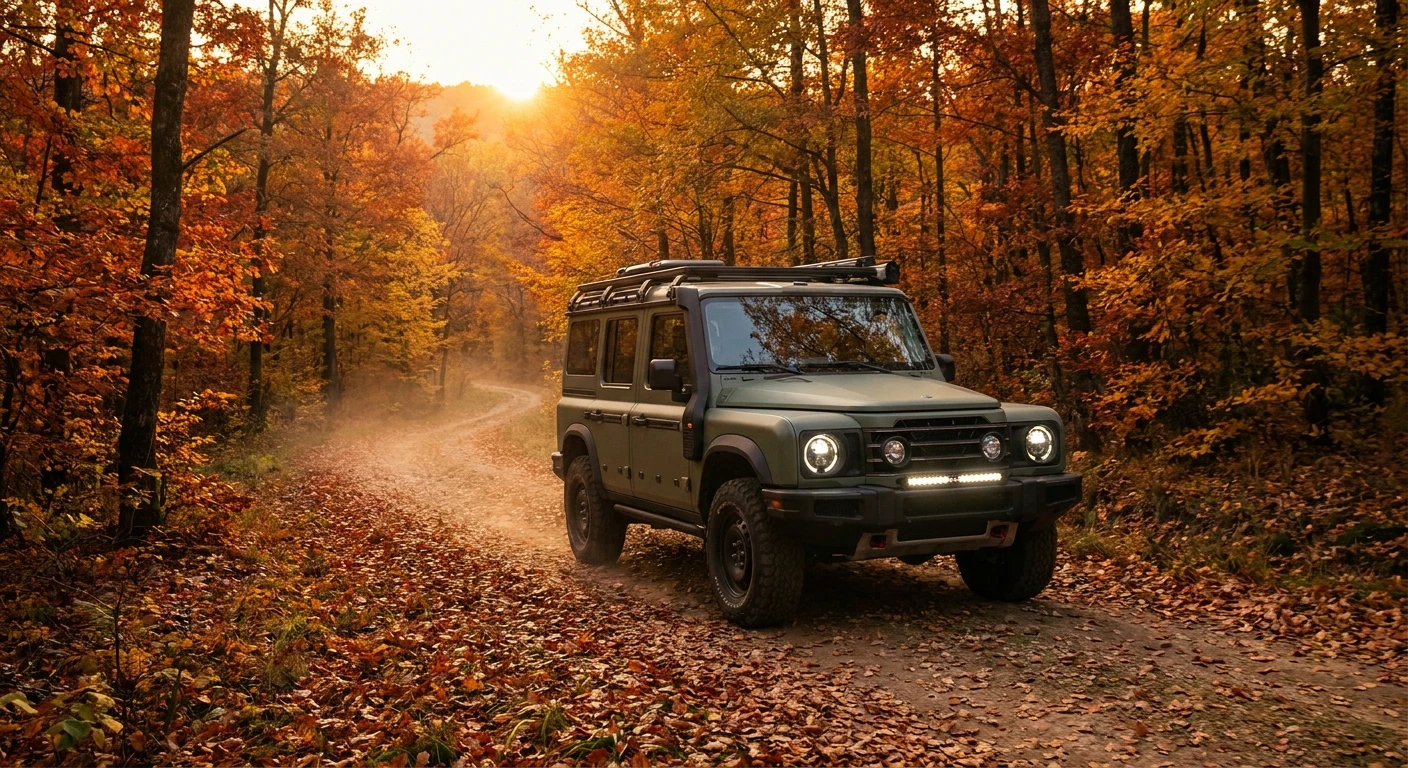
Unpacking the Hype Around the land cruiser 2025
Have you actually seen the new land cruiser 2025 rolling down the street yet? I was grabbing a quick espresso near the Golden Gate here in Kyiv last week, and this absolutely stunning, rugged masterpiece drove past. It instantly turned every single head on the block. The aggressive, retro-modern stance just screams pure adventure. I honestly could not stop staring at the bold heritage grille and that iconic boxy silhouette. It felt exactly like watching an automotive legend being reborn right in front of my eyes. If you are wondering why everyone is suddenly so obsessed with this specific model year, you are in the exact right spot. We are breaking down exactly what makes this SUV tick, from its incredibly efficient hybrid powertrain to its legendary off-road capability. This is not merely just another standard car release; it is a complete, ground-up redesign that beautifully honors its heritage while bringing massive, much-needed tech upgrades to the table. Whether you want to conquer the muddy trails of the Carpathian mountains or just cruise comfortably through brutal city traffic, this machine handles it all with zero sweat. Grab a coffee, sit back, and let me walk you through the nitty-gritty details, the hidden specs, and everything else you need to know about this absolute beast of a vehicle.
So, why is this specific SUV stealing all the spotlight right now? The absolute core value proposition of the land cruiser 2025 boils down to a truly brilliant mix of uncompromised mechanical reliability and cutting-edge hybrid efficiency. Toyota essentially looked at what made the classic models great and modernized only the parts that strictly needed it. For example, you get the advanced i-FORCE MAX hybrid powertrain which gives you massive low-end torque for crawling over jagged rocks, while somehow still saving you a ton of cash on fuel during your mundane daily commute. Another perfect example is the simplified, back-to-basics trim strategy. Instead of overwhelming you with bloated, overpriced luxury packages that you will never actually use, Toyota gives you pure, functional, rugged capability straight out of the box.
Read also: Why the toyota crown 2023 Still Leads the Hybrid Market; Why the toyota corolla 2023 is Still the Ultimate Sedan.
Here is a quick breakdown I put together for you to easily compare the main trims:
| Trim Level | Defining Feature | Best Suited For |
|---|---|---|
| 1958 Edition | Retro round LED headlights | Purists and heavy trail modders |
| Standard Grade | Rectangular lights & rigid fog lamps | Daily drivers and weekend warriors |
| First Edition | Roof rack, rock rails & skid plates | Die-hard collectors and overlanders |
If you are still on the fence about whether this rig is right for your garage, here are the top three reasons you absolutely need to take one for a spin:
- Unmatched long-term durability: Built on the TNGA-F truck platform, this frame is notoriously over-engineered to withstand decades of abuse.
- Timeless retro styling: It completely ditches the bloated, rounded look of the past decade for a sharp, utilitarian aesthetic that looks amazing covered in mud.
- Surprising hybrid efficiency: Getting an estimated 23 miles per gallon combined in a vehicle this heavy and capable is nothing short of engineering magic.
Trust me, once you sit behind the wheel and feel the commanding view of the road, you immediately understand the massive appeal.
The Humble Origins of the Cruiser
To truly appreciate what we have today, we have to look back at where it all started. Back in 1951, the original Toyota BJ was born out of a strict necessity for a tough, military-style utility vehicle. It famously climbed higher up Mount Fuji than any vehicle had ever gone before, instantly cementing its reputation for being totally unstoppable. The early models were raw, unrefined, and completely devoid of any creature comforts. They were essentially just an engine, a frame, and four wheels designed to survive the harshest environments on the planet.
The Evolution Through the Decades
As the decades rolled on, the vehicle evolved dramatically. The iconic FJ40 of the 1960s brought a bit more mass appeal, becoming the definitive off-road vehicle for explorers, farmers, and adventurers worldwide. However, by the time we reached the 1990s and 2000s with the J80, J100, and eventually the J200 series, the focus shifted heavily towards premium luxury. These trucks became massive, incredibly heavy, and extremely expensive status symbols. While they never lost their off-road chops, many fans felt they had strayed way too far from their accessible, rugged roots. They became luxury barges that rarely saw a dirt road.
The Modern State of the Legend
That brings us to the glorious return to form with the current generation. The designers made a massive, bold decision to shrink the footprint slightly, drop the thirsty V8 engines, and lower the price tag to make it accessible again. They successfully managed to capture the rugged spirit of the original FJ series while packaging it with 21st-century safety and technology. It is a stunning course correction that perfectly balances nostalgia with forward-thinking automotive engineering. It is practically a love letter to the hardcore fans who just wanted a dependable, tough truck without all the unnecessary luxury fluff.
Understanding the i-FORCE MAX Powertrain
Let us talk about what is actually beating under the hood, because this is where the real magic happens. The old gas-guzzling V8 is officially dead and gone. In its place is the brilliant i-FORCE MAX hybrid system. This pairs a 2.4-liter turbocharged four-cylinder engine with a 48-horsepower electric motor integrated directly into the eight-speed automatic transmission. Now that we are well into 2026, we have seen substantial real-world data proving that this hybrid setup holds up beautifully under extreme stress. It produces a massive 326 horsepower and an absolutely jaw-dropping 465 lb-ft of torque. Because the electric motor provides instant torque at zero RPM, this truck crawls over steep, jagged rocks with a terrifying level of ease. You barely have to touch the accelerator pedal to maintain a slow, steady climb.
The Geometry of Off-Roading
Beyond the engine, a proper off-roader is defined by its physical geometry. You can have all the power in the world, but if your bumper gets caught on a rock, you are completely stuck. Toyota engineered this chassis to tackle some of the steepest obstacles imaginable. The suspension articulation allows the wheels to drop incredibly low to maintain contact with the ground when traversing deeply rutted trails. The electronic stabilizer bar disconnect feature gives you even more flex with just the push of a button.
Here are some of the hardcore technical specifications you need to know:
- Ground clearance is a highly capable 8.7 inches, allowing you to clear massive debris easily.
- The approach angle sits at a solid 31 degrees, meaning you can attack steep hills head-on without scraping the front fascia.
- The departure angle is 22 degrees, keeping your rear bumper totally safe as you drop off steep ledges.
- Breakover angle is 25 degrees, ensuring you do not get high-centered on the crest of a hill.
- Standard full-time four-wheel drive with a two-speed transfer case gives you ultimate traction control.
Thinking about making the jump and putting one of these in your driveway? I highly recommend following this simple, stress-free 7-day plan to ensure you get exactly the right truck for your specific lifestyle.
Day 1: Assessing Your Off-Road Needs
Start by being brutally honest with yourself about how you plan to use this vehicle. Are you actually going to tackle hardcore trails every weekend, or do you just want a reliable, tough daily driver for harsh winter weather? Knowing this dictates which trim you actually need.
Day 2: Deep Dive into Dealership Inventory
Spend a few hours scanning local dealer allocations online. Because these trucks are in ridiculously high demand, you might have to expand your search radius. Look for incoming freight rather than just what is physically sitting on the lot right now.
Day 3: The Highway Test Drive
When you finally get behind the wheel, take it on the highway first. Pay very close attention to the wind noise around those big, boxy mirrors and the ride comfort over standard pavement joints. The TNGA-F platform should feel incredibly solid and planted at high speeds.
Day 4: Testing the Crawl Control
If the dealer allows it, find a dirt patch or a steep incline to test the low-speed electronics. Engage the Crawl Control system and let the truck manage the throttle and braking. It sounds loud and mechanical, but it is totally normal and highly effective.
Day 5: Evaluating Interior Comfort and Tech
Spend at least twenty minutes just sitting inside the cabin. Play with the massive infotainment screen, connect your phone, and adjust the seats. Check the visibility out of the windows, especially over that large, squared-off hood, to make sure you feel totally comfortable.
Day 6: Calculating Total Cost of Ownership
Sit down and run the actual math. Factor in the hybrid fuel savings, your local insurance rates, and the notoriously high resale value these trucks command. They might cost a bit upfront, but they hold their value better than almost anything else on the market.
Day 7: Making the Final Decision
If the numbers make sense and the truck puts a massive smile on your face every time you look at it, pull the trigger. Do not let dealer markups ruin the experience; negotiate firmly and secure your absolute dream ride.
Whenever a legendary nameplate undergoes a massive redesign, crazy rumors and false information inevitably start spreading like wildfire. Let us clear the air and debunk some of the biggest nonsense floating around out there.
Myth: Hybrids cannot handle deep water or extreme off-road conditions safely.
Reality: The high-voltage battery system is completely sealed and heavily protected. You can confidently ford deep water and bash through muddy swamps without shorting out your drivetrain.
Myth: It is literally just a rebranded Lexus GX with a cheaper badge.
Reality: While they share the exact same underlying platform, they have entirely different powertrains, suspension tuning, and target audiences. The Toyota is purpose-built for rugged utility, whereas the Lexus is tuned heavily for quiet luxury and towing.
Myth: The boxy, aerodynamic-nightmare design absolutely ruins the fuel economy.
Reality: Thanks to the highly efficient i-FORCE MAX hybrid system and clever active aero elements hidden behind the grille, it actually gets significantly better gas mileage than the smooth, rounded V8 models of the previous generation.
Myth: A four-cylinder engine is just way too weak for an SUV this massive.
Reality: Cylinder count honestly means nothing anymore. With 465 lb-ft of torque available almost instantly thanks to the electric motor, this four-cylinder feels noticeably punchier and faster than the old, sluggish naturally aspirated V8s ever did.
What is the starting base price?
Pricing typically kicks off right in the mid-$50,000 range for the 1958 base model, making it way more affordable than the previous generation.
Does it have an available third row of seating?
No, this model strictly remains a five-seater. The hybrid battery pack occupies the space under the cargo floor where a third row would normally go.
What is the maximum towing capacity?
It is fully rated to tow up to 6,000 pounds, which is plenty for a decent-sized boat or an overland camper trailer.
Is the First Edition trim actually worth the extra money?
If you love exclusive design elements and want all the factory off-road armor right out of the gate, yes. Otherwise, the standard grade offers the best overall value.
How does it directly compare to the Ford Bronco?
The Bronco is more of an open-air toy with a removable roof, while the Toyota offers significantly better daily comfort, superior reliability, and vastly better hybrid fuel economy.
Can I order one with a manual transmission?
Sadly, no. It is exclusively paired with a smooth-shifting 8-speed automatic transmission to seamlessly integrate with the hybrid drive system.
What exterior colors are currently available?
You can get incredible classic shades like Heritage Blue, Trail Dust, and Ice Cap, many of which come with a cool contrasting Grayscape roof.
Is the tech interface easy to use while driving?
Absolutely. Toyota smartly kept physical buttons and chunky dials for all the climate controls and drive modes, making it incredibly easy to operate even with heavy winter gloves on.
Wrapping things up, if you want a vehicle that combines heritage styling with modern hybrid efficiency, nothing else comes close. Get out there, test drive one today, and start planning your next epic off-road adventure!

Leave a Reply