
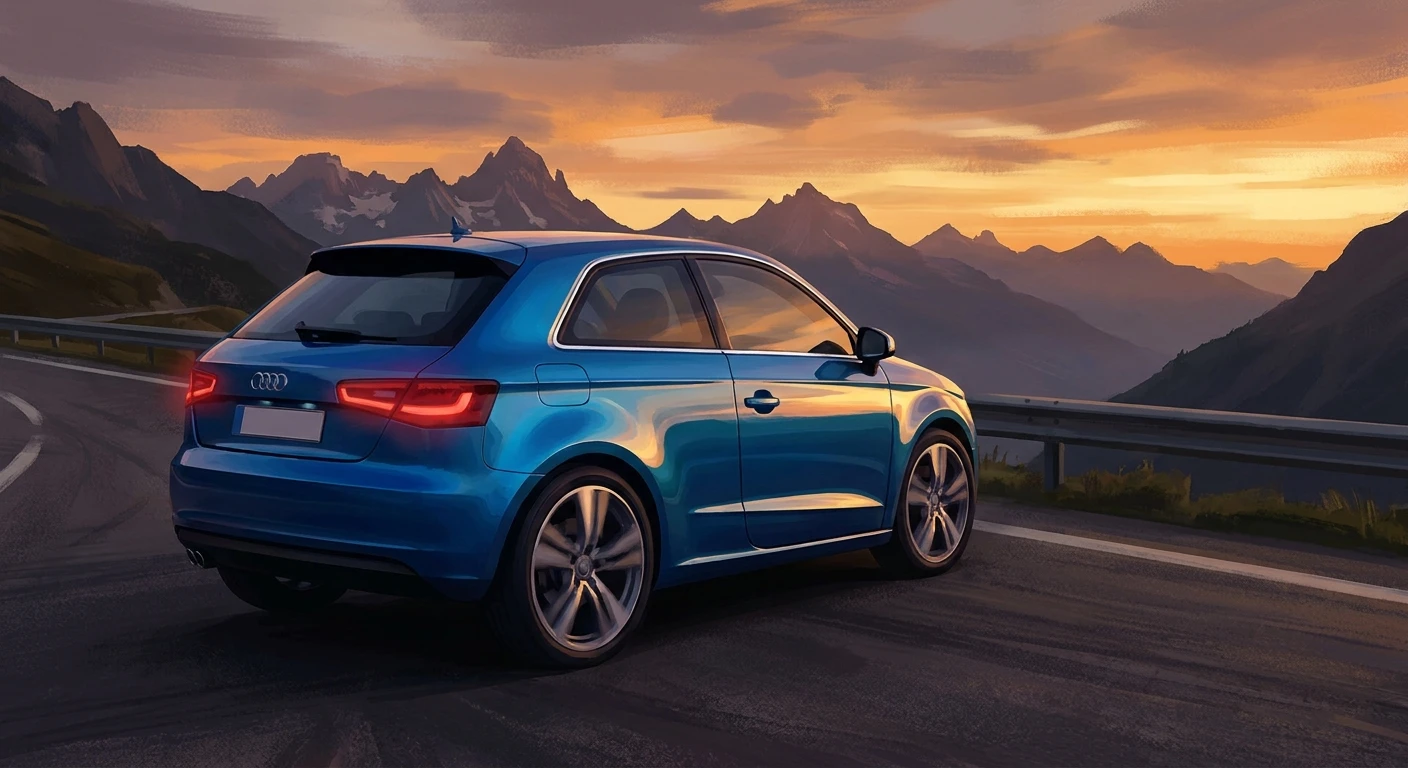
Why the Hyundai Elantra GT Deserves Your Full Attention
If you are actively searching for a versatile compact car that perfectly bridges the gap between everyday practicality and spirited driving dynamics, the Hyundai Elantra GT should be at the absolute top of your shopping list. For years, driving enthusiasts and daily commuters alike have debated the merits of standard sedans versus their five-door counterparts, and this specific vehicle provides one of the most compelling arguments for choosing a hatchback. From its European-inspired design language to its highly capable engine options, it offers an incredible balance of utility and fun without demanding a premium price tag.
We know that navigating the pre-owned car market can feel overwhelming, but this model stands out for its exceptional value retention and robust feature set. You get the agility necessary for tight city parking, the expansive cargo volume required for weekend getaways, and a sleek aesthetic that simply looks fast even when sitting still. Whether you need a dependable daily driver or a platform for light performance modifications, understanding the full scope of what this vehicle offers will radically change your perspective on compact hatchbacks. Let us dive deep into the mechanics, history, and ownership realities of this remarkable machine.
Read also: The 2026 Corolla: Complete Review, Specs, and Features; Why the toyota corolla 2023 is Still the Ultimate Sedan; Review: Is the kia seltos 2024 Still Worth It?.
Core Advantages and Exceptional Value Proportions
When evaluating compact vehicles, buyers often have to sacrifice driving pleasure for cargo capacity or fuel economy for outright performance. The Hyundai Elantra GT manages to sidestep these common compromises entirely. Currently recognized as a strong used-car pick, it consistently delivers premium features at economy pricing. You can easily find well-equipped models on the secondary market that feature panoramic sunroofs, leather seating, and advanced infotainment systems for a fraction of what a comparable European hot hatch would cost. It proves that practical, budget-friendly transportation does not have to be boring.
To fully grasp the trim hierarchy and exactly what you receive for your money, review the comparison table below detailing the distinct variations across its lifespan.
| Generation & Trim Level | Powertrain Specifications | Defining Technical Features |
|---|---|---|
| 2013-2017 Base Hatchback | 1.8L naturally aspirated 4-cylinder, 148 horsepower | Driver Selectable Steering Mode (DSSM) offering Comfort, Normal, and Sport feedback settings. |
| 2018-2020 Standard GT | 2.0L naturally aspirated 4-cylinder, 161 horsepower | Stiffer chassis construction utilizing advanced high-strength steel and a standard 8-inch display screen. |
| 2018-2020 GT Sport / N-Line | 1.6L turbocharged 4-cylinder, 201 horsepower | Multi-link independent rear suspension, upgraded brake rotors, and performance-tuned shock absorbers. |
The value proposition here is undeniable. Consider two quick examples. Example one: if you are a musician or a photographer, the rear seats fold virtually flat, providing space comparable to small crossover SUVs, allowing you to transport bulky gear without struggling. Example two: if you spend hours commuting in heavy traffic, the advanced ergonomics, quiet cabin insulation, and intuitive Apple CarPlay and Android Auto integration turn a stressful drive into a comfortable, connected experience.
Here are three undeniable benefits of selecting the GT over its sedan sibling:
- Unmatched Cargo Versatility: The upright rear profile creates significantly more vertical storage space, accommodating large boxes, bicycles, and luggage that a standard trunk simply cannot handle.
- Enhanced Driving Dynamics: Because it shares its core architecture with the globally acclaimed Hyundai i30, the suspension tuning is distinctly firmer and more responsive, yielding sharper cornering capabilities.
- Premium Aesthetic Appeal: The cascading front grille, aggressive wheel designs, and sweeping roofline present a sophisticated, sporty presence that dramatically outshines generic economy cars in the company parking lot.
The Origins of the Hatchback Design
To truly appreciate this vehicle, we must look back at the global strategy that brought it to North American shores. The story officially begins with the phasing out of the Elantra Touring, a station wagon-like vehicle that served its purpose but lacked the visual excitement buyers craved. In 2013, the manufacturer introduced a brand new five-door model heavily based on the European i30. This was a calculated move to capture a demographic that admired the Volkswagen Golf and Mazda3 but wanted a more aggressive warranty and better standard features. Equipped with a 1.8L four-cylinder weighing 2,745lbs in its manual configuration, the original iteration was incredibly light on its feet. It proved that a dedicated five-door platform could offer both efficiency and a highly engaging tactile response for the driver.
Evolution Through the Generations
The true turning point occurred during the shift to the second generation for the 2018 model year. The engineering team went back to the drawing board, focusing heavily on structural rigidity, noise reduction, and advanced safety implementations. If you look at reviews of the completely re-designed 2018 Elantra GT, you will immediately notice the shift toward a more mature, premium aesthetic. The chassis utilized over 50 percent advanced high-strength steel, which not only improved crash safety ratings but significantly reduced body roll during aggressive cornering. The interior was completely revamped, prioritizing horizontal lines that made the cabin feel wider and much more luxurious than the price tag suggested. This era firmly cemented its reputation as a legitimate contender in the hotly contested compact hatchback segment.
The Modern State of the GT Nameplate
Today, shifting consumer preferences toward subcompact crossover SUVs like the Kona and Venue led to the eventual discontinuation of the model in the North American market after 2020. However, this cessation of production has only increased its appeal on the secondary market. Because it is no longer sold new, discerning buyers are aggressively hunting for low-mileage examples. The platform continues to thrive globally under the i30 badge, meaning replacement parts and aftermarket support remain incredibly robust. You can easily find pristine 2013 and 2018 hatchbacks through various reputable dealerships, allowing modern buyers to experience this phenomenal engineering without the steep depreciation curve of a brand new car.
Powertrain and Performance Engineering
Beneath the hood, the engineering philosophy focused on providing distinct flavors for different types of drivers. The standard models utilized dependable, naturally aspirated engines designed for maximum longevity and fuel efficiency. However, the true marvel of engineering is found in the Sport and subsequent N-Line variants. These models boast 201-hp, turbo four-cylinder and dual-clutch auto transmissions. A dual-clutch transmission (DCT) is a highly advanced gearbox that operates using two separate clutches—one for odd gears and one for even gears. When you are accelerating in second gear, the computer has already pre-selected third gear on the second clutch. The moment it is time to shift, the first clutch disengages while the second simultaneously engages, resulting in lightning-fast gear changes with virtually zero interruption in power delivery. This technology, once reserved exclusively for high-end exotic sports cars, completely transforms the driving experience.
Chassis Dynamics and Safety Technology
Power is meaningless without control, and the chassis engineering here is phenomenal. While base models utilize a torsion beam rear axle to maximize interior cargo space and reduce manufacturing complexity, the high-performance trims feature a fully independent multi-link rear suspension. This setup allows each rear wheel to react independently to bumps and road imperfections, vastly improving mid-corner stability and tire contact patches during aggressive maneuvers. Coupled with larger front brake rotors and specifically tuned electric power steering, the vehicle communicates road texture directly to the driver’s hands.
- The standard powertrain offers respectable 2.0L Engine specifications, reliably generating 154 lb-ft of torque peaking at 4,700 RPM, providing plenty of passing power for highway driving.
- Aerodynamic improvements, including functional front air curtains and a carefully sculpted rear spoiler, drastically reduce the drag coefficient, contributing to exceptional highway fuel efficiency and wind noise reduction.
- Advanced driver assistance systems, such as automated emergency braking with pedestrian detection, rely on high-resolution forward-facing cameras and millimeter-wave radar to continuously monitor the road ahead.
- The implementation of structural adhesives alongside traditional spot welding on the production line increases torsional rigidity, directly translating to a quieter cabin and longer-lasting interior build quality.
Step 1: Define Your Powertrain Needs
The very first step in evaluating a pre-owned model is deciding which engine matches your lifestyle. If you prioritize maximum fuel economy, lower insurance rates, and a softer ride for daily commuting, focus entirely on the naturally aspirated 2.0L variants. Conversely, if you enjoy canyon carving, rapid highway merging, and aggressive acceleration, restrict your search exclusively to the 1.6L turbocharged Sport or N-Line trims.
Step 2: Check the Transmission Service Records
This step is critical, especially if you are targeting the 7-speed dual-clutch transmission. DCTs operate differently than traditional torque-converter automatics and require specific maintenance. Review the vehicle’s history report to ensure the transmission fluid was inspected and replaced at the correct intervals. A well-maintained DCT will shift crisply and smoothly, whereas a neglected one may exhibit shuddering at low speeds.
Step 3: Inspect the Hatchback Struts and Seals
Because the heavy rear liftgate is a central feature of the vehicle, you must physically open and close it several times during your inspection. Ensure the hydraulic gas struts hold the door up firmly without sagging, even in colder weather. Run your hand along the rubber weatherstripping surrounding the cargo opening to check for any tears, dry rot, or signs of water intrusion into the spare tire well.
Step 4: Verify the Suspension Components
During your test drive, turn the radio off and listen closely as you drive over speed bumps or potholed roads. You are listening for any clunks, rattles, or squeaks originating from the rear axle. While both the torsion beam and multi-link setups are generally highly durable, worn sway bar end links or aging shock absorbers are common wear items that you can use as leverage during price negotiations.
Step 5: Test the Infotainment and Electronics
Do not skip a thorough check of the technological suite. Bring a USB cable to the test drive and plug your smartphone directly into the console. Verify that Apple CarPlay or Android Auto launches instantly and that the touchscreen responds accurately without any dead zones. Check that all steering wheel-mounted audio and cruise controls function flawlessly.
Step 6: Review Safety System Functionality
Modern vehicles rely heavily on complex sensors. Ensure that the blind-spot monitoring lights illuminate correctly in the side mirrors when vehicles pass you. Check the dashboard cluster for any warning lights related to the lane-keeping assist or forward collision warning systems. Replacing a damaged radar sensor behind the front grille can be surprisingly expensive, so visual confirmation is mandatory.
Step 7: Negotiate Based on Market Averages
Arm yourself with accurate pricing data before making an offer. Depending on the exact year, mileage, and condition, standard pricing for earlier generations hovers around the $8,700 mark. Factor in the cost of any immediate maintenance needs you discovered during steps two through six, and present a firm, data-backed offer to the seller or dealership.
Myths and Reality
Myth: Hatchbacks are essentially just standard sedans with the trunk roof lifted higher for a little extra cargo space.
Reality: This is completely false. The GT is built upon an entirely different global platform (the i30 architecture) than the standard sedan. This means its wheelbase, overall length, suspension geometry, and inherent driving dynamics are entirely bespoke, offering a much more European driving feel.
Myth: These vehicles lack the serious performance credentials required to be considered a true enthusiast car.
Reality: When equipped with the 201-horsepower turbocharged engine, the sport-tuned independent suspension, and sticky summer tires, the N-Line variant routinely matches or beats established segment leaders in slalom testing and zero-to-sixty acceleration metrics.
Myth: Because of its European design roots, routine maintenance and replacement parts are exceptionally expensive.
Reality: Despite the unique chassis, the engines, transmissions, and electronic modules are shared widely across the corporate fleet, ensuring that replacement parts are cheap, plentiful, and easily serviced by any competent local mechanic.
Is the Elantra GT reliable long-term?
Yes, it utilizes proven four-cylinder engines and durable chassis components that have been tested across millions of miles globally, making it a highly dependable choice for long-term ownership.
Does the turbocharged engine require premium fuel?
No, the manufacturer engineered the 1.6L turbo engine to run safely and efficiently on regular unleaded gasoline, saving you significant money at the pump over the vehicle’s lifespan.
Why was the model ultimately discontinued?
The automotive industry experienced a massive consumer shift toward subcompact crossover SUVs. Buyers preferred higher seating positions, leading the manufacturer to replace this hatchback with vehicles like the Kona.
What is the maximum cargo capacity available?
With the rear seats folded down, it offers nearly 55 cubic feet of total cargo volume, which rivals many small SUVs and allows you to easily transport bulky furniture or outdoor gear.
Does the vehicle offer a manual transmission option?
Yes, driving enthusiasts will be pleased to know that both generations offered a 6-speed manual transmission, though these specific models are rarer and highly sought after in the used market.
Are replacement body parts hard to find?
Not at all. Because it shares so many mechanical components with the standard models and remains a massively popular global vehicle under the i30 badge, body panels and trim pieces are readily available.
What are the absolute best model years to purchase?
The 2018 through 2020 models are widely considered the best options, as they offer the vastly improved, stiffer chassis, modernized exterior styling, and heavily updated infotainment systems with standard smartphone integration.
Ultimately, the Hyundai Elantra GT represents a phenomenal intersection of practicality, driving enjoyment, and outright value. By offering European-style handling characteristics, cavernous cargo space, and a suite of modern technological features, it proves that a daily commuter does not need to be a chore to drive. If you are in the market for a smart, capable, and fun five-door vehicle, do not hesitate to schedule a test drive. Start browsing local listings today and discover the incredible utility and performance of this standout hatchback for yourself!

Leave a Reply