
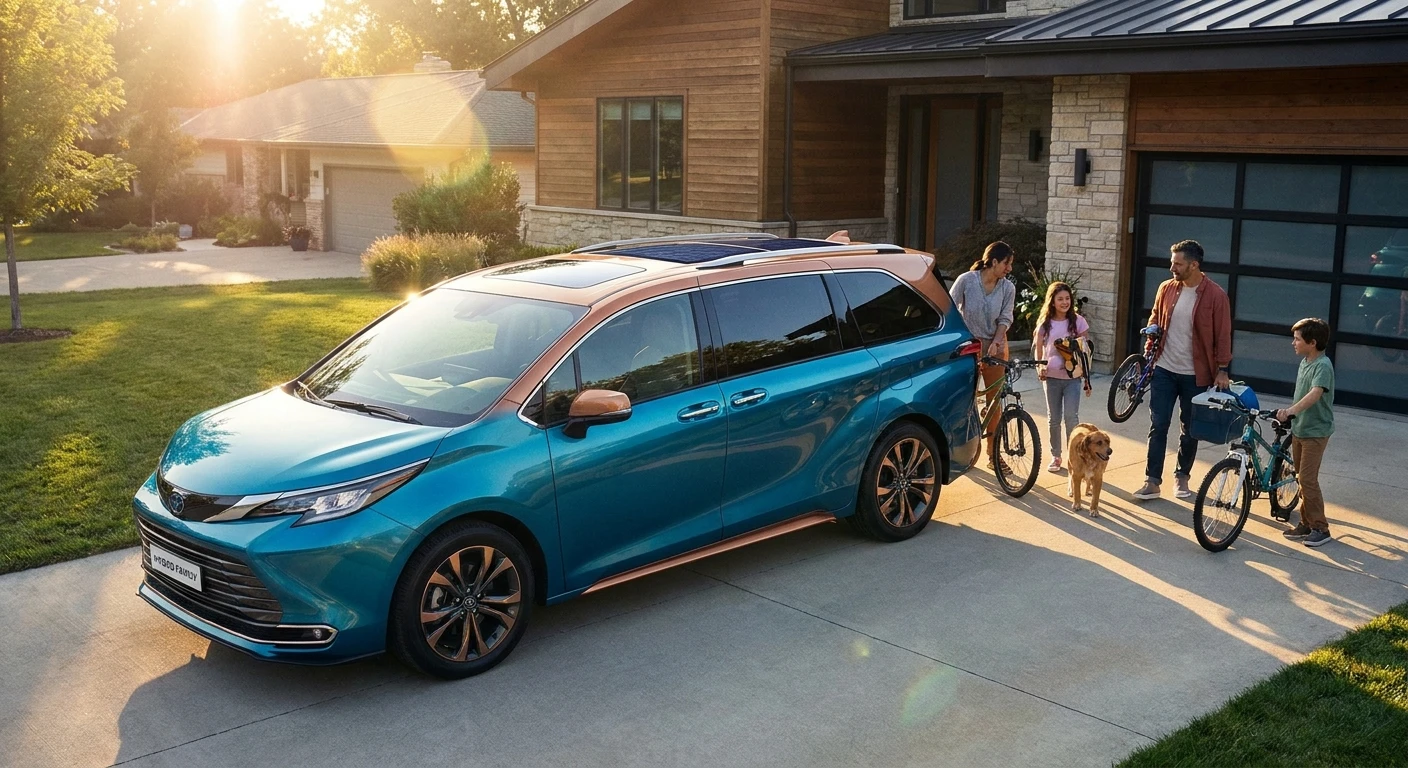
The Complete Guide to the Kia Carnival Hybrid
Family transportation has officially entered a highly efficient new era with the arrival of the Kia Carnival Hybrid. If you are currently searching for a multipurpose vehicle that perfectly blends the cavernous utility of a traditional minivan with the aggressive styling of a premium SUV, you are looking in the exact right place. The automotive industry’s transition to electrified family haulers is rapidly accelerating, and modern engineers have finally cracked the code to bridge the gap between heavy fuel consumption and maximum passenger capacity. The core thesis here is undeniable: opting for this specific gasoline-electric powertrain fundamentally changes the way large families travel, dramatically cutting monthly fuel costs without sacrificing an inch of cargo room or passenger comfort.
Gone are the days when buying a family van meant accepting abysmal fuel efficiency and sluggish driving dynamics. Today’s consumers demand smarter engineering, lower emissions, and cutting-edge technology wrapped in a sophisticated exterior. By integrating a potent battery and electric motor system with a turbocharged internal combustion engine, the manufacturer has created a vehicle that excels in stop-and-go school lines just as well as it dominates long stretches of interstate highway. Let us break down exactly what makes this electrified multipurpose vehicle a dominant force on the road and why it deserves a spot in your driveway.
Read also: Is the kia carnival 2025 the Best MPV?; Why the kia carnival 2022 Rules; Ultimate 2026 Hyundai Palisade Review.
Core Benefits and Everyday Utility
Why is this specific vehicle taking the family car market by storm? The answer lies in its exceptional efficiency metrics. When we look at the EPA-estimated 34 mpg city and 32 combined fuel economy rating, the financial value proposition becomes absolutely impossible to ignore. A traditional naturally aspirated V6 engine heavily struggles with efficiency in stop-and-go suburban traffic, but an electrified drivetrain thrives in those exact low-speed environments.
Consider two everyday examples of this value proposition in action. First, think about standard city commutes. The electric motor seamlessly handles low-speed crawls through traffic lights and parking lots, saving you gallons of expensive fuel every single month. Second, consider cross-country road trips. With highway efficiency hovering around 31 mpg, your total range between necessary gas station fill-ups expands significantly, meaning fewer stops and faster travel times with impatient kids in the back.
| Performance Feature | Hybrid Powertrain Model | Traditional V6 Counterpart |
|---|---|---|
| City Fuel Economy | ~34 MPG (Exceptional urban efficiency) | ~18 MPG (High consumption in traffic) |
| Acceleration Profile | Smooth, instant torque delivery | Linear, delayed power band |
| Starting Price (Approx) | $42,935 (Higher initial cost) | $39,035 (Lower barrier to entry) |
The advantages of making the switch to this electrified platform extend far beyond simple fuel savings. Here are the top benefits drivers immediately notice:
- Unmatched passenger flexibility: The interior architecture maximizes floor space, allowing for incredible legroom and optional premium seating arrangements that rival luxury transport vehicles.
- Superior energy retention: The vehicle excels in urban environments due to an advanced regenerative braking system that constantly feeds free energy back into the battery pack during deceleration.
- Instant torque delivery: The electric propulsion motor provides immediate pulling power from a dead stop, making heavily loaded family trips feel substantially lighter and more responsive to driver inputs.
The History and Origins of the Multipurpose Vehicle
Origins of the Family Hauler
To truly appreciate this modern marvel, we have to look back at the origins of the segment. Minivans used to be the default, undisputed choice for suburban families in the late 1980s through the early 2000s. These vehicles were defined entirely by their sheer function rather than their aesthetic form. The original predecessors in the manufacturer’s lineup built a rock-solid reputation for offering affordable, reliable space. However, they featured bubbly, uninspiring designs that prioritized headroom over aerodynamics or curb appeal. As automotive tastes shifted rapidly toward rugged, aggressive sport utility vehicles, the classic sliding-door family hauler faced an existential crisis. It desperately needed a complete philosophical redesign to stay relevant in a highly competitive market.
Evolution into an SUV Alternative
To actively combat the negative stigma often associated with driving a traditional minivan, exterior designers completely overhauled the vehicle’s underlying architecture. By drastically extending the hood line, squaring off the front grille fascia, and lifting the beltline to create a more imposing stance, the resulting design language successfully blurred the visual lines between a utility van and a full-size luxury SUV. This brilliant aesthetic shift made the vehicle highly desirable for modern drivers who craved aggressive SUV styling but practically required the massive interior cargo volume that only a flat-floor van platform could ever provide.
The Modern State of Electrification
The most significant evolutionary leap forward occurred quite recently, when forward-thinking engineers finally managed to integrate fully electrified powertrains into these incredibly large vehicle platforms. Today, the latest iterations boast highly advanced gasoline-electric systems specifically calibrated to handle the massive curb weight of a fully loaded passenger vehicle. Successfully incorporating a heavy, liquid-cooled battery pack and a high-voltage electric motor without eating into the crucial passenger cabin space is a serious engineering feat. This meticulous packaging ensures that modern families get the absolute best of both worlds—uncompromised environmental efficiency and cavernous daily utility.
Scientific and Technical Deep Dive
Under the Hood: Powertrain Mechanics
Let us talk about the specific mechanics driving this machine forward. The beating heart of this propulsion system is not a massive, thirsty six-cylinder engine. Instead, it relies entirely on a highly sophisticated internal combustion engine paired directly in tandem with a high-voltage electric propulsion unit. According to detailed engineering specifications, the hybrid combines a 1.6-liter turbocharged four-cylinder engine with a robust electric drive motor. Working together in perfect synchronization, these internal components generate a highly respectable output of 242 horsepower. Crucially, this power is seamlessly routed to the front drive wheels through a traditional, geared six-speed automatic transmission. This mechanical choice completely bypasses the rubber-band feeling often associated with the continuously variable transmissions (CVTs) found in many competing hybrid models, resulting in a much more engaging and traditional driving feel.
Advanced Regenerative and Acoustic Dynamics
Another fascinating technical aspect is exactly how this advanced vehicle manages both kinetic energy and acoustic sound waves. Whenever you apply pressure to the brake pedal, the electric traction motor actually reverses its mechanical function, acting temporarily as an electrical generator. This brilliant process captures kinetic momentum that would otherwise be entirely lost as useless brake heat and forcefully sends it back to recharge the lithium-ion battery pack. Furthermore, the acoustic benefits of this setup are absolutely massive. Automotive experts consistently highlight that the hybrid powertrain provides smooth acceleration and quiet operation, vastly reducing harsh engine noise and irritating vibrations inside the cabin at highway cruising speeds.
- Turbocharging Efficiency: Forcing compressed, dense air directly into the small 1.6-liter engine block allows a smaller displacement mechanical unit to produce the low-end torque typically reserved for much larger V6 engines.
- Kinetic Recovery: The active regenerative braking system constantly converts forward vehicle momentum into usable electrical charge, practically guaranteeing maximum miles per gallon during heavy city driving.
- Thermal Management: Highly advanced liquid-cooled battery thermal systems ensure optimal electrical output and longevity, regardless of whether you are driving in freezing winter weather or extreme summer heat.
- Acoustic Isolation Tech: Enhanced sound deadening materials strategically placed in the floorboards work synergistically with the inherently silent electric motor to significantly lower interior decibel levels.
Actionable Step-by-Step Buyer’s Guide
Navigating the purchase and ownership of a sophisticated electrified vehicle requires a solid game plan. Follow this comprehensive step-by-step guide to ensure you make the absolute best decision for your family’s unique transportation needs.
Step 1: Define Your Exact Passenger Needs
Begin by critically evaluating your daily seating requirements. You must decide whether you strictly need the luxurious 7-passenger VIP lounge seating arrangement or the highly practical 8-passenger standard bench configuration. Carefully consider how frequently you transport full-grown adults versus small children requiring bulky rear-facing car seats.
Step 2: Analyze Your Daily Driving Commute
Take time to calculate your actual average daily mileage. If the vast majority of your driving involves urban stop-and-go traffic, endless school drop-off lines, or crowded city streets, the electric motor’s low-speed efficiency will offer the absolute maximum financial return on your investment.
Step 3: Compare Available Trims and Technology
Thoroughly review the spec sheets for all available trim levels. Base models offer incredibly excellent standard safety tech and connectivity, while the top-tier luxury trims include advanced highway driving assistance systems, panoramic sunroofs, and premium multi-speaker audio components.
Step 4: Secure Market-Accurate Financing
Look closely at current market data before walking into a dealership. As of recent tracking metrics, used prices span a 2025 $40,397 to $43,690 range depending on condition and trim. Determine clearly whether buying slightly used or ordering a brand new factory model fits your strict financial goals.
Step 5: Schedule a Comprehensive Test Drive
Do not simply drive the vehicle around the local dealership block. Take the van out onto the fast-paced highway to thoroughly test the 1.6-liter turbo’s high-speed passing power, and make sure to navigate a tight grocery store parking lot to accurately gauge its overall turning radius and camera visibility.
Step 6: Master the Digital Infotainment System
Once you actually take delivery of the vehicle, dedicate your first full afternoon purely to configuring the massive dual-screen digital setup. Connect your primary smartphone, set up personalized driver memory profiles, and fully customize the information displayed on the digital gauge cluster.
Step 7: Establish a Strict Maintenance Routine
Remember that hybrid internal combustion engines require routine oil changes just like traditional gas-only cars. Follow the manufacturer’s specified mileage intervals for engine fluid changes, tire rotations, and hybrid battery health diagnostic checks to ensure decades of long-term reliability.
Myths and Reality: Separating Fact from Fiction
When new automotive technology hits the mass market, misinformation spreads rapidly. Let us clear up the most common misunderstandings regarding this electrified MPV.
Myth: A small 1.6-liter four-cylinder engine is dangerously weak and cannot safely merge a heavy minivan onto a fast-moving highway.
Reality: The brilliant integration of a high-pressure turbocharger and an instant-torque electric motor provides massive low-end thrust, making off-the-line acceleration feel incredibly brisk and totally effortless compared to an older naturally aspirated V6.
Myth: The massive, heavy hybrid battery pack ruins the interior cargo space and prevents the seats from folding down.
Reality: Clever engineers strategically packaged the flat hybrid battery completely beneath the floorboards, ensuring that you fully maintain the best-in-class space and available side-flex seating that large families absolutely require.
Myth: Electrified minivans are vastly more expensive to repair and maintain over their lifetime.
Reality: Because the aggressive regenerative braking system literally saves wear and tear on your physical brake pads, and the electric motor drastically reduces the mechanical workload on the gas engine, routine maintenance costs are actually often noticeably lower over the vehicle’s lifespan.
Frequently Asked Questions & Final Verdict
Does this vehicle feature an all-wheel-drive (AWD) system?
No, the current powertrain architecture mechanically routes all generated power exclusively to the front wheels.
What is the official estimated fuel economy?
Drivers can expect roughly 34 mpg in tight city driving and 31 mpg on the open highway, depending heavily on weather and driving conditions.
Exactly how much total horsepower does the hybrid system make?
The combined peak system output from both the gas engine and electric motor is a very healthy 242 horsepower.
Does the transmission use a continuously variable design (CVT)?
No, it utilizes a traditional, geared six-speed automatic transmission for a much more natural and engaging driving feel.
Can the middle-row seats be completely removed for cargo?
The standard second-row seats are fully removable in certain trim configurations, though the luxury VIP lounge seats are permanently fixed to the floor.
Does this vehicle qualify for federal electric vehicle tax credits?
Typically no, because it operates as a standard closed-loop hybrid system and not a plug-in hybrid electric vehicle (PHEV) with a massive battery.
What is the general starting price for a brand new model?
Brand new entry-level models generally start in the low to mid-$40,000 range, scaling up significantly based on added luxury options.
The era of the wildly inefficient, gas-guzzling family hauler is officially over. This technologically advanced electrified MPV actively delivers absolutely everything a busy modern household could ever need—from massive cargo space to wallet-saving efficiency. Take control of your daily commute, head down to your local dealership to test drive one today, and experience the brilliant future of family travel for yourself!

Leave a Reply