
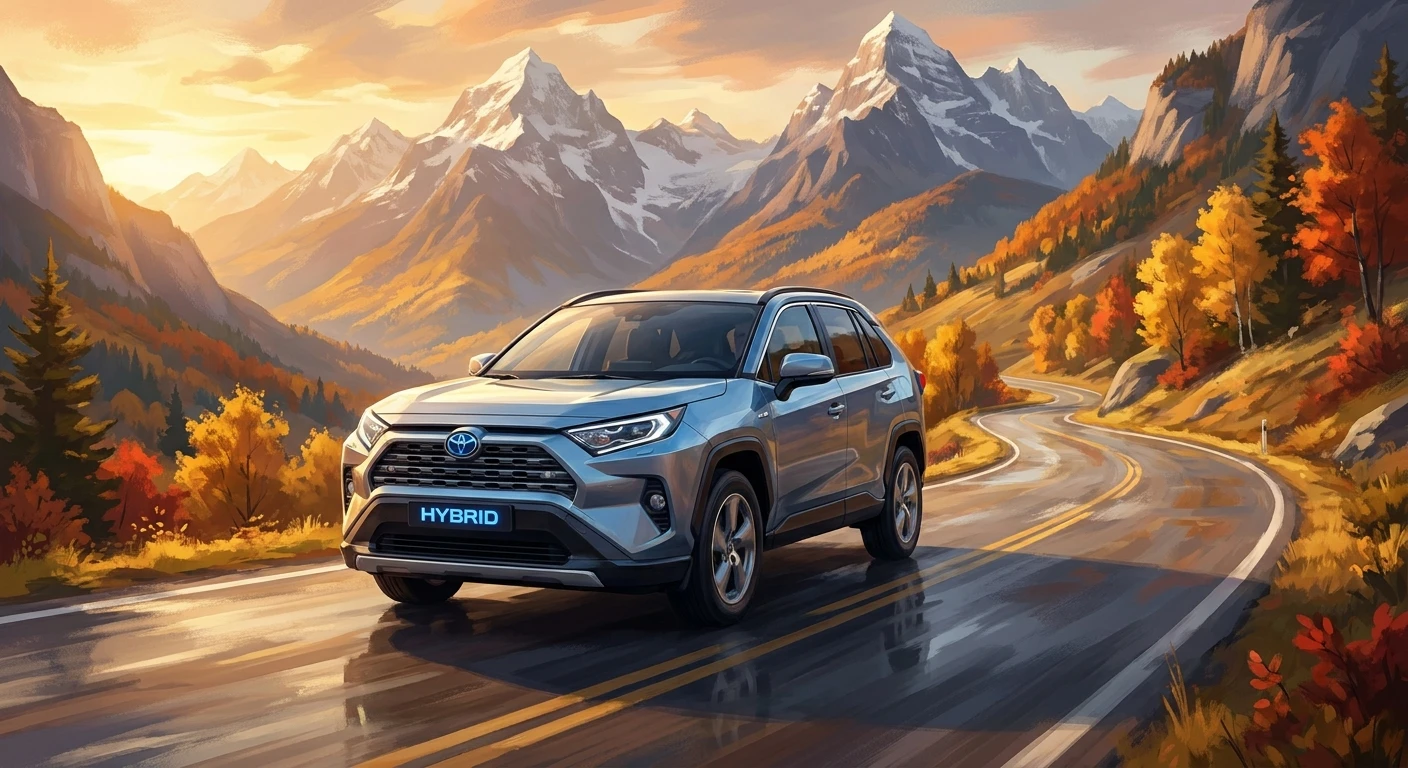
Finding the Best Hybrid SUV Canada Has for Your Daily Drive
If you are searching for a reliable Hybrid SUV Canada has a rapidly expanding market tailored specifically for cold-weather durability and impressive fuel economy. The shift toward electrified family vehicles is accelerating from coast to coast. As gas prices fluctuate unpredictably and environmental awareness grows across the provinces, switching to a dual-powertrain sport utility vehicle makes incredible financial and practical sense. Drivers here deal with exceptionally unique conditions: freezing winter mornings, heavy snowfalls, vast highway distances between major cities, and demanding off-road terrains. A hybrid system perfectly bridges the gap between traditional combustion engines and full electric vehicles. It gives you the necessary range for a massive road trip from Toronto to Montreal, coupled with the all-wheel-drive traction required for a severe Alberta blizzard. You get the ruggedness, ride height, and cargo capacity of a traditional utility vehicle without the painful fuel bills at the pump. We will break down exactly how these sophisticated vehicles operate under extreme northern conditions, trace their engineering development, and provide a clear, actionable roadmap for selecting the exact model that fits your lifestyle. Whether you want a plug-in model for short city commutes or a self-charging platform for cross-country hauls, the options on dealership lots are better than ever.
Why Upgrading Makes Total Financial Sense Right Now
The core value proposition of a modern electrified utility vehicle revolves around massive long-term fuel savings paired with uncompromised daily utility. The dual power source actively captures kinetic energy through regenerative braking, storing it in an onboard high-voltage battery to power the electric traction motor. This process translates to incredibly low urban fuel consumption where traditional gas engines usually suffer the most. Take popular models like the Toyota RAV4 Hybrid; it seamlessly shifts between electric and gas power, drastically cutting tailpipe emissions while maintaining standard all-wheel-drive capabilities. Another prime example is the Mitsubishi Outlander PHEV, which allows drivers to handle their daily grocery runs entirely on battery power before the gasoline engine ever needs to kick in for longer weekend escapes. You get the best of both engineering worlds without compromising on the interior space you desperately need for your family and gear.
Read also: Ultimate 7 seater suv canada Guide; Kia Carnival Hybrid: Ultimate Family MPV Review & Guide; Review of the New gv90 Luxury SUV.
- Exceptional Fuel Efficiency: Drastically reduce your visits to the local gas pump, especially during stop-and-go city commutes where the electric motor handles the heavy lifting from a dead stop.
- Enhanced Winter Traction: Electric motors provide instant torque to the rear wheels, dramatically improving traction on icy roads before a traditional mechanical driveshaft could even react to wheel slip.
- High Resale Value Retention: Consumer demand heavily outpaces factory supply for these specific dual-motor configurations, ensuring your vehicle holds its financial worth much longer than gas-only alternatives on the used market.
| Feature Category | Traditional Gas SUV | Hybrid SUV Alternative |
|---|---|---|
| City Fuel Economy | 10-12 L/100km average consumption | 5-6 L/100km average consumption |
| Cold Weather Highway Range | Unaffected range, high fuel cost | Excellent range, significantly lower cost |
| Torque Delivery and Acceleration | Delayed by transmission downshifting | Immediate electric motor response |
Origins of Electrified Utility
The ambitious concept of combining a heavy-duty chassis with a battery-assisted drivetrain genuinely felt like science fiction just two decades ago. Early automotive pioneers focused strictly on compact sedans to maximize aerodynamics and battery efficiency, prioritizing fuel numbers above all else. However, consumer demand quickly demanded larger footprints and more practical cargo areas. Engineers quickly realized they needed to scale up the technology to move heavier frames without completely draining the limited battery reserves of the era. Early attempts at hybridizing larger utility vehicles were often clunky, featuring massive, heavy battery packs that ate up valuable trunk space and offered minimal actual fuel savings over their gas counterparts.
Evolution of Dual Powertrains
By the early 2010s, lithium-ion battery technology hit a major industrial breakthrough. These energy storage packs became substantially smaller, lighter, and vastly more energy-dense. Automakers started integrating electric motors directly into the front and rear axles, completely eliminating heavy mechanical transfer cases and driveshafts. This rapid evolution allowed the hybrid components to be packaged neatly beneath the floorboards or rear passenger seats, perfectly preserving the vital cargo capacity that utility vehicle buyers demand. Software management systems also grew exponentially smarter, learning to switch between gas and electric drive modes imperceptibly to maximize efficiency based on real-time road conditions, throttle input, and elevation changes.
Modern State in Northern Climates
Today, the technology has fully matured into a highly reliable platform. Automakers specifically test these dual-powertrain systems in brutal sub-zero environments to ensure the sensitive battery cells do not degrade rapidly during a frigid February night. Modern thermal management architectures actively keep the battery modules at optimal operating temperatures, ensuring reliable start-ups and consistent electric range regardless of the severe weather outside. The integration of advanced heat pumps also allows the interior cabin to warm up incredibly fast without solely relying on the internal combustion engine to generate heat, proving that these highly capable machines are genuinely built for tough northern climates and long winters.
How Regenerative Braking Captures Energy
At the technical heart of every electrified utility vehicle is a highly sophisticated energy recovery loop. When you take your foot off the accelerator pedal or press the brake, the electric traction motor essentially runs in reverse. Instead of consuming electricity to physically turn the wheels, the heavy forward momentum of the vehicle turns the motor, effectively transforming it into an active electrical generator. This magnetic resistance seamlessly slows the car down while actively sending captured kinetic energy straight back into the high-voltage battery pack. This technical marvel saves immense mechanical wear and tear on your traditional friction brake pads while constantly topping up your electric driving range during steep downhill descents or heavy highway traffic jams.
Thermal Management Architecture
Battery cells require highly specific temperature windows to function safely and efficiently. Extreme ambient cold naturally increases internal cell resistance, which previously crippled electric range in early models. Modern systems heavily utilize active liquid cooling and heating loops physically surrounding the battery modules. When you start the vehicle in freezing temperatures, the thermal management system aggressively pulls ambient heat from the internal combustion engine coolant or uses dedicated high-voltage resistive heaters to quickly warm the battery fluid. This ensures optimal power delivery to the electric traction motors even when the vehicle has been parked outside overnight.
- Inverter Efficiency: Instantly converts direct current (DC) from the main battery into alternating current (AC) for the electric motors with over 95% electrical efficiency.
- Planetary Gearsets: Seamlessly blends the torque from the gasoline engine and the primary electric motor without the traditional shifting shock felt in standard automatic transmissions.
- Lithium-Ion Chemistry: Utilizes highly specific anode and cathode chemical structures optimized for frequent, rapid charge and discharge cycles rather than deep depletion.
- Electric Power Steering: Completely removes parasitic mechanical drag from the gasoline engine, utilizing pure battery power to assist steering input dynamically based on vehicle speed.
Step 1: Analyze Your Exact Daily Commute
Start your buying journey by calculating your precise daily mileage. If you consistently drive less than 50 kilometers a day, a Plug-in Hybrid Electric Vehicle (PHEV) might allow you to run entirely on pure electricity, saving the combustion gas engine strictly for longer weekend trips or heavy towing duties.
Step 2: Determine Your Actual Cargo Needs
Measure the physical space you actually require for daily life, including hockey bags, large camping gear, or double strollers. Some battery packs slightly raise the rear cargo floor height, so always verify the specific cubic volume measurements before financially committing to a specific trim level.
Step 3: Evaluate Home Charging Infrastructure
For standard self-charging models, zero home charging is needed. However, for PHEVs, you must assess your home parking situation. Installing a dedicated Level 2 wall charger in your garage dramatically maximizes the convenience of daily electric driving and ensures a full battery every morning.
Step 4: Check Regional Financial Incentives
Aggressively research both federal and provincial EV rebate programs. Many PHEV models actively qualify for generous point-of-sale government discounts that significantly lower the upfront dealership purchase price, heavily offsetting the initial premium you pay over standard gas-only models.
Step 5: Test Drive in Diverse Traffic Conditions
Schedule your dealership test drive to deliberately include both low-speed city traffic to feel the pure electric transition and aggressive highway merging to test the maximum combined power output. Pay very close attention to the regenerative braking feel, which varies greatly between brands.
Step 6: Review Winter Package Options
Look specifically for robust cold-weather equipment packages. Heated steering wheels, heated rear passenger seats, and remote smartphone cabin pre-conditioning are absolute daily necessities for staying completely comfortable and safe during harsh winter morning commutes.
Step 7: Secure Financing and Place Your Order
Due to extraordinarily high consumer demand, factory wait times can occasionally be extensive. Finalize your exact build sheet with the dealership representative, secure a heavily locked-in interest rate if financially possible, and place your official deposit well ahead of when you actually need to drive the new vehicle off the lot.
Debunking Powertrain Misconceptions
Myth: The main battery pack will die in five years and cost an absolute fortune out of pocket to replace.
Reality: Modern traction batteries are intensely engineered to last the complete lifetime of the vehicle. Major automakers officially back this up with extensive factory warranties, typically covering the entire battery pack and hybrid components for 8 years or 160,000 kilometers.
Myth: You constantly have to plug them into a wall outlet for them to actually work.
Reality: Standard self-charging hybrid models never need to be plugged into any electrical wall outlet. They efficiently generate all their own internal electricity strictly through the gas engine operations and regenerative braking. Only PHEV models offer an external charging plug, and even those run perfectly fine on regular gasoline if you ever forget to charge them.
Myth: They completely lack the physical power to safely tow small utility trailers or family boats.
Reality: The integrated electric motor actually provides massive instant torque right off the line, making pulling away from a complete stop with a heavy trailer exceptionally smooth. Many modern electrified models now boast impressive certified towing capacities well exceeding 3,500 pounds.
Do I need a special highly trained mechanic for routine maintenance?
No. Standard routine maintenance like synthetic oil changes, windshield wiper replacements, and seasonal tire rotations can easily be done by regular neighborhood mechanic shops. The sealed high-voltage electrical system requires essentially zero regular scheduled maintenance.
Are they mechanically worse to drive in the deep snow?
They are actually often vastly better. Sophisticated electric all-wheel-drive systems actively react significantly faster to sudden wheel slip than traditional heavy mechanical driveshafts, instantly sending targeted power directly to the exact tire that currently has the most grip on the ice.
How much more do they really cost upfront at the dealer?
You typically pay a modest $1,500 to $3,000 factory premium over the exact same gas-equivalent trim level. However, active drivers frequently recoup this entire initial premium purely in monthly fuel savings within just two to three years of regular daily driving.
Can I safely drive them through deep water puddles?
Yes. The entire high-voltage battery pack and heavy electrical wiring harnesses are heavily sealed and completely insulated from the outside elements. You can safely drive through standard heavy rain, deep puddles, and regular car washes exactly like a traditional gas vehicle.
Will extreme freezing cold weather suddenly cut my range in half?
While extreme cold severely affects pure electric vehicles, dual-powertrain setups deliberately rely on their internal combustion gas engine to generate primary cabin heat. This brilliant engineering dramatically minimizes the severe battery efficiency drop normally experienced during the harshest winter months.
What physically happens if the main gas tank runs completely empty?
You must always keep regular fuel in the main tank. The intricate system is purposefully designed to run entirely in tandem; running completely out of gasoline can trigger an automatic protective system shutdown to permanently prevent catastrophic mechanical damage to the highly sensitive hybrid components.
Does the actual electric motor ever require regular oil changes?
No. The heavy-duty electric motor components are completely factory-sealed and require absolutely zero standard lubricating oil. Only the internal gasoline combustion engine requires your standard seasonal synthetic oil changes and routine mechanical filter replacements.
Final Takeaway
Finding the perfect dual-powertrain vehicle genuinely comes down to meticulously matching your specific daily commute distance with the correct battery configuration. Stop endlessly burning your hard-earned money idling in frustrating stop-and-go city traffic. Follow the comprehensive steps outlined above, compare the exact models that fit your cargo lifestyle, and book a comprehensive test drive today to feel the smooth, quiet, and powerful electric difference for yourself. Take full control of your fuel budget and drive smarter.

Leave a Reply