
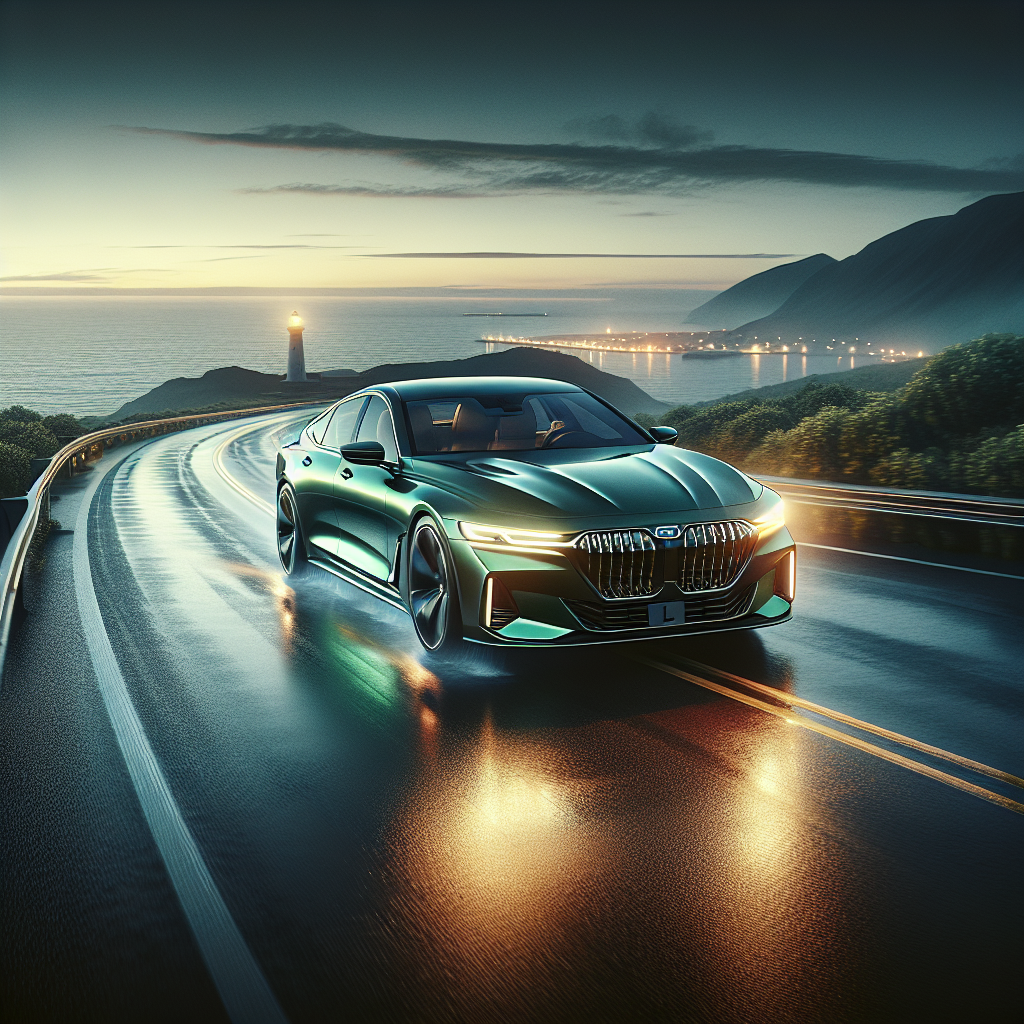
Why the bmw m3 competition Remains Unmatched on the Road
Ever wondered what it actually feels like to pilot a street-legal rocket ship on your morning commute? The bmw m3 competition isn’t just another fast luxury sedan; it is a brutal, unapologetic statement of pure, unfiltered adrenaline. You know the exact feeling. You walk up to it, the aggressive widebody stance staring back at you, and you realize this machine wants to be pushed to its absolute limits.
Picture this scenario: it is a crisp, cool autumn morning in Ukraine, and you are merging onto the perfectly paved, sweeping sections of the Kyiv-Chop highway. The exhaust note bounces violently off the tree lines as the engine screams toward the redline. I remember vividly the first time I took that exact route. My hands gripped the thick, aggressively bolstered leather steering wheel, while the rigid carbon bucket seats hugged my ribs tighter than a tailored suit. The sheer, relentless pulling power made me instantly forget I was sitting in a four-door family car with a spacious trunk and rear climate control.
You don’t just casually drive this car; you form a deeply physical bond with it. It communicates every crack in the pavement directly to your fingertips. The chassis reacts to your thoughts before you even fully turn the wheel. If you are looking for a gentle, wafting land yacht, you are in the wrong place. But if you want a machine that bridges the gap between a daily grocery getter and a weekend track weapon, the competition variant of the M3 stands entirely alone at the top of the mountain.
The Core Mechanics: Breaking Down the Beast
To truly understand why this car commands so much respect, we need to look under the skin. The core philosophy of the competition badge is simple: take an already phenomenal sports sedan, and turn the dial up past eleven. It is about maximizing airflow, optimizing chassis rigidity, and squeezing every ounce of thermal efficiency out of the powertrain.
Let’s look at the raw numbers. When you compare the standard base model to the competition spec, the differences go far beyond a simple software tune.
| Specification | Standard M3 | M3 Competition |
|---|---|---|
| Power Output | 473 Horsepower | 503+ Horsepower |
| Transmission | 6-Speed Manual | 8-Speed M Steptronic |
| 0-60 MPH Time | 4.1 Seconds | 3.4 Seconds (with xDrive) |
The true value proposition here lies in versatility. You aren’t just buying speed; you are buying a chameleon. For instance, look at the M xDrive system. You get the confidence of all-wheel drive during a torrential downpour, but with the push of a button, you can completely decouple the front axle. Boom—you have a 100% rear-wheel-drive drift machine ready to destroy rear tires. Another great example is the suspension geometry. The adaptive M suspension gives you a comfortable enough ride to pick up your boss from the airport, but switch to Sport Plus, and it stiffens up to rival purpose-built race cars.
Here are the top three reasons the competition package dominates the current market:
- Unrelenting Torque Delivery: The revised engine mapping holds peak torque across a massive RPM range, meaning you have instant passing power in almost any gear.
- The ZF 8-Speed Calibration: Unlike the older dual-clutch setups, this torque converter automatic is incredibly smooth at low speeds but shifts with shotgun-like ferocity when you demand it.
- Staggered Wheel Setup: Running 19-inch wheels in the front for sharper turn-in and 20-inch wheels in the rear for massive traction gives the car an aggressive rake and mechanical grip that defies physics.
Origins of the M Badge
To appreciate where we are, we have to look back at how this madness started. The M3 lineage began in the 1980s with the legendary E30. It wasn’t built to be a luxury cruiser; it was a strict homologation special. BMW needed to sell street-legal versions of their race car to compete in the DTM (Deutsche Tourenwagen Meisterschaft). That high-revving, naturally aspirated four-cylinder set the benchmark for what a driver’s car should feel like. It was lightweight, noisy, and perfectly balanced.
Evolution of the Competition Moniker
As the generations progressed through the E36, the raspy inline-six E46, and the howling V8-powered E90, the cars got heavier and more luxurious. Enthusiasts wanted that raw edge back. The “Competition Package” (often internally referred to as ZCP) was introduced to sharpen the blade. It started as a subtle upgrade—slightly different wheels, a tweaked steering rack, revised spring rates. By the time the F80 generation rolled around with its twin-turbo setup, the Competition package became almost mandatory if you wanted the car to put its power down without aggressively snapping the rear end out.
Modern State of M Performance
Fast forward to the G80 generation, and the Competition is no longer just a package you tick on an options sheet; it is treated as a distinct, standalone tier. It represents the pinnacle of internal combustion development for the brand. The track width has swelled, the cooling systems have grown massive, and the electronics governing the traction control operate at speeds that border on artificial intelligence. It is the culmination of decades of motorsport heritage distilled into a sedan body.
The S58 Engine Architecture
At the beating heart of this monster is the S58 engine. This 3.0-liter, twin-turbocharged inline-six is an absolute marvel of engineering. Unlike regular engines that start running out of breath at high RPMs, the S58 is designed with a closed-deck block. This means the cylinder block is exceptionally rigid, allowing it to handle massive amounts of cylinder pressure and heat without warping.
As we cruise through 2026, finding a strictly internal combustion engine that hasn’t been watered down by heavy plug-in hybrid batteries is becoming incredibly rare. The S58 stands as a defiant middle finger to boring powertrains. The forged crankshaft, lightweight pistons, and precisely mapped direct injection allow this engine to rev freely and aggressively, producing a power curve that feels completely linear.
M xDrive and Chassis Dynamics
Power is useless if you can’t put it to the ground. The M xDrive system is rear-biased, meaning under normal conditions, the car behaves like a classic rear-wheel-drive BMW. However, a multi-plate clutch in the transfer case electronically routes power to the front wheels the microsecond the rear tires start losing traction.
- Cooling Capacity: Features multiple radiators, an engine oil cooler, and a separate transmission oil cooler to prevent overheating during continuous track sessions.
- 3D Printed Cores: The cylinder head core is manufactured using advanced 3D printing techniques, allowing for complex coolant routing that traditional casting could never achieve.
- Active M Differential: An electronically controlled multi-plate clutch in the rear diff locks between 0 and 100 percent, maximizing traction out of tight corners.
- Boost Pressure: The mono-scroll turbochargers spool up quickly, delivering peak boost with minimal turbo lag thanks to electronic wastegates.
Day 1: The Delivery and Walkaround
Taking delivery is an event. Spend this first day just taking in the details. Smell the rich Merino leather. Walk around the exterior and trace the aggressive lines, the flared fenders, and the massive quad exhaust tips. Set your seating position perfectly. The carbon buckets require a specific technique to get in and out of—slide your leg over the high thigh bolster, drop your weight, and pull yourself in. Take it for a gentle cruise around your neighborhood to get a feel for the throttle response in its most relaxed setting.
Day 2: Mastering the Infotainment
Modern M cars are essentially rolling supercomputers. Spend your second day sitting in the driveway with the engine running. Navigate through the massive curved display. Connect your phone, set up your heads-up display preferences, and familiarize yourself with the tire pressure and temperature monitors. You need to know exactly where these menus are before you start driving aggressively.
Day 3: Setting Up M1 and M2 Buttons
Those two bright red buttons on the steering wheel are your shortcuts to different personalities. Set M1 as your “spirited daily” mode: Engine in Sport, Suspension in Comfort, Steering in Comfort, and exhaust valves open. Set M2 as your “maximum attack” mode: Everything in Sport Plus, traction control in MDM (M Dynamic Mode), and the transmission shift speed dialed to level 3. Testing these distinct setups on familiar local roads will show you the dual nature of the chassis.
Day 4: The Highway Cruise
Take it out on a long stretch of highway. Notice how quiet the cabin can actually be when you leave it in Comfort mode. The suspension absorbs highway expansion joints surprisingly well, and the active cruise control makes long-distance travel effortless. It is a fantastic grand tourer when you aren’t wringing its neck.
Day 5: Twisty Backroads
Find the curviest piece of tarmac within an hour of your house. Press your newly programmed M1 button. Focus on the steering feel and turn-in response. Notice how the front end bites into the asphalt with zero understeer. The grip levels are staggering. This is where you learn how the active differential pushes you through and out of tight hairpins.
Day 6: The Track Day Preparation
If you plan to track it, today is for prep. Check your cold tire pressures—you will want to drop them slightly because they will heat up and expand significantly on the track. Double-check your brake fluid reservoir. Ensure your wheel bolts are torqued to the correct spec. Make sure there are no loose items flying around in the cabin or trunk.
Day 7: Launch Control and Full Send
Find a safe, closed, and legal straightaway. Engage launch control. Press the brake firmly with your left foot, pin the throttle to the floor with your right, wait for the checkered flag icon to appear on the dash, and let go of the brake. The violent G-force that pins you into the back of your seat as the xDrive system claws into the pavement is something you will never, ever forget.
Separating Fact from Fiction
Myth: The large kidney grilles are just an ugly design flaw.
Reality: That massive front opening is strictly functional. The S58 engine requires a tremendous amount of air for the intercoolers and radiators. The vertically oriented grille feeds cold air directly into the heat exchangers far more efficiently than the older, smaller designs.
Myth: It is way too harsh and stiff for daily driving.
Reality: If you leave the adaptive suspension in Sport Plus, yes, it will shatter your spine over potholes. However, in Comfort mode, the dampening is highly compliant. It rides better than many standard sports sedans from five years ago.
Myth: The carbon bucket seats are incredibly uncomfortable.
Reality: While getting in and out takes a bit of gymnastics, once you are seated, they are exceptionally ergonomic. Many owners report doing 500-mile road trips in the carbon buckets without any back pain, as the posture support is phenomenal.
Myth: Adding all-wheel drive ruined the pure M3 experience.
Reality: The system is heavily rear-biased. It feels like a rear-wheel-drive car right up until the moment you would normally crash, at which point it pulls you out of trouble. Plus, you can switch it to 2WD mode and completely disable the front axle anyway.
Is the car reliable for daily use?
Yes, the B58/S58 engine architecture has proven to be incredibly robust and reliable, provided you strictly follow the maintenance schedule and use high-quality synthetic oil.
What is the real-world fuel economy?
If you have a heavy right foot, expect around 15 MPG in the city. However, on long highway cruises in efficient mode, hitting 23-25 MPG is totally achievable.
Can it safely fit a rear-facing child seat?
Absolutely. It is still a 3-series sedan at its core. The rear doors open wide, and there are standard ISOFIX anchor points. The trunk easily swallows a large stroller.
How much does the vehicle weigh?
It is admittedly heavy, tipping the scales at roughly 3,990 lbs for the xDrive model. However, the immense power and sophisticated suspension completely mask the weight when driving.
Are the carbon ceramic brakes necessary?
For street driving, no. The standard steel M compound brakes are phenomenal and cheaper to replace. Carbon ceramics are only necessary if you are constantly doing heavy track days.
Does the competition model come in a manual transmission?
No. If you want the three-pedal 6-speed manual, you must opt for the base M3, which has slightly less horsepower and is exclusively rear-wheel drive.
What high-performance tires come standard from the factory?
It typically ships with Michelin Pilot Sport 4S or Pirelli P-Zero tires, both of which offer incredible wet and dry grip. Always stick to top-tier rubber when replacing them.
At the end of the day, making the jump to a true M car is a decision you make with both your heart and your head. It delivers pragmatic daily usability wrapped in a genuinely terrifying performance envelope. If you have been on the fence, stop waiting. Go schedule a test drive, press that glowing red start button, hear the exhaust roar to life, and find out for yourself why the M3 continues to rule the asphalt. Drop a comment below or share this guide with your car friends if you are ready to hit the track!

Leave a Reply