
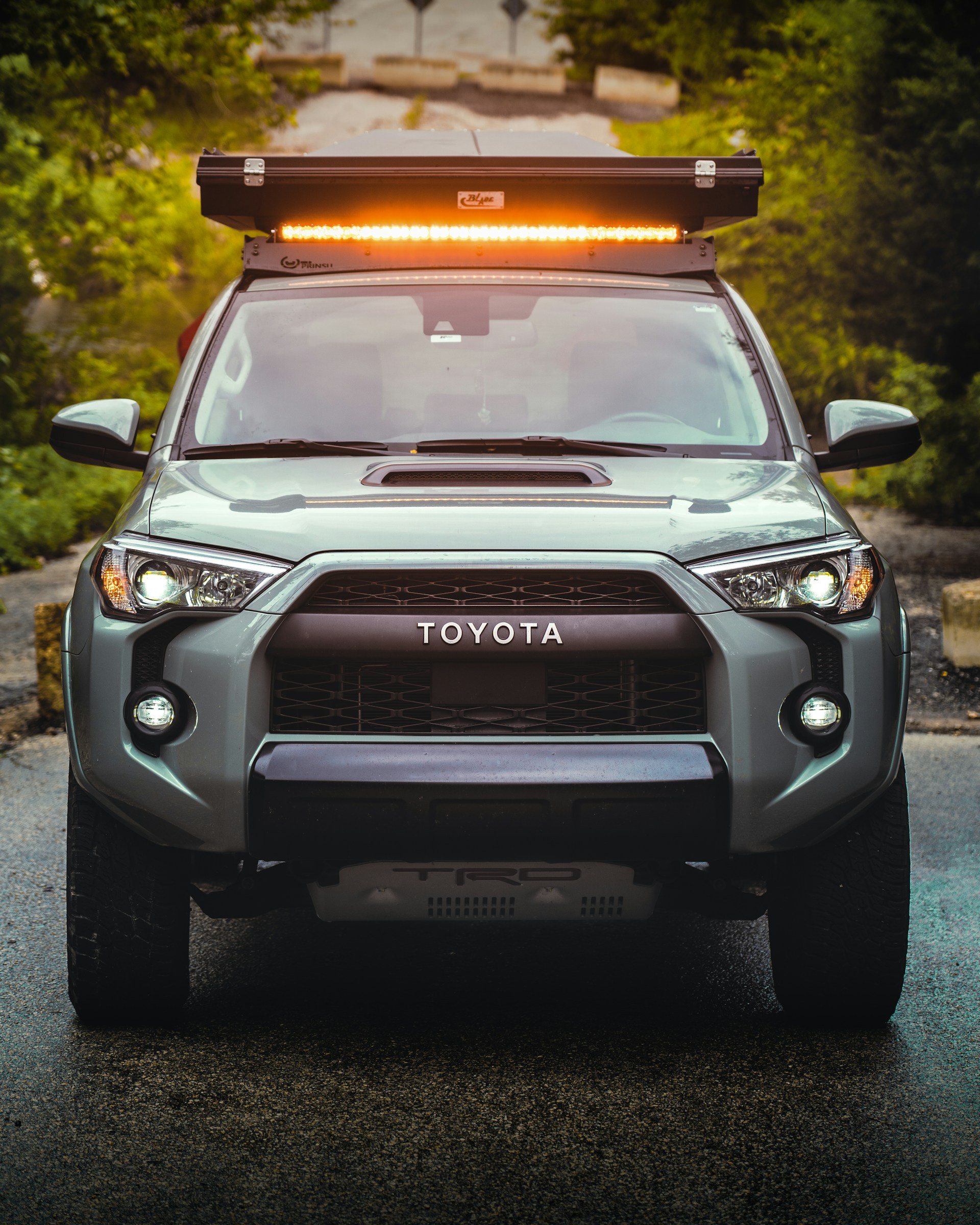
Why the 2024 Toyota 4Runner refuses to get old
Let’s be real for a second. In a world where every new SUV looks like a melted jellybean and runs on a tiny engine with three turbochargers, the 2024 Toyota 4Runner is a bit of a dinosaur. And honestly? That is exactly why Canadians love it. While other brands are busy adding touchscreens that control your windshield wipers, Toyota is still selling a truck that feels like it could survive a small apocalypse. It’s heavy, it’s thirsty, and it’s about as aerodynamic as a brick wall, but it works every single time you turn the key.
If you live in a place like Alberta or Northern Ontario, you know that “rugged” isn’t just a marketing word. It’s a necessity when the snow is up to your knees and the nearest paved road is a forty-minute drive away. The 4Runner has stayed relevant for over a decade without a major redesign because it nails the basics. It uses a body-on-frame construction, which is basically old-school truck DNA. Most SUVs today are “unibody,” meaning they are built like cars. The 4Runner is built like a tank. It doesn’t care about your feelings, and it certainly doesn’t care about the pothole that just swallowed a Honda Civic.
But here is the kicker: 2024 is a special year. It’s the last call for the fifth-generation 4Runner. With a new model on the horizon for 2025, people are scrambling to grab this version. Why? Because it’s the last one with that legendary 4.0-liter V6 engine. It’s not fast, and it won’t win any drag races against an electric SUV, but it is famous for lasting 400,000 kilometers without breaking a sweat. For many of us, that peace of mind is worth more than a fancy digital dashboard.
The heart of the beast: That 4.0L V6 engine
If you look at the specs on paper, the 270 horsepower and 278 lb-ft of torque don’t look impressive. My neighbor’s minivan probably has similar numbers. But numbers don’t tell the whole story. This engine is naturally aspirated. No turbos to fail, no complex hybrid systems to worry about when the warranty ends. It’s paired with a five-speed automatic transmission. Yes, you read that right. Five speeds. In an era of 10-speed gearboxes, this feels like a relic from the past.
But there is a logic to the madness. A five-speed transmission is simple. It doesn’t hunt for gears when you are climbing a steep hill or towing a boat. It just finds the right spot and stays there. On the highway, sure, you’ll notice the engine revving a bit higher than a modern crossover, and your fuel bill will definitely reflect that. You aren’t buying this for the fuel economy. You are buying it because when you are 100 kilometers deep into the backcountry, you want a drivetrain that won’t quit on you.
| Feature | Specification |
|---|---|
| Engine | 4.0L V6 DOHC 24-Valve |
| Horsepower | 270 hp @ 4,400 rpm |
| Torque | 278 lb-ft @ 4,400 rpm |
| Transmission | 5-Speed Automatic |
| Towing Capacity | 5,000 lbs (2,268 kg) |
| Ground Clearance | 9.6 inches (TRD Models) |
Trims and packages for the Canadian wild
Choosing a 4Runner in Canada usually comes down to how much dirt you plan on eating. If you just want a reliable winter commuter that can handle a ski trip to Whistler or Mont-Tremblant, the SR5 or the Limited will do the trick. The Limited is actually quite interesting because it uses a full-time 4WD system, which is much better for patchy ice and clear asphalt. The other trims use a part-time system, meaning you have to manually shift into 4WD when things get slippery.
However, if you are the type who spends your weekends looking for trails that aren’t on Google Maps, the TRD Pro is the holy grail. It comes with Fox shocks, a beefy skid plate to protect the “expensive bits” underneath, and a roof rack that looks like it belongs on an expedition. It also has the “heritage” grille with TOYOTA spelled out in big letters, which, let’s be honest, is 50% of the reason people buy it. It just looks cool.
- SR5: The entry point. It has everything you need and nothing you don’t. Great for families who want durability.
- TRD Off-Road: Adds a locking rear differential and the Kinetic Dynamic Suspension System (KDSS) option. This is the sweet spot for value.
- Limited: The “luxury” 4Runner. Chrome accents, leather seats, and that full-time 4WD system. It’s the most comfortable on pavement.
- TRD Pro: The beast. Built for high-speed desert running or crawling over boulders. It’s expensive, but it holds its value better than almost any vehicle on the market.
Living with a 4Runner: The good, the bad, and the thirsty
I’ll be blunt: if you care about interior tech, you might be disappointed. The infotainment screen is small by today’s standards, though it does have Apple CarPlay and Android Auto now, which was a huge win when they finally added it a few years back. The plastics are hard and meant to be scrubbed clean after a muddy hike. There aren’t many soft-touch surfaces here. But everything is tactile. The knobs for the volume and climate control are huge-you can literally operate them while wearing thick winter gloves. That is a design win that many modern car designers seem to have forgotten about.
Space-wise, it’s a cavern. With the rear seats down, you can fit a mountain bike, a week’s worth of camping gear, or enough IKEA furniture to fill a small apartment. Some models come with a third row, but unless your children are very small and you don’t like them very much, I wouldn’t recommend it. It’s cramped back there and eats up all your trunk space. Stick to the five-seater version for the best experience.
Now, let’s talk about the “elephant in the room”-fuel consumption. The 4Runner drinks gas like a frat boy drinks cheap beer. You’re looking at around 14.8 L/100km in the city and maybe 12.5 on the highway if the wind is behind you. In a Canadian winter with the heater blasting and 4WD engaged? Expect worse. If you are switching from a Prius, this will be a shock to your wallet. But most owners look at the fuel cost as a “reliability tax.” You pay more at the pump, but you pay way less at the mechanic over the next ten years.
Off-roading tech that actually works
The 4Runner isn’t just about raw strength; it has some clever tricks up its sleeve. The Multi-Terrain Select system allows you to choose the type of ground you are on-mud, sand, loose rock-and the computer adjusts the wheel spin accordingly. But the real star is Crawl Control. Think of it as low-speed cruise control for off-roading. You set the speed, take your feet off the pedals, and just steer. The truck will modulate the brakes and throttle to get you through a tough spot. It makes a bunch of scary clicking noises while it works, but it’s incredibly effective.
Another “secret weapon” is the optional KDSS (Kinetic Dynamic Suspension System). On the road, it keeps the sway bars stiff so the truck doesn’t lean like a boat in the corners. Off-road, it automatically disconnects them to allow the wheels to move up and down further, keeping your tires on the ground when the terrain gets uneven. It’s a mechanical system that doesn’t rely on sensors or air bags that can leak. It’s pure engineering magic.
| Off-Road Tool | What it actually does |
|---|---|
| Locking Rear Diff | Forces both rear wheels to turn at the same speed (great for mud). |
| Crawl Control | Automated low-speed throttle/braking so you only have to steer. |
| A-TRAC | Active Traction Control that mimics lockers using the brakes. |
| Multi-Terrain Select | Optimizes wheel slip based on the surface you choose. |
The sliding rear window: A Canadian hero
It might sound silly to get excited about a window, but the 4Runner’s power-sliding rear glass is a legendary feature. It’s the only SUV on the market that lets you roll down the entire back window. If you have a dog, they will love you forever. If you are hauling long pieces of lumber from Home Depot, it’s a lifesaver. And in the summer, if you open the sunroof and the back window together, the airflow is incredible. It’s one of those “if you know, you know” features that makes the 4Runner community so loyal.
Safety and reliability in the 2024 model
Even though it’s an older design, Toyota has kept the safety tech updated. Every 2024 4Runner comes with Toyota Safety Sense P. This includes pre-collision systems with pedestrian detection, lane departure alerts (which will beep at you constantly because the truck is wide), and dynamic radar cruise control. It’s not “self-driving” by any means, but it adds a layer of protection that’s nice to have on long highway stints.
Let’s talk about resale value. This is probably the 4Runner’s biggest strength in Canada. Used 4Runners often sell for nearly what they cost new, even after three or four years. If you buy one today and decide you want the new 2025 model in two years, you likely won’t lose much money. It’s basically a savings account on wheels. People know these trucks last forever, so the demand for used ones is always sky-high. Honestly, it’s one of the few vehicles where the “smart financial move” and the “fun off-road move” are the same thing.
Winter performance: Keeping it real
How does it handle the Canadian winter? Like a pro. The heater in this thing could probably melt a glacier. It gets hot fast, and the heated seats are decent. The high ground clearance means you won’t get “beached” on the snow pile the city plow left at the end of your driveway. However, because it is a rear-wheel-drive-based truck, you need to be careful. If you are in 2WD mode on an icy bridge, the back end can get a bit “happy.” Switching into 4WD High solves this instantly, but it’s something to keep in mind if you are used to front-wheel-drive crossovers.
- Tires matter: Even with 4WD, the factory tires are just “okay.” For a real Canadian winter, get some dedicated winter tires or high-quality All-Terrains like the BFGoodrich KO2 or Falken Wildpeak.
- Undercoating: If you live in Ontario or Quebec where they use a ton of salt, get your 4Runner oil-sprayed or undercoated. The frame is tough, but salt is the enemy of all Toyotas.
- Remote Start: Most trims now have the ability to start via the key fob or an app. On a -30°C morning, this is a game changer.
Common questions about the 4Runner
Is the 2024 4Runner good on gas?
Honestly? No. It’s one of the thirstiest vehicles in its class. You’re trading fuel efficiency for world-class reliability. If you do a lot of city driving, your wallet will feel it.
Does it have a third row?
Some SR5 and Limited models have a small third row. It’s really only for kids. If you need a real seven-seater, you might want to look at a Highlander or a Sequoia instead.
Can it tow a boat?
Yes, it’s rated for 5,000 lbs. That’s enough for a decent-sized boat, a couple of jet skis, or a small camping trailer. It tows confidently because of its heavy frame.
Is it comfortable for long road trips?
It’s okay, but it’s not a Lexus. The ride can be a bit bouncy because it’s a truck, and there is some wind noise at highway speeds. But the seats are actually quite supportive.
Should I wait for the 2025 model?
That’s the big question. The 2025 will be more modern and efficient, but it will have a turbocharged engine and more electronics. If you want “simple and indestructible,” get the 2024.
Does it have a good sound system?
The Limited trim has a JBL system that sounds pretty good. The other trims have basic speakers that are… fine, but nothing special. Most enthusiasts end up upgrading them anyway.
How is the visibility?
It’s actually great. The windows are large and the pillars aren’t too thick. Plus, that rear window rolls down if you need to see exactly how close you are to a tree on the trail.
The final verdict
At the end of the day, the 2024 Toyota 4Runner isn’t for everyone. If you just want a comfortable car to get to the grocery store and back, there are twenty other SUVs that are cheaper, faster, and better on gas. But if you want a vehicle that feels like a partner in crime-one that will get you through a blizzard, haul your gear to a remote lake, and still be running twenty years from now-this is it. It’s a piece of automotive history that you can still buy new. Just make sure you have a Costco gas membership, because you’re going to be using it a lot. Stay safe out there on the trails!

Leave a Reply