
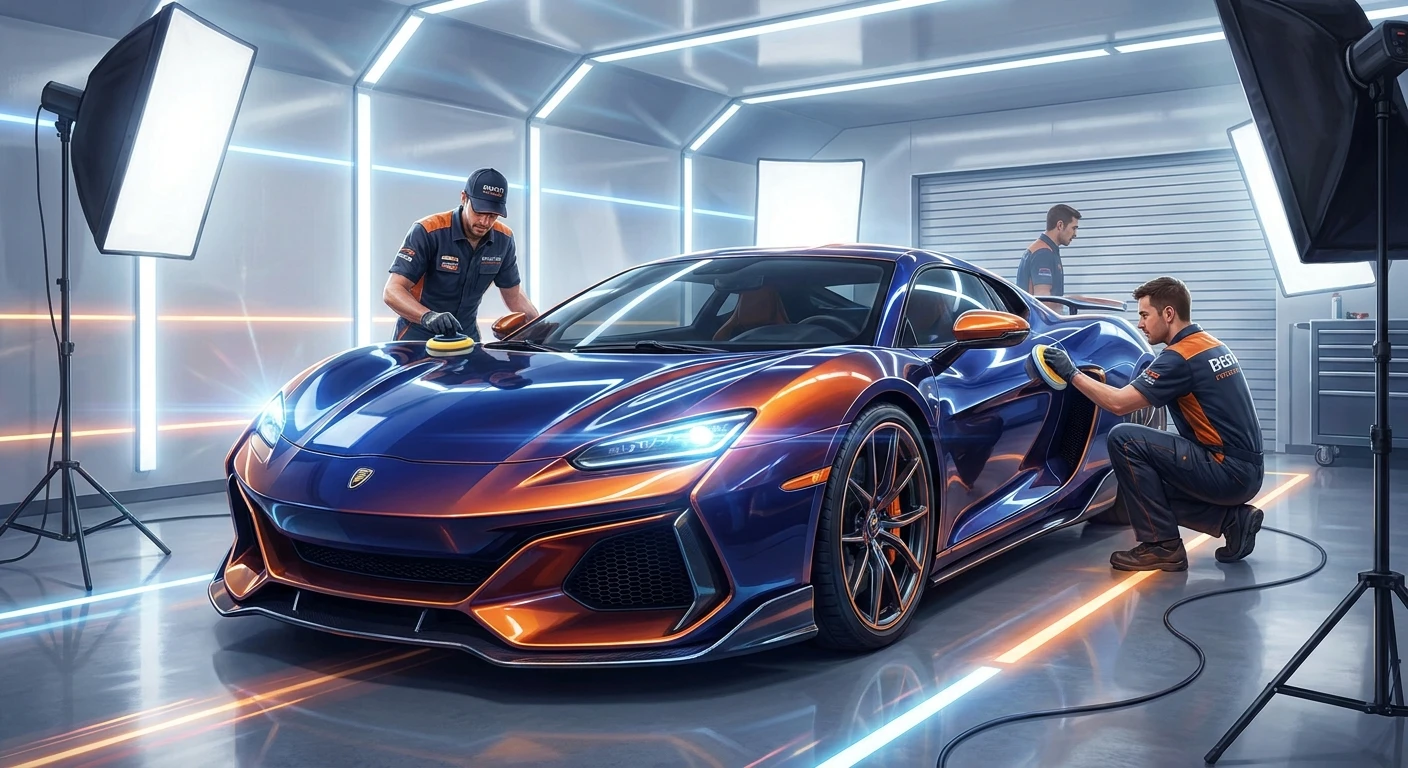
Ceramic Coating Car: The Ultimate Paint Protection Guide
Think of your vehicle’s factory paint like a delicate canvas. You absolutely would not leave a masterpiece exposed to harsh weather, right? Deciding on a ceramic coating car application is one of the smartest, most effective ways to lock in that flawless showroom shine while aggressively shielding the exterior from relentless environmental damage. Waxing every few weeks is a thing of the past. Today, vehicle enthusiasts and everyday drivers alike are shifting toward high-tech solutions to maintain their investments. A true nano-ceramic layer acts as a sacrificial second skin. It bonds directly with the porous clear coat of your vehicle, creating a semi-permanent barrier. This barrier actively repels water, dirt, road grime, and harmful ultraviolet rays. If you are tired of spending hours scrubbing stubborn bug splatter or bird droppings off your hood, this technology changes the entire maintenance game. The slickness of a coated surface means contaminants simply cannot gain a solid grip. You spend less time washing and more time enjoying a brilliantly glossy ride. We are going to break down exactly how this works, why it beats traditional sealants, and how you can achieve that flawless mirror finish step by step.
Why Choose a Ceramic Coating Over Wax?
Let us look closely at the core benefits. When you compare old-school carnauba wax to a liquid polymer ceramic resin, the differences are staggering. Traditional waxes sit softly on top of the paint and melt away under intense summer heat or heavy alkaline detergents. Ceramics harden and cure.
Read also: Reviewing the honda accord 2024 Features; The Ultimate kia seltos 2025 Guide; Honest honda crv 2024 Review: A True Daily Driver.
| Protection Type | Durability | Chemical Resistance |
|---|---|---|
| Carnauba Wax | 1 to 3 months | Very Low |
| Polymer Sealant | 6 to 12 months | Moderate |
| Nano-Ceramic Coating | 2 to 5+ years | Extremely High |
The value proposition here is massive, depending on how you use your vehicle. Consider these two prime examples. Example 1: The Daily Commuter. If you drive eighty miles a day on heavily trafficked highways, your bumper takes a beating from acidic bug guts, oily road spray, and harsh rain. A coated surface allows you to rinse all of that debris away with a standard pressure washer effortlessly, preserving the underlying clear coat. Example 2: The Weekend Show Vehicle. For a classic or heavily modified sports car that spends most of its time in a garage but needs to look absolutely blinding under car show lights, this technology amplifies the depth and clarity of the paint far beyond what a natural wax can achieve.
Here are the top three definitive advantages you get:
- Unrivaled Hydrophobic Properties: Water instantly beads up and rolls right off the panels, taking loose dirt along with it in a self-cleaning effect.
- Superior Chemical Defense: The hardened silica shell prevents highly acidic bird droppings and tree sap from etching right into your expensive factory paint job.
- Maximum UV Ray Deflection: Prolonged sun exposure causes painful oxidation and fading; a ceramic layer blocks these rays, keeping your color vibrant and rich for years.
Origins of Automotive Paint Protection
To fully appreciate where we are now, you have to look back at how paint protection started. In the late nineteenth and early twentieth centuries, coachbuilders literally used animal fats and natural waxes to protect carriage paint. By the time mass-produced automobiles rolled around, carnauba wax extracted from Brazilian palm trees became the gold standard. It provided a warm, rich glow that car enthusiasts loved, but it offered practically zero long-term durability. A hot summer afternoon or a single trip through an aggressive automatic car wash would completely strip the wax away, leaving the bare paint totally vulnerable to the elements.
The Evolution of Nano-Ceramics
As the detailing industry matured through the 1980s and 1990s, synthetic polymer sealants hit the market. These laboratory-created formulas extended protection from mere weeks to several months. However, the true breakthrough happened in the early 2000s. Scientists working in the aerospace and marine industries needed something far tougher than polymers to protect ship hulls from saltwater corrosion and aircraft exteriors from extreme atmospheric friction. They began experimenting with silicon dioxide (SiO2) and titanium dioxide (TiO2) nanoparticles. When these raw materials were formulated into a liquid suspension and applied to a solid substrate, they cured into a rigid, glass-like layer. Detailers soon realized this technology could be adapted for automotive clear coats.
The Modern State of Ceramic Coatings
Fast forward to the present day, and the market has exploded with specialized formulations. We now have distinct tiers of protection. Professional-grade coatings require strict environmental controls to apply but can last upwards of a decade. Consumer-grade versions are slightly more forgiving, allowing weekend warriors to apply them in a home garage. Recently, manufacturers have even started infusing graphene molecules into the silica matrix to reduce water spotting and increase tensile strength, pushing the boundaries of automotive surface science even further.
How Silicon Dioxide (SiO2) Actually Works
Let us get slightly technical for a moment, because understanding the chemistry helps you maintain the finish better. The primary active ingredient in almost all high-quality automotive coatings is Silicon Dioxide, commonly known as silica or quartz. In its raw form, this is the exact same chemical compound found in natural glass and quartz crystals. Chemists take these microscopic silica particles and suspend them in a unique blend of carrier solvents. When you wipe this liquid onto a car panel, the solvents begin to flash off and evaporate into the surrounding air. As the liquid dissipates, the remaining silica nanoparticles are left behind to form an incredibly tight, densely packed structural grid over the paint. Because these particles are measured on a nanometer scale, they are small enough to fill in the microscopic valleys, pores, and imperfections naturally present in all factory clear coats.
The Cross-Linking Covalent Bond Process
This is not just a physical layer sitting on the surface; a chemical reaction occurs. The silica undergoes a process called cross-linking, where it forms a permanent covalent bond with the vehicle’s paint. Once this bond cures, the coating cannot be washed away by harsh soaps or degreasers. It literally becomes a new, functional top layer of the exterior. The physics of this new surface are fascinating.
- High Water Contact Angles: A quality application creates a water contact angle exceeding 110 degrees, meaning water droplets maintain a tight spherical shape and roll off instantly rather than flattening out.
- 9H Hardness Rating: On the standardized pencil hardness test, these cured layers often achieve a 9H rating, providing a measurable buffer against micro-marring and wash-induced swirl marks.
- Sub-Micron Thickness: Despite its incredible strength, the fully cured layer is typically only 1 to 2 microns thick, roughly a fraction of the thickness of a single human hair.
Getting a flawless finish requires meticulous preparation. You cannot just slap the liquid onto dirty paint. Follow this comprehensive seven-step plan for a perfect application.
Step 1: Thorough Pre-Wash and Decontamination
Begin by completely stripping the vehicle of loose dirt. Use a high-pH strip soap in a foam cannon to break down any old waxes, grease, and road grime. Rinse the vehicle thoroughly with a pressure washer to ensure the surface is completely free of heavy debris before you even touch it with a wash mitt.
Step 2: Iron Removal and Clay Bar Treatment
Even after a heavy wash, embedded contaminants remain. Spray a dedicated iron remover across all painted panels to dissolve microscopic brake dust particles trapped in the clear coat. Follow this immediately with a synthetic clay bar or clay towel, using plenty of lubrication, to physically pull out any remaining tree sap, overspray, or industrial fallout.
Step 3: Paint Correction and Machine Polishing
This is the most critical phase. The coating will lock in whatever the paint currently looks like. Use a dual-action orbital polisher, an appropriate foam pad, and a quality compound to level the clear coat, permanently removing swirl marks, light scratches, and oxidation.
Step 4: Surface Prep and Panel Wipe
Polishing leaves behind oily residues that prevent proper bonding. Spray every single inch of the polished paint with a dedicated isopropyl alcohol panel wipe solution. Use fresh microfiber towels to wipe the surface completely bare, ensuring absolute chemical purity.
Step 5: Applying the Ceramic Resin
Wrap a suede applicator cloth around a foam block and apply several drops of the liquid. Working in small, two-by-two-foot sections, gently wipe the applicator across the paint in a tight cross-hatch pattern. Ensure completely even coverage without applying excessive pressure.
Step 6: Leveling and Buffing the Surface
Wait for the solvents to flash. You will see a slight rainbow effect or sweating on the surface, usually within one to three minutes depending on ambient temperature and humidity. Quickly take a clean microfiber towel to gently level the high spots, then use a second plush towel to buff the panel to a high-gloss streak-free shine.
Step 7: Curing Time and Final Inspection
The vehicle must remain completely dry and untouched in a climate-controlled garage for at least twenty-four hours. Avoid exposing the freshly coated paint to rain or chemical cleaners for a full seven days while the cross-linking bond reaches its maximum structural hardness.
There is a lot of misinformation floating around about what this technology can actually do. Let us clear up the most common misunderstandings right now.
Myth: It makes your exterior completely bulletproof against rock chips and deep key scratches.
Reality: While the silica layer adds a measurable degree of scratch resistance against light wash marring, it is completely incapable of stopping high-velocity flying rocks or intentional vandalism. For impact protection, you need Paint Protection Film.
Myth: You never have to wash your car again once it is applied.
Reality: Vehicles still get dirty. The primary benefit is that the dirt sits loosely on top of the slick surface, making your routine maintenance washes drastically faster, safer, and much easier.
Myth: A single application will last forever without any maintenance.
Reality: Nothing lasts forever. Even professional-grade applications slowly degrade over several years through environmental abrasion. You must maintain the finish with regular safe washes and occasional silica-based booster sprays to keep the hydrophobic properties alive.
How long does a typical application last?
Consumer kits usually provide protection for one to two years, while professional multi-layer installations can easily survive for five to nine years with proper care.
Can I apply the treatment myself at home?
Absolutely. If you have a clean garage, patience, and are willing to put in the grueling hours required for proper polishing and prep work, DIY kits are fantastic.
Does the liquid fix existing paint scratches?
No, it does not hide or fill deep scratches. You must physically correct the clear coat with a machine polisher before applying the liquid.
Is this technology actually better than traditional carnauba wax?
Yes, in nearly every measurable metric, including heat resistance, chemical durability, UV protection, and long-term hydrophobic performance.
What is the standard curing time?
Most formulas require at least twenty-four hours of strictly dry conditions, followed by seven to fourteen days without encountering chemical soaps or extreme weather.
Can I put regular wax over the cured surface?
You can, but you definitely should not. Wax masks the superior water-beading properties of the silica, ultimately attracting more dust and dirt to the surface.
How do I safely wash a coated vehicle?
Use the two-bucket wash method with grit guards, a plush microfiber wash mitt, and a pH-neutral automotive shampoo that contains zero added waxes or heavy degreasers.
Conclusion
Making the jump to a high-quality ceramic defense system is a brilliant move for anyone who genuinely cares about preserving their automotive investment. The initial effort or cost easily pays for itself by maintaining a flawless finish and protecting against harsh environmental elements year after year. Stop relying on outdated waxes that wash away in a week. Grab your detailing gear, prepare your paint, and give your ride the permanent protection it deserves today!

Leave a Reply