
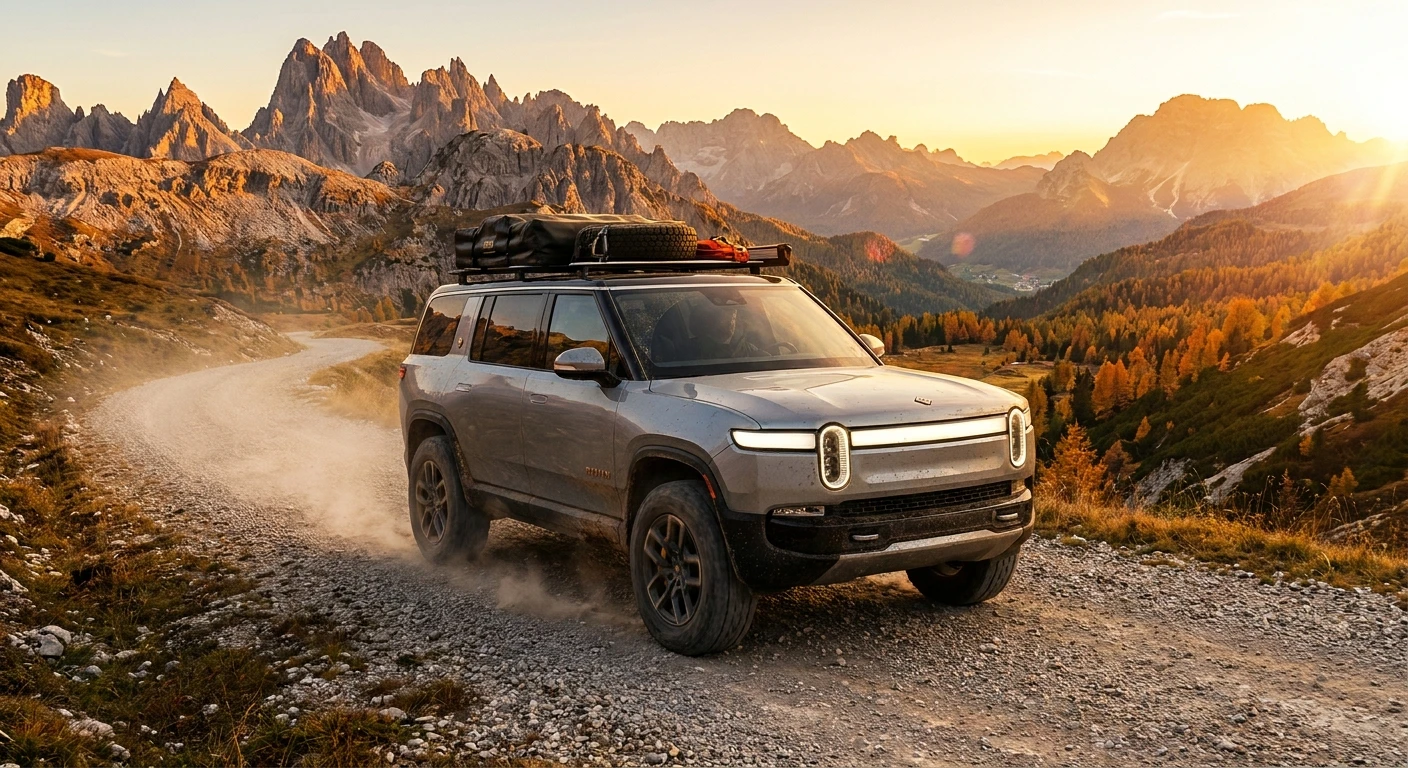
The Definitive Guide to the Honda Passport 2025
The Honda Passport 2025 continues to dominate the competitive landscape of midsize, two-row sport utility vehicles with its commanding presence and unshakeable reliability. Designed to sit perfectly between the compact CR-V and the three-row Pilot, this robust SUV caters to buyers who demand ample cargo space without the cumbersome footprint of a larger family hauler. By prioritizing utility, muscular V6 performance, and advanced standard safety features, this vehicle secures its spot as a premier choice for outdoor enthusiasts and daily commuters alike. The current iteration builds upon a proven formula, blending aggressive styling cues with functional aerodynamics to optimize both highway cruising efficiency and trail-ready ruggedness. Drivers searching for a vehicle that balances daily practicality with weekend overlanding capability will find a compelling proposition here.
Understanding the value of this midsize SUV requires looking beyond surface-level aesthetics. The automotive industry frequently shifts toward smaller, turbocharged four-cylinder engines and complex hybrid systems, yet this specific model retains a traditional naturally aspirated V6 powerplant. This engineering choice guarantees smooth, linear acceleration and a stout towing capacity that many rivals struggle to match. As we examine the detailed specifications, mechanical architecture, and trim variations, you will gain a comprehensive understanding of why this crossover remains highly sought after by discerning buyers seeking longevity and straightforward mechanical dependability.
Read also: Ford Escape 2019: The Complete Buyer’s Guide and Review; Why the Toyota RAV4 2024 Remains the Ultimate Compact SUV; Why You Need the 2024 honda pilot.
Core Benefits, Harm, and Practical Utility
Evaluating the practical utility of a modern midsize SUV involves weighing its everyday advantages against its inherent limitations. The primary benefit of selecting this rugged crossover is its exceptional interior volume. With over 50 cubic feet of cargo space available behind the second row—and more than 100 cubic feet when the rear seats are folded flat—it completely eclipses many direct competitors. This sheer volume translates directly to convenience, whether you are hauling camping gear, building materials, or sports equipment. Furthermore, the standard safety suite ensures that advanced driver-assistance systems are not locked behind expensive optional packages. On the downside, the lack of a hybrid powertrain option means that fuel economy figures fall slightly behind some of the more modern, electrified competitors in the segment, which could translate to higher long-term fuel costs for drivers with long daily commutes.
To contextualize the lineup, understanding the distinct trim levels is essential for prospective buyers. The manufacturer offers a streamlined approach, eliminating bare-bones base models in favor of highly equipped trims right from the starting gate. The table below outlines the primary configurations available to consumers:
| Trim Level | Key Standard Feature | Target Audience |
|---|---|---|
| EX-L | Leather-trimmed interior, Power tailgate | Everyday commuters seeking premium comfort |
| TrailSport | Off-road tuned suspension, All-terrain tires | Outdoor enthusiasts and weekend adventurers |
| Black Edition | Gloss black exterior accents, Premium audio | Buyers looking for aggressive, upscale aesthetics |
The value proposition of this vehicle becomes immediately clear when compared to alternatives like the Chevrolet Blazer or the Ford Edge. First, the resale value is historically exceptional; owners typically lose far less money to depreciation over a five-year ownership period compared to domestic alternatives. Second, the standard implementation of torque-vectoring all-wheel drive on most upper trims provides a distinct traction advantage in adverse weather conditions, whereas competitors often utilize a simpler, reactive slip-and-grip system.
Here are the top three definitive reasons buyers gravitate toward this midsize utility vehicle:
- Proven Powertrain Reliability: The naturally aspirated 3.5-liter V6 engine offers exceptional longevity, avoiding the complex maintenance issues sometimes associated with high-strung turbocharged engines.
- Class-Leading Interior Space: The clever packaging of the cabin ensures that adult passengers enjoy extensive legroom and headroom in both the front and rear seating rows.
- Advanced Traction Management: The sophisticated all-wheel-drive system actively shifts power not just from front to back, but from left to right across the rear axle, maximizing grip on slippery terrain.
Origins of the Passport Nameplate
The history of this iconic badge begins in the early 1990s, marking the Japanese automaker’s very first foray into the growing sport utility vehicle market in the United States. Rather than developing an entirely new platform from scratch, the company entered a strategic partnership with Isuzu. The original model was essentially a rebadged Isuzu Rodeo, built on a traditional body-on-frame truck chassis. This utilitarian approach provided excellent off-road durability and towing capabilities, establishing a rugged reputation that appealed to a generation of buyers transitioning away from station wagons. The partnership allowed the brand to quickly establish a foothold in a highly profitable segment while their own engineers quietly developed proprietary unibody crossovers for the future.
The Evolution into a Modern Crossover
After a lengthy hiatus, the nameplate was triumphantly resurrected for the 2019 model year. However, the mechanical philosophy had entirely shifted. Abandoning the heavy, truck-like body-on-frame architecture of the 1990s, the new iteration utilized the manufacturer’s Global Light Truck platform—a sophisticated unibody structure shared with the Pilot and the Ridgeline. This modern incarnation was intentionally designed as a shortened, two-row version of the larger three-row family hauler. By removing the third row, engineers drastically improved the departure angle, reduced the overall length for better maneuverability, and created a massive rear cargo hold. This strategic pivot allowed the vehicle to offer car-like ride quality and precise handling while maintaining a commanding driving position.
The Modern State of the Honda Passport 2025
Today, the vehicle stands as a refined, mature product that perfectly captures the current automotive zeitgeist favoring rugged, outdoor-oriented aesthetics. The Honda Passport 2025 capitalizes on the massive overlanding trend, specifically through its highly successful TrailSport trim. This modern state reflects a delicate balance; it offers the aggressive front fascia, skid plates, and roof rails expected by adventurous buyers, yet underneath it all, it retains the quiet cabin, smooth shifting transmission, and ergonomic excellence required for comfortable daily driving. It represents the culmination of decades of engineering refinement, offering a highly polished driving experience that honors its rugged roots.
Powertrain Dynamics and i-VTM4 All-Wheel Drive
The mechanical heartbeat of the vehicle is a triumph of traditional engineering. Rather than downsizing, the engineers retained a robust 3.5-liter naturally aspirated V6. The true technical marvel, however, is the Intelligent Variable Torque Management (i-VTM4) all-wheel-drive system. Unlike basic systems that brake a spinning wheel to simulate traction, i-VTM4 utilizes a pair of electro-hydraulically actuated clutch packs on the rear axle. Under normal driving conditions, the system operates primarily in front-wheel drive to conserve fuel. When slip is detected, or during aggressive cornering, the system can send up to 70 percent of engine torque to the rear axle. More impressively, it can direct 100 percent of that rear torque to either the left or right rear wheel exclusively. This mechanical torque vectoring actively pushes the vehicle through corners, significantly reducing understeer and providing unparalleled traction on snow, mud, or loose gravel.
Chassis Architecture and Suspension Tuning
Beneath the sheet metal, the unibody structure employs advanced high-strength steel to maximize torsional rigidity while keeping weight manageable. The front suspension utilizes a MacPherson strut design tailored for precise steering geometry, while the rear features a sophisticated multi-link setup that independently absorbs road imperfections. In the specialized off-road trims, the sway bars are uniquely tuned to allow for greater wheel articulation over uneven terrain without completely sacrificing highway stability.
- Engine Displacement: 3471 cc (3.5 liters) naturally aspirated V6.
- Peak Output: 280 horsepower at 6,000 RPM.
- Peak Torque: 262 lb-ft at 4,700 RPM.
- Transmission: 9-speed automatic featuring shift-by-wire technology and paddle shifters.
- Maximum Towing Capacity: 5,000 pounds when properly equipped with the factory towing package.
Day 1: Assessing Ergonomics and Initial Comfort
When embarking on an extended test drive or the first week of ownership, Day 1 should be entirely focused on the interior environment. Take the time to perfectly adjust the 10-way power driver’s seat and the tilt-and-telescopic steering column. Evaluate the placement of physical buttons for the climate control system—a welcome feature in an era dominated by distracting touchscreens. Pair your smartphone via Bluetooth to test the immediate audio clarity and familiarize yourself with the digital gauge cluster’s various informational menus.
Day 2: Urban Commuting and Parking Maneuverability
Use Day 2 to test the vehicle in dense city traffic. Despite its midsize classification, pay close attention to the outward visibility provided by the large greenhouse windows and elevated seating position. Test the turning radius in tight grocery store parking lots. Engage the multi-angle rearview camera and the parking sensors to see how intuitively the vehicle alerts you to curbs, shopping carts, and other urban obstacles during reverse maneuvers.
Day 3: Highway Cruising and NVH Levels
Take the vehicle out on the interstate to assess its Noise, Vibration, and Harshness (NVH) mitigation. At 70 miles per hour, listen for excessive wind noise around the large side mirrors or tire roar from the aggressive tread patterns. This is the optimal time to activate the standard adaptive cruise control and lane-keeping assist systems to evaluate how smoothly the electronics manage following distances and lane centering without bouncing the vehicle between highway lines.
Day 4: Cargo Loading and Utility Testing
Dedicate Day 4 to the vehicle’s primary selling point: utility. Open the power tailgate and experiment with the quick-release buttons that fold the second-row seats completely flat. Lift the cargo floor to discover the hidden storage compartments, which are perfect for securing muddy hiking boots or emergency equipment out of sight. Try loading bulky items like a bicycle or a large cooler to truly appreciate the width and height of the cargo aperture.
Day 5: Off-Road Trails and i-VTM4 Testing
If you have access to a legal dirt trail or a gravel road, Day 5 is the time to test the intelligent traction management system. Select the Mud, Sand, or Snow modes on the center console and observe how the throttle mapping and transmission shift points change. Feel the torque-vectoring rear differential working to maintain forward momentum as you navigate through loose surfaces or minor ruts, testing the suspension articulation.
Day 6: Infotainment and Connectivity Integration
Spend Day 6 diving deep into the technology suite. Ensure the wireless Apple CarPlay and Android Auto systems connect seamlessly upon startup without dropping the signal. Test the responsiveness of the central touchscreen, the clarity of the premium audio system, and the speed of the wireless charging pad. Evaluate how the native navigation system responds to voice commands while driving.
Day 7: Fuel Economy Review and Final Verdict
On the final day, calculate your real-world fuel consumption based on the varied driving conditions of the past week. Compare your findings against the EPA estimates. Review your notes regarding comfort, utility, and driving dynamics to determine if the blend of rugged capability and refined on-road manners perfectly aligns with your specific lifestyle needs and long-term ownership goals.
Myths vs. Reality
Myth: The Honda Passport 2025 is just a larger Pilot with the third row forcefully removed to save money.
Reality: While they share a foundational platform, this two-row SUV features completely unique suspension tuning, a shorter overall length, and better approach and departure angles specifically engineered to enhance agility and off-road capability.
Myth: Naturally aspirated V6 engines are entirely outdated and inefficient compared to modern turbocharged four-cylinders.
Reality: The J35 V6 engine offers immediate, lag-free throttle response, a robust towing capacity, and proven mechanical longevity that highly stressed turbocharged engines often struggle to match over a decade of ownership.
Myth: Unibody crossover SUVs are completely incapable of handling actual off-road trails.
Reality: Thanks to advanced electro-hydraulic torque vectoring and specialized off-road tuning on specific trims, this unibody vehicle can easily conquer steep, loose-surface inclines and moderate overlanding trails that would easily strand lesser all-wheel-drive systems.
Does the Honda Passport 2025 offer a hybrid powertrain?
No. Currently, the vehicle is offered exclusively with a 3.5-liter naturally aspirated V6 engine to prioritize towing capacity and mechanical simplicity over hybrid efficiency.
How many passengers can it comfortably seat?
The vehicle provides spacious seating for exactly five adults, offering excellent headroom and legroom in both the front bucket seats and the rear bench.
What is the maximum towing capacity?
When equipped with the manufacturer’s factory towing package and all-wheel drive, the maximum towing capacity reaches a highly competitive 5,000 pounds.
Is Apple CarPlay connectivity wireless?
Yes. The infotainment system supports wireless Apple CarPlay and Android Auto integration, allowing for seamless smartphone pairing without cable clutter.
Does the engine require premium fuel?
No. The 3.5-liter V6 is specifically tuned to run efficiently on standard regular unleaded 87-octane gasoline, helping owners save money at the pump.
How much ground clearance does the TrailSport trim provide?
The specialized off-road trim provides approximately 8.1 inches of ground clearance, enabling it to clear common trail obstacles and deep snow with ease.
What driver safety system comes standard?
Every single trim level comes standard with a comprehensive suite of advanced safety features, including collision mitigation braking, adaptive cruise control, and lane-keeping assist.
Are there physical buttons for the climate control?
Yes. The interior design retains physical knobs and tactile buttons for the dual-zone automatic climate control, prioritizing driver safety and ergonomic ease of use.
How much cargo space is available behind the rear seats?
You get an expansive 50.5 cubic feet of dedicated cargo volume directly behind the second row, making it one of the most practical vehicles in its class.
Is the all-wheel-drive system permanent?
The i-VTM4 system is fully automatic and proactive. It operates primarily in front-wheel drive for efficiency but instantly and seamlessly transfers power to the rear wheels the millisecond it detects slip or aggressive cornering.
In conclusion, the Honda Passport 2025 remains an incredibly versatile and mechanically robust choice for buyers who refuse to compromise on cargo space, V6 power, and all-weather capability. By blending proven engineering with modern technological conveniences, it stands ready to tackle both the daily commute and weekend adventures with total confidence. If you are in the market for a durable midsize SUV, take the next step and schedule a comprehensive test drive at your local dealership today!

Leave a Reply