
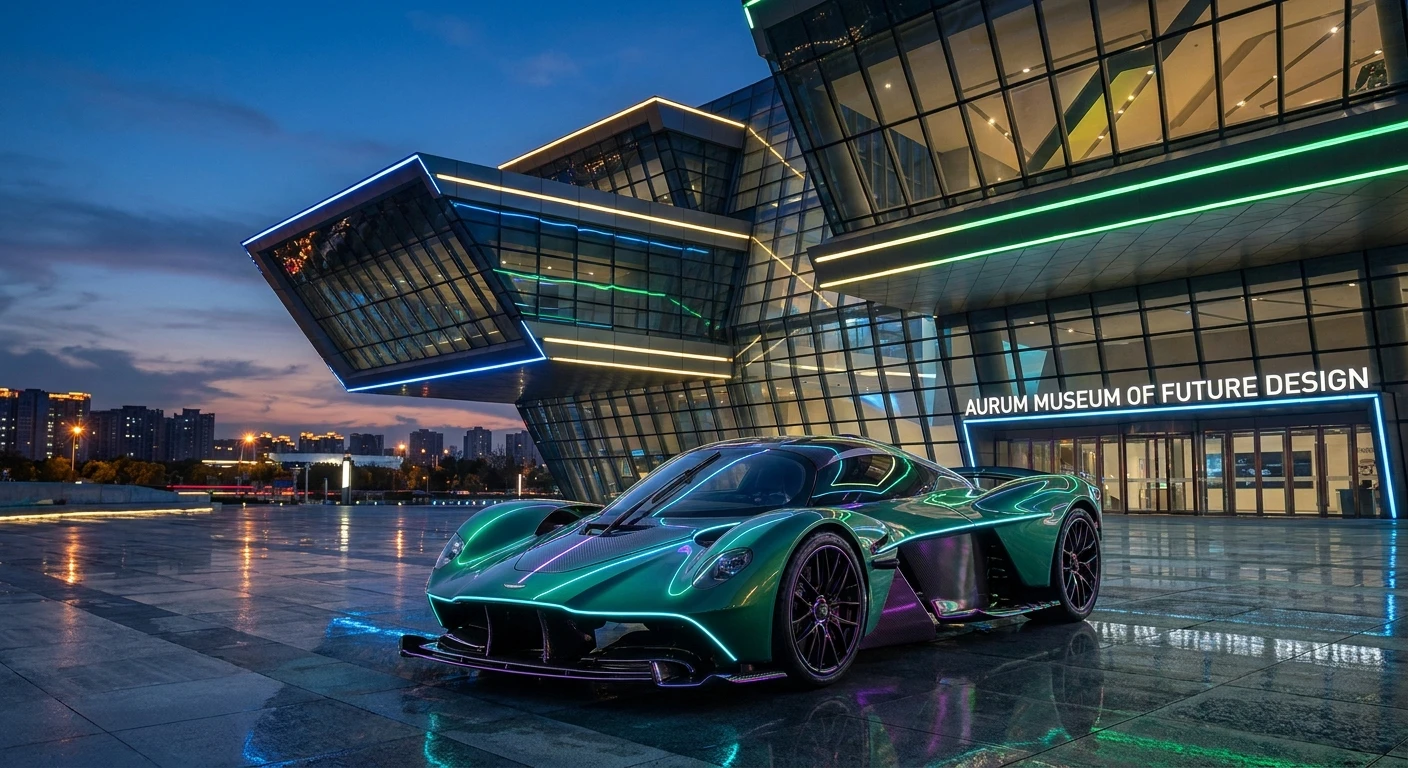
Aston Martin Valhalla Price Breakdown and Hypercar Evaluation
The Aston Martin Valhalla price reflects a paradigm shift in automotive engineering, merging aggressive track-focused aerodynamics with a sophisticated plug-in hybrid powertrain. When evaluating a machine of this caliber, the financial commitment extends far beyond the basic acquisition cost; it represents entry into an exclusive tier of automotive history. Designed to bridge the gap between grand touring luxury and pure track weaponry, the Valhalla stands as a testament to what happens when Formula 1 engineering meets road-legal constraints. Buyers seeking to secure one of these rare vehicles must navigate a landscape of bespoke customization, stringent allocations, and extraordinary engineering. The mid-engine architecture fundamentally redefines the brand’s traditional design language, offering a vehicle that is remarkably distinct from their iconic front-engine V12 grand tourers. This evolution requires a complete rethinking of chassis dynamics, weight distribution, and thermal management. By combining a ferocious internal combustion engine with advanced electric motors, the vehicle delivers instantaneous torque and a relentless power curve. Every carbon fiber weave, every aerodynamic channel, and every line of code governing the hybrid systems justifies the tremendous investment required to put this hypercar in your garage.
Understanding the Core Value Proposition
To fully comprehend the Aston Martin Valhalla price, one must dissect the components that elevate it from a traditional supercar to a genuine hypercar. At an estimated base cost of approximately $800,000, the vehicle commands a premium that demands justification through unparalleled performance metrics and exotic material usage. The value proposition becomes evident when you examine the integration of aerospace-grade technologies into a street-legal package.
Read also: Apollo Evo Price: Hypercar Market Cost & Specs; The BMW i8: A Plug-In Hybrid Supercar Revolution; Ferrari SF90 Price Guide and Market Breakdown.
| Engineering Component | Technical Specification | Hypercar Value Addition |
|---|---|---|
| Primary Powertrain | 4.0L Twin-Turbo V8 PHEV | Delivers 1,012 metric horsepower with instantaneous electric torque fill. |
| Structural Chassis | Bespoke Carbon Fiber Monocoque | Provides exceptional torsional rigidity while keeping total mass remarkably low. |
| Aerodynamic System | Active Front and Rear Elements | Generates 600kg of functional downforce at 149 mph without immense drag. |
Consider the value proposition through two distinct comparisons. First, when compared to the Ferrari SF90 XX Stradale, the Valhalla offers a much more exclusive production run, limiting total global availability to merely 999 units, which naturally protects long-term residual values. Second, when positioned against hypercars like the McLaren Speedtail, the Valhalla provides superior track-focused agility while still retaining plug-in hybrid utility for quiet urban maneuvering.
Here are three definitive reasons why the financial commitment is ultimately justified:
- Unmatched Powertrain Integration: The synergy between the high-revving, flat-plane crank V8 and the triple electric motor setup creates an entirely new sensation of acceleration, eliminating turbo lag entirely.
- Extreme Exclusivity and Resale Value: With production capped at 999 units globally, demand far outstrips supply, ensuring the vehicle remains a highly sought-after asset among elite collectors.
- Direct F1 Technology Transfer: From the pushrod front suspension geometry to the underbody Venturi tunnels, the car utilizes concepts developed directly alongside the Aston Martin Formula 1 team.
Origins of the Valhalla Concept
The lineage of this extraordinary machine traces back to the 2019 Geneva Motor Show, where it debuted under the codename AM-RB 003. Initially conceived as a direct collaboration with Red Bull Advanced Technologies, the project aimed to create a more accessible, usable counterpart to the extreme Valkyrie. The original vision was vastly different from the final product, primarily regarding the powertrain. Engineers initially planned to develop an entirely bespoke, in-house turbocharged V6 engine to serve as the heart of the hybrid system. This early concept generated massive excitement, promising lightweight packaging and a completely unique acoustic signature for the brand.
Evolution from Concept to Production
As the development cycle progressed, sweeping leadership changes within the company brought a critical reassessment of the engineering strategy. The bespoke V6 project proved excessively complicated and costly to bring to global emissions compliance. Consequently, the engineering team executed a brilliant pivot, securing a proven, violently powerful 4.0-liter twin-turbo V8 from Mercedes-AMG. However, this was not a simple engine swap. The block was heavily modified to include a flat-plane crankshaft, significantly altering its character, allowing it to rev higher and respond faster, perfectly suiting the hypercar application. The exterior design also matured, gaining functional aerodynamic refinement while retaining the dramatic aesthetic that initially captivated audiences.
The Modern State of the Hypercar Market
Today, the vehicle occupies a highly strategic position within the hypercar echelon. It sits comfortably below the multi-million dollar realm of the Valkyrie and the Mercedes-AMG ONE, yet it offers performance capabilities that rival those flagship models. This places it in direct competition with vehicles that define the current era of electrification in high-performance driving. It serves as a crucial bridge, familiarizing the traditional internal combustion enthusiast with the undeniable performance benefits of electric assistance, proving that hybridization can enhance driver engagement rather than mute it.
F1-Inspired Aerodynamics
The aerodynamic philosophy governing the vehicle is entirely dictated by the pursuit of managing airflow to maximize traction without compromising straight-line speed. Unlike older track cars that relied on massive, fixed rear wings that generated enormous drag, this vehicle utilizes the air flowing underneath the chassis. Immense Venturi tunnels sculpted into the carbon fiber floor act as a vacuum, sucking the car onto the tarmac. The active aerodynamics system continuously adjusts the front splitter and the dual-element rear wing in milliseconds, constantly optimizing the balance between low drag for acceleration and high downforce for cornering stability. The absence of traditional side mirrors, replaced by aerodynamic camera pods, further cleans the airflow traveling along the flanks.
The Flat-Plane Crank V8 Hybrid Powertrain
At the core of the mechanical layout is a masterpiece of modern hybrid engineering. The transition to a flat-plane crankshaft alters the firing order of the V8, resulting in better exhaust scavenging and a dramatic, motorsport-derived exhaust note. This internal combustion engine drives the rear wheels, while the sophisticated electrical architecture manages the rest of the dynamic envelope. Two electric motors are mounted on the front axle, providing true torque vectoring to pull the nose through corners with unnatural precision. A third electric motor is integrated directly into the transmission, supplying torque during gear changes to ensure relentless, unbroken acceleration.
- The combined system output reaches a staggering 1,012 metric horsepower.
- The 400-volt battery architecture allows for ultra-fast energy deployment and recuperation under heavy braking.
- The vehicle features no mechanical reverse gear; the electric motors simply spin backward to reverse the car, saving crucial transmission weight.
- The carbon fiber passenger tub provides exceptional rigidity, contributing to a targeted dry weight of less than 1,550 kilograms.
Step 1: Submitting an Expression of Interest
Acquiring a vehicle in this echelon is not a traditional retail experience. The process begins by submitting a formal expression of interest through an authorized dealership. Due to the limited 999-unit production run, dealerships carefully vet potential clients, prioritizing established collectors who have a documented history with the brand’s flagship models.
Step 2: Financial Pre-Qualification
Once the initial interest is registered, clients must demonstrate the financial capacity to accommodate the Aston Martin Valhalla price. This involves placing a substantial initial deposit, which acts as a placeholder while the factory assesses the global demand and begins mapping out regional allocations.
Step 3: Dealership Allocation Confirmation
Dealerships are granted a highly restricted number of build slots based on their historical sales volume and market size. Securing an allocation means the factory has officially reserved one of the 999 chassis numbers specifically for you, moving the process from theoretical interest to a confirmed future build.
Step 4: Exploring Q by Aston Martin Customization
The most engaging phase of the journey involves the Q by Aston Martin bespoke division. Clients are invited to tailor every conceivable detail of their hypercar. This ranges from formulating a one-off exterior paint color to selecting the specific weave pattern of the exposed carbon fiber and choosing bespoke materials for the minimalist interior cabin.
Step 5: Finalizing the Build Configuration
After exhaustively exploring all customization options, the client locks in the final specification. This step is critical, as it finalizes the exact Aston Martin Valhalla price for their specific vehicle, incorporating all the premium bespoke touches, personalized aerodynamic packages, and unique interior appointments.
Step 6: Securing the Production Slot
With the specification locked, a secondary, much larger deposit is required to cement the vehicle’s place on the assembly line. This financial commitment triggers the procurement of the specific materials required for the bespoke build, ensuring all components are ready when the chassis enters the pristine manufacturing facility.
Step 7: Delivery and Handover Experience
The culmination of the process is a highly orchestrated handover event. Clients can choose to take delivery at their local dealership or opt for a factory handover in the UK. The presentation is accompanied by a detailed technical briefing, ensuring the owner understands how to safely extract the maximum performance from their new hybrid hypercar.
Debunking Common Misconceptions
Myth: The vehicle relies entirely on an electric powertrain for its performance.
Reality: It utilizes a highly sophisticated plug-in hybrid system that features a roaring twin-turbo V8 engine alongside its electric motors, prioritizing visceral internal combustion engagement enhanced by electric torque.
Myth: Anyone willing to pay the Aston Martin Valhalla price can buy one immediately.
Reality: Production is strictly capped at 999 units worldwide, and allocations are carefully distributed to established, pre-approved clients first, making it incredibly difficult to acquire even with sufficient funds.
Myth: The car uses the originally announced in-house V6 engine from the concept phase.
Reality: Engineering directions shifted during development, and the final production model utilizes a heavily modified, flat-plane crank 4.0-liter V8 sourced from Mercedes-AMG for ultimate reliability and power delivery.
Myth: It is strictly a track-only vehicle with no road-legal application.
Reality: While it boasts F1-derived technology and immense track capabilities, it is fully homologated for road use, featuring a compliant suspension mode and a purely electric driving mode for quiet neighborhood departures.
Frequently Asked Questions
What is the exact Aston Martin Valhalla price?
The base price is estimated to start around $800,000, though extensive customization through the Q bespoke division can easily push the final cost closer to the $1 million mark depending on the specific materials and finishes chosen.
How many units will be produced globally?
Production is strictly limited to 999 units worldwide, ensuring exceptional exclusivity and protecting the vehicle’s long-term status as a highly collectible automotive asset.
What engine powers the vehicle?
It is powered by a mid-mounted 4.0-liter twin-turbocharged V8 engine featuring a flat-plane crankshaft, which is seamlessly integrated with a triad of high-performance electric motors.
Is the vehicle fully street legal?
Yes, despite its extreme aerodynamic profile and massive power output, the vehicle is fully homologated for street use and includes necessary safety and emissions equipment for global markets.
How fast can it accelerate from zero to sixty?
Thanks to the instant torque provided by the electric motors and the immense grip from the aerodynamic downforce, the sprint to 60 mph is expected to take approximately 2.5 seconds.
Can I drive it in pure electric mode?
Yes, the plug-in hybrid architecture allows for a purely electric driving mode, offering a limited emission-free range ideal for navigating city centers or quietly leaving residential areas.
How does it differ from the Valkyrie?
While the Valkyrie is an uncompromising, extreme track vehicle that demands significant physical effort to drive, this model is designed to be much more accessible, comfortable, and usable on standard public roads while still delivering astonishing performance.
The Aston Martin Valhalla price is a reflection of an uncompromising pursuit of automotive perfection. By blending the raw emotional appeal of a flat-plane V8 with the instantaneous, brutal efficiency of modern electric motors, the vehicle offers a driving experience unlike anything else on the road. For the fortunate 999 individuals who secure an allocation, the investment yields a rolling masterpiece of Formula 1 technology. If you are captivated by the intersection of luxury and extreme performance, contact your local authorized dealership immediately to inquire about remaining allocation possibilities before the production run is entirely finalized.

Leave a Reply