
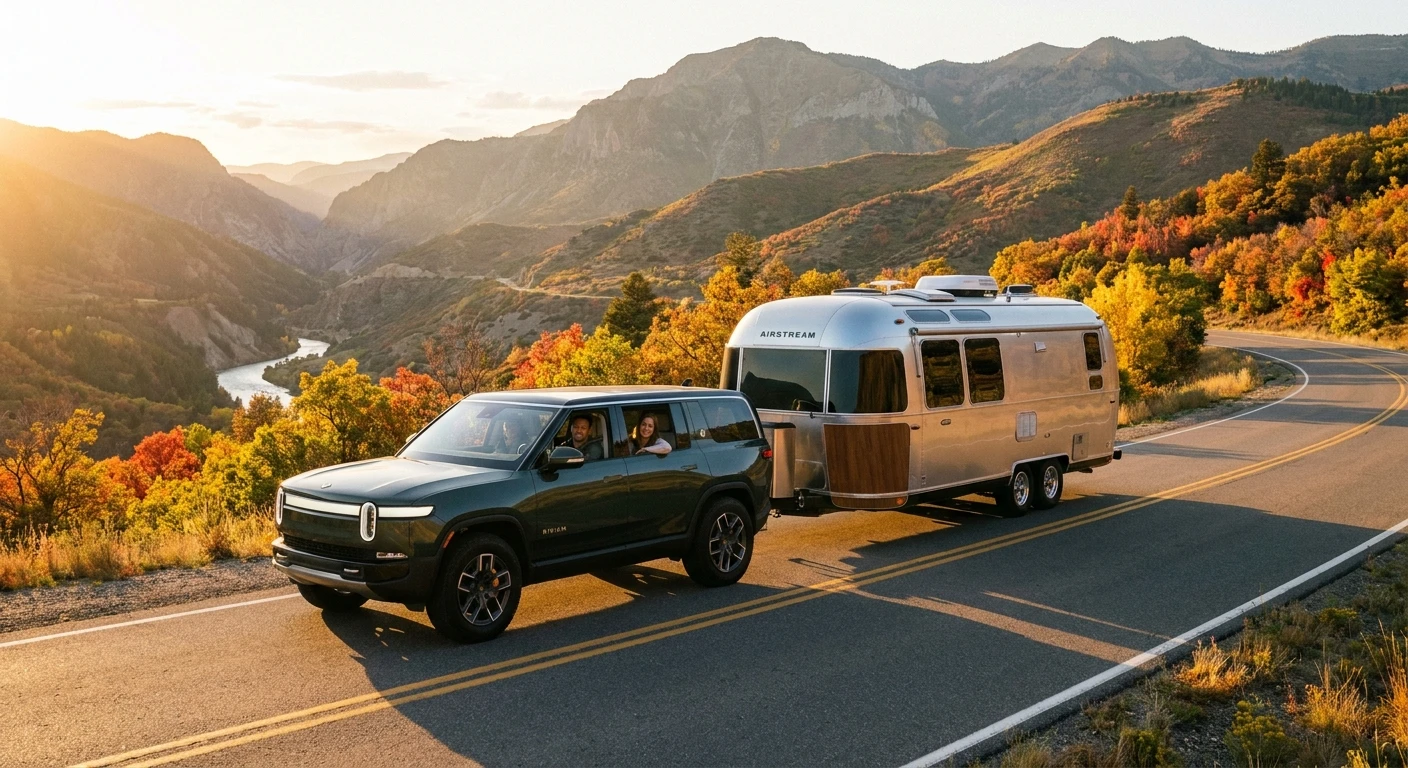
Choosing the Best SUV for Towing
When you are looking for the best SUV for towing, you need a highly capable machine that balances heavy-duty pulling power with everyday passenger comfort. Hauling a massive travel trailer, a heavy boat, or a loaded horse box is a serious mechanical task that stresses every single component of a vehicle. You cannot just pick the largest vehicle on the dealer lot and assume it will handle ten thousand pounds with ease. You need specific hardware: robust transmission coolers, highly rigid chassis structures, powerful braking systems, and suspension components engineered to prevent rear-end sag. Finding that perfect balance requires understanding exact payload capacities, torque curves, and the specific geometry of the wheelbase. Too many buyers make the mistake of looking only at horsepower numbers, completely ignoring the fact that pulling heavy loads is entirely about torque and stability. Your chosen rig must act as a stable anchor, resisting the lateral forces created by crosswinds and passing semi-trucks. The right utility vehicle transforms a stressful, white-knuckle driving experience into a smooth, confident journey, keeping your passengers safe and your expensive gear completely secure on the highway.
Understanding the core components of these powerful vehicles helps you make the right purchasing decision. You need a setup that will not overheat on a steep mountain grade while pulling maximum weight. The true value of a dedicated towing setup lies in its integrated engineering. For example, vehicles like the Jeep Wagoneer or the Ford Expedition come equipped from the factory with heavy-duty cooling fans, upgraded radiators, and reinforced hitch receivers bolted directly to the frame. These integrated systems work seamlessly together, providing far more safety than aftermarket add-ons.
Read also: Complete Guide to Hybrid Trucks: Power and Efficiency Specs; Ultimate 7 seater suv canada Guide; The Ultimate Guide to the 2022 Toyota Tundra.
| SUV Model | Max Towing Capacity | Engine Type |
|---|---|---|
| Jeep Wagoneer | 10,000 lbs | Twin-Turbo Inline 6 |
| Ford Expedition | 9,300 lbs | Twin-Turbo V6 |
| Chevrolet Tahoe | 8,400 lbs | V8 |
To really grasp what makes a specific model superior, you have to look at the structural foundation. A great trailering vehicle requires specific architectural choices from the manufacturer. Here are the most critical elements you need to evaluate before signing any paperwork:
- Body-on-Frame Construction: Unlike lighter crossovers built like cars, heavy-duty utility vehicles use a truck-like ladder frame. This provides the immense structural rigidity needed to handle the massive tongue weight of a heavy trailer without bending or flexing.
- High Torque Output at Low RPMs: Getting a heavy load moving from a dead stop requires massive twisting force from the engine. Engines that deliver peak torque at low engine speeds prevent the transmission from constantly hunting for gears on the highway.
- Advanced Trailering Packages: Factory towing packages include essential upgrades like larger brake rotors, specialized suspension tuning, trailer brake controllers, and enhanced alternator outputs to run trailer electronics.
The Origins of Utility Vehicles
The concept of a multi-passenger vehicle capable of performing serious work traces its roots back to the 1930s. The introduction of the Chevrolet Suburban Carryall in 1935 marked a major shift in automotive design. Early iterations were essentially commercial truck chassis fitted with a wagon body, designed specifically for moving work crews and their heavy equipment across rugged terrain. These early models lacked any modern comforts, functioning strictly as utilitarian workhorses with rigid leaf springs and low-geared manual transmissions designed for absolute pulling power rather than speed. They set the foundational architecture—mounting a large passenger cabin onto a rigid truck frame—that remains the gold standard for heavy towing today.
The Evolution of Towing Capacities
During the 1980s and 1990s, consumer preferences shifted dramatically. Families began abandoning station wagons and minivans in favor of larger utility vehicles, demanding both passenger comfort and the ability to haul recreational gear. Manufacturers responded by taking heavy-duty truck platforms and refining their suspensions. We saw the introduction of larger V8 engines specifically tuned for sustained pulling, alongside the first primitive versions of electronic overdrive transmissions. As travel trailers and boats grew larger and heavier, automakers engaged in a massive engineering arms race. The structural reinforcement of hitch receivers and the integration of specialized transmission coolers became standard operating procedure for any full-size utility vehicle rolling off the assembly line.
The Modern State of Towing SUVs
Today, the engineering behind these vehicles has reached an incredible level of sophistication. We have moved far beyond simple raw power. Modern hauling vehicles utilize high-strength steel alloys, active air suspension systems that automatically level the rear end under heavy loads, and sophisticated traction management algorithms. Today’s models can pull upwards of 10,000 pounds while providing a whisper-quiet, luxurious ride for seven passengers. The integration of technology has fundamentally changed the safety equation, with cameras providing multiple angles of the hitch and blind spots, ensuring that even novice drivers can navigate busy highways with a massive load attached to their rear bumper.
The Physics of Payload and Torque
Moving thousands of pounds of dead weight requires overcoming immense physical forces. Inertia, aerodynamic drag, and rolling resistance all fight against your vehicle. Torque is the rotational force that actually gets the mass moving, multiplying through the transmission gears and the rear differential to apply force where the rubber meets the road. Thermodynamics also plays a massive role. When you pull a heavy load, the transmission fluid temperatures skyrocket due to the increased friction inside the torque converter. Without adequate cooling, that fluid breaks down rapidly, leading to catastrophic mechanical failure. Wheelbase geometry dictates stability; a longer distance between the front and rear axles creates a longer lever arm to resist the lateral pushing forces generated by a swaying trailer.
Advanced Trailering Technology
The electronic systems managing these mechanical forces operate hundreds of times per second. Modern vehicles utilize a network of sensors to monitor steering angle, wheel speed, and lateral acceleration to keep the setup stable.
- Electronic Trailer Sway Control: This system detects the microscopic beginnings of trailer sway and automatically applies asymmetrical braking to specific wheels of the vehicle to pull the setup back into a straight line.
- Integrated Brake Controllers: These devices communicate directly with the vehicle’s hydraulic braking system, applying the electric trailer brakes smoothly and proportionately to the vehicle’s pedal pressure.
- Active Suspension Leveling: Air springs automatically inflate to compensate for heavy tongue weight, keeping the vehicle’s headlights aimed correctly and maintaining proper weight distribution over the front steering tires.
- Blind Spot Extension: Radar sensors can be calibrated to account for the length of the trailer, alerting the driver if a vehicle is hiding in the extended blind spot during lane changes.
Step 1: Calculate Gross Combined Weight Rating
Before you ever hook up a trailer, you must verify the numbers. The Gross Combined Weight Rating (GCWR) is the absolute maximum allowable weight of the fully loaded vehicle and the fully loaded trailer combined. You have to account for the weight of your passengers, fuel, cargo inside the cabin, the trailer itself, and everything packed inside the trailer. Exceeding this number guarantees mechanical stress and creates extreme safety hazards on the road.
Step 2: Install the Right Hitch Class
Not all hitches can handle the same stress. For heavy hauling, you absolutely need a Class IV or Class V hitch receiver bolted directly to the frame. Check the stamped metal plate on the hitch receiver to verify its exact weight limits. Never use a bumper-mounted ball for anything other than extremely light utility trailers.
Step 3: Connect the Wiring Harness
Your trailer needs power for brake lights, turn signals, and electronic brakes. Plug the 7-way connector securely into the bumper receptacle. Ensure the locking tab engages fully so the plug does not vibrate loose over rough pavement. Check every single light function before moving the vehicle.
Step 4: Calibrate the Brake Controller
If you are pulling anything over 3,000 pounds, you need active trailer brakes. Navigate to your vehicle’s towing menu and adjust the brake controller gain. You want the trailer to tug slightly when you apply the brakes, ensuring the trailer is doing its own stopping rather than violently pushing the rear of your vehicle.
Step 5: Adjust Tire Pressure for Heavy Loads
Heavy tongue weight compresses the rear tires, creating excess heat and increasing the risk of a blowout. Check your owner’s manual for the specific hauling tire pressure recommendations. Usually, you need to inflate the rear tires closer to their maximum cold pressure rating to handle the added load securely.
Step 6: Test the Weight Distribution System
For incredibly heavy loads, a standard hitch is not enough. A weight distribution hitch uses spring bars to lever the weight off the rear axle and push it forward onto the front wheels. Measure the height of your front fender before and after hooking up. The height should remain nearly identical if the spring bars are tensioned correctly.
Step 7: Perform a Low-Speed Trial Run
Never hit the highway immediately. Take the setup to an empty parking lot or a quiet side street. Practice sweeping wide turns to understand the tracking path of the trailer tires. Apply the manual override on the brake controller to ensure the trailer brakes are engaging correctly. Listen closely for any binding, popping, or unusual metal-on-metal sounds.
Myth: All-Wheel Drive is all you need for towing heavy loads.
Reality: While All-Wheel Drive provides excellent traction on slippery boat ramps or wet grass, towing safely requires robust chassis strength, upgraded suspension, and massive transmission cooling. AWD alone does not increase how much weight a vehicle can safely handle.
Myth: Higher horsepower guarantees better hauling performance.
Reality: Horsepower dictates top speed, but torque gets heavy loads moving from a dead stop. A vehicle with lower horsepower but massive low-end torque will always pull a heavy trailer much more comfortably than a high-horsepower sports motor.
Myth: Any midsize crossover can safely pull a large boat.
Reality: Midsize crossovers usually feature unibody construction and short wheelbases. Pulling a long, heavy boat with a short wheelbase creates severe instability. The trailer acts as a lever against the rear axle, causing dangerous sway at highway speeds.
What is the best SUV for towing a travel trailer?
Vehicles built on dedicated truck frames like the Jeep Wagoneer, Ford Expedition, and Chevrolet Tahoe consistently rank at the top due to their immense structural rigidity, high payload capacities, and factory-integrated heavy-duty cooling systems.
Do I need a V8 engine to tow?
Not necessarily. Modern twin-turbocharged V6 engines, like Ford’s EcoBoost or Jeep’s Hurricane inline-six, generate massive amounts of low-end torque that actually rival or beat traditional naturally aspirated V8 engines in pulling performance.
What is trailer sway control?
It is an electronic stability system that uses the vehicle’s yaw sensors to detect when the trailer begins swinging side to side. The system automatically applies individual wheel brakes on the vehicle to correct the motion and pull the setup straight.
Can hybrid SUVs tow heavy loads?
Some specific hybrid models can pull moderate weights, but most lack the heavy-duty transmission cooling required for maximum loads. However, heavy-duty hybrid setups like the Toyota Sequoia use their electric motors to provide instant torque, making them highly capable haulers.
Is a weight distribution hitch necessary?
If your trailer weighs more than 50% of your vehicle’s weight, or if the tongue weight causes the rear suspension to sag significantly, a weight distribution hitch is absolutely essential to restore steering control and braking balance to the front axle.
How does towing affect fuel economy?
Pulling a massive square box through the air destroys aerodynamics and requires immense fuel to overcome drag. You can expect your standard fuel economy to drop by half when pulling a large travel trailer at highway speeds.
Should I turn off overdrive when towing?
Yes, especially in hilly terrain. Locking out the highest overdrive gears prevents the transmission from constantly shifting back and forth to maintain speed. This reduces extreme heat buildup inside the transmission, protecting the mechanical components from premature failure.
Securing the right heavy-duty rig changes everything about the hauling experience. You stop worrying about every crosswind and steep hill, and start actually enjoying the journey to your destination. Evaluate your payload requirements, check the exact factory configurations, and always prioritize factory-installed cooling packages over raw horsepower. Ready to upgrade your hauling capabilities? Check out our complete reviews of the latest heavy-duty models and find the exact setup that fits your lifestyle today.

Leave a Reply