
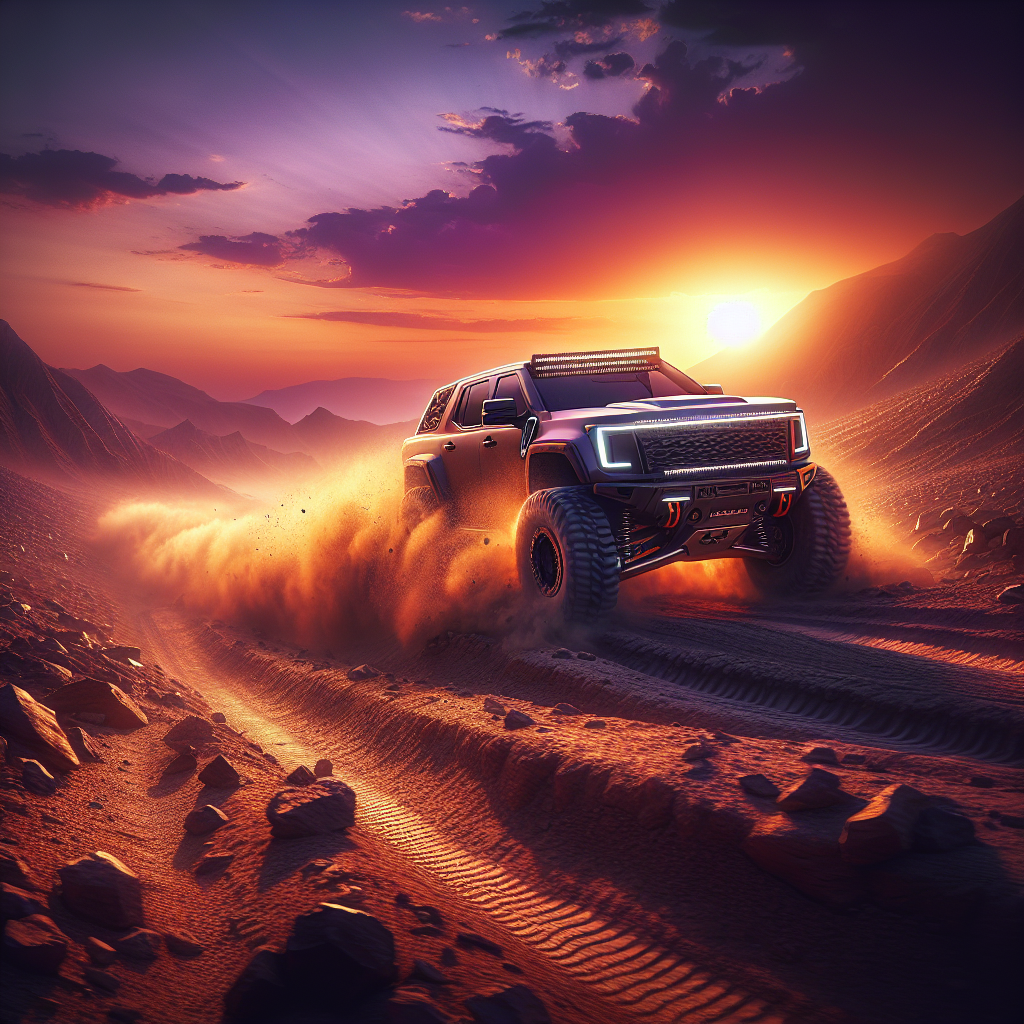
The Bronco Raptor Experience: Conquering the Impossible
Have you ever stared at a steep, jagged, rock-strewn path and thought to yourself, “Yeah, I can drive straight over that”? If you are currently eyeing a bronco raptor, the answer to that question is an absolute, definitive yes. This machine is far more than just a means of transportation; it is a loud, aggressive statement of absolute terrain dominance. Let me share a quick personal story to put this into perspective. A few years back, I took a heavily modified standard 4×4 up into the Carpathian Mountains here in Ukraine, specifically aiming for the treacherous, steep logging trails near Mount Hoverla. It rained relentlessly for three straight days. The dirt trails turned into thick, slick clay, and we got hopelessly stuck in deep ruts for six grueling hours. The entire time, as we stood knee-deep in freezing mud, shivering and winching ourselves out inch by inch, I kept fantasizing about the sheer necessity of factory-built extreme capability. With its massive ground clearance and wildly aggressive stance, that exact same mountain pass would have been nothing more than a casual afternoon drive for this Ford beast.
The sheer engineering packed into this specific vehicle means you aren’t just surviving the wilderness—you are conquering it. Whether you are navigating urban jungles fraught with massive potholes or literal forests, the raw, unfiltered capability of this truck is staggering. We aren’t just talking about a mild suspension lift and some flashy stickers; we are talking about a fundamental shift in how you interact with the outdoors. It begs you to find the hardest route possible and laugh as you glide over it. Let us break down exactly what makes this extreme off-roader tick, why the engineering justifies the price tag, and how you can push it to its absolute limits without breaking a sweat.
Breaking Down the Bronco Raptor’s DNA
What actually separates the Bronco Raptor from a standard off-road SUV? It comes down to a hyper-focused design philosophy centered around high-speed desert running and aggressive rock crawling. You get an ultra-wide stance, a heavily reinforced high-strength steel frame, and suspension that literally feels like it was stolen from a Baja 1000 race truck. This is an extensive total overhaul of the vehicle’s geometry. The value proposition here is incredibly simple: you are buying a factory-ready race truck with a full manufacturer warranty. Think about the alternative route most enthusiasts take. You buy a base model vehicle, spend tens of thousands of dollars on aftermarket lift kits, heavy-duty axles, custom tuning, massive wheels, and massive tires. After all that time and money, you still end up voiding your powertrain warranty, and the aftermarket parts rarely communicate perfectly with the factory computer systems.
With this factory beast, you get the absolute peace of mind knowing that Ford Performance engineers specifically designed every single bolt, weld, and line of code to handle severe abuse. For instance, the suspension system absorbs violent impacts that would simply snap a lesser truck’s axles in half. Another prime example is the fully boxed frame, which features upgraded shock towers specifically designed to handle the massive torsional stress of launching the heavy vehicle into the air and landing it safely.
Let’s look at the hard numbers and compare the beast against standard configurations:
| Vehicle Model | Ground Clearance | Horsepower | Suspension Type |
|---|---|---|---|
| Bronco Raptor | 13.1 inches | 418 hp | HOSS 4.0 Fox Semi-Active |
| Standard Bronco (Sasquatch) | 11.5 inches | 330 hp | Bilstein Position-Sensitive |
| Base Bronco | 8.3 inches | 300 hp | Standard Independent |
| Typical Competitor SUV | 10.8 inches | 285 hp | Solid Axle |
To truly master this exceptionally capable vehicle, you need to deeply understand three core pillars of its operation:
- Understand the Terrain Management: The specialized GOAT (Goes Over Any Type of Terrain) modes alter throttle response mapping, steering wheel resistance, and automatic transmission shift points. You must use them proactively depending on the surface you are driving on.
- Master the Sway Bar Disconnect: When engaging in serious rock crawling, electronically disconnecting the front sway bar allows for maximum independent wheel articulation, keeping your tires planted on the rocks rather than floating in the air.
- Respect the Physical Dimensions: It is massive. Spatial awareness is critical on tight, narrow woodland trails to avoid severe body and paint damage on trees and rock walls.
The Evolution of Off-Road Dominance
The Humble Origins
To truly appreciate the engineering marvel we have parked in our driveways right now, we need to look back at the historical roots of both the Raptor nameplate and the legendary Bronco lineage. The original Ford Bronco launched way back in 1966 as a dedicated ORV (Off-Road Vehicle). It was intended to directly compete with the classic Jeeps of the era. It was a utilitarian, blocky, and incredibly tough little truck that farmers, explorers, and racers quickly fell in love with. Fast forward several decades to the SVT F-150 in 2010, and the manufacturer essentially invented the factory street-legal trophy truck segment. The core concept was completely wild at the time: sell a full-size truck to the general public that could safely jump sand dunes right off the showroom floor.
Evolution of the Species
For many years, the off-road enthusiast community practically begged for a marriage between the tight agility of a short-wheelbase SUV and the ridiculous, high-flying suspension travel of a desert race truck. The manufacturer finally listened, but the internal development process was exceptionally grueling. Engineers pushed early test prototypes through brutal testing regimens in the notorious Johnson Valley and the scorching, unforgiving deserts of Baja California. They realized quickly that they could not just bolt on bigger shocks. They ripped off the standard suspension geometry and started from absolute scratch. This evolution required widening the vehicle’s track by over eight full inches, which in turn demanded completely new, aggressive body panels. Those massive, imposing fender flares aren’t just for looking cool; they are strictly legally required by federal laws to cover the colossal, heavy 37-inch all-terrain tires.
The Modern State
Now, as we navigate through 2026, the entire automotive off-road landscape has shifted dramatically. With electrification and hybrid powertrains heavily entering the utility market, this gas-powered twin-turbo V6 leviathan feels like a glorious, mechanical tribute to the golden age of internal combustion. We are witnessing a peak era of pure mechanical off-road prowess. The 2026 iterations have refined the interior digital tech, improved the massive infotainment screens, and tweaked the cabin comfort, but the mechanical soul of the machine remains perfectly pure, unapologetic, and aggressively capable.
The Physics of Flying Dirt
High-Performance Off-Road Stability Suspension (HOSS)
Let’s get into the hard science of why the Bronco Raptor doesn’t just fall apart into a thousand pieces when you hit a sharp boulder at 50 miles per hour. The secret magic lies in the Live Valve technology housed within the massive Fox 3.1 internal bypass semi-active dampers. These are not your grandfather’s shock absorbers. These shocks read the terrain beneath you hundreds of times every single second. They utilize a network of high-speed sensors mounted directly on the suspension arms and the vehicle body to detect if the wheels are suddenly airborne. If the computer senses that you have caught air, the system instantly stiffens the shocks to their absolute maximum damping force before the heavy tires even touch the ground again. This prevents the heavy frame from violently bottoming out. This is a brilliant application of fluid dynamics and extreme processing power working together to effectively cheat physics.
Torsional Rigidity and Power Transfer
When any standard SUV articulates heavily over uneven rocks, the entire chassis acts like a giant, twisting spring. If the metal frame isn’t stiff enough to handle this, it twists excessively, causing doors to jam shut and suspension geometry to fail under load. To combat this physical limitation, severe structural reinforcements were welded to the B-pillar and C-pillar crossbars. Under the hood, the twin-turbo 3.0-liter EcoBoost V6 engine forcibly shoves compressed air into the combustion chambers, generating a massive 418 horsepower. But raw engine power is entirely useless without traction to the ground. The heavy-duty front and rear electronic locking differentials ensure that if even one single wheel has grip on a rock, 100% of the rotational force is sent directly to it.
- Suspension Travel: A staggering 13.0 inches of travel in the front, and 14.0 inches of travel in the rear, allowing for insane articulation.
- Approach Angle: 47.2 degrees, allowing you to drive straight up near-vertical walls without smashing the front bumper.
- Departure Angle: 40.5 degrees, meaning the rear exhaust and bumper won’t violently scrape the earth when coming down steep inclines.
- Water Fording: Fully capable of crossing rushing rivers up to 37 inches deep thanks to elevated engine air intakes and heavily sealed electrical systems.
The 7-Day Ultimate Trail Expedition Plan
If you own this specific off-roader, you simply cannot let it sit idle in a suburban driveway. It is a crime against engineering. You need a structured, progressive plan to unleash its true potential safely. Here is a definitive 7-day expedition plan to aggressively push your driving skills and the machine to the absolute limit.
Day 1: System Calibration and Urban Escape
Start your journey by familiarizing yourself with every single interior toggle switch. Engage the active exhaust modes—switch from the neighbor-friendly Quiet mode to the loud Baja mode just to feel the difference in your chest. Pack your heavy recovery gear, portable air compressor, and emergency survival kits. Hit the highway and observe how surprisingly civil and comfortable it rides on the pavement despite rolling on enormous, aggressive rubber.
Day 2: The Gravel Highway
Find long, winding, unpaved gravel routes. Engage the 4A (4WD Auto) setting on the dial. Practice feeling the rear end slip slightly through corners and correct itself seamlessly. The ultra-wide stance gives incredible high-speed cornering stability. Keep your speeds reasonable but start trusting the advanced suspension to completely soak up the violent washboard ruts.
Day 3: Deep Mud and Ruts
Time to find some wet, horribly sloppy terrain. Switch the dial mode directly to Mud/Ruts. The onboard computer instantly adjusts the traction control parameters to allow just enough wheel spin to physically clear the thick mud from the tire treads. Momentum is your best friend here. Steer smoothly, “saw” the wheel slightly left and right to find grip, and keep a very steady throttle application.
Day 4: High-Speed Desert Running
If you have access to open desert plains or massive sand dunes, this is the vehicle’s natural, intended habitat. Manually drop your tire pressure down to around 20 PSI to increase your footprint. Switch to the aggressive Baja Mode. The turbo anti-lag system actively keeps the turbos spooling even when you briefly lift your foot off the throttle pedal, providing instant, violent boost when you press the gas again.
Day 5: Introduction to Rock Crawling
Shift the transfer case into 4-Low. Find a heavily rocky trail. Engage Rock Crawl mode. Electronically disconnect the front sway bar using the dashboard hero button. Practice utilizing the one-pedal drive feature, which automatically applies the brakes the moment you lift off the gas, allowing for millimeter-precise movements over massive boulders without slipping backward.
Day 6: The Extreme Summit
Combine absolutely everything you have learned over the week. Tackle a difficult trail that features deep water crossings, steep, terrifying inclines, and loose shale rock. Rely heavily on the advanced 360-degree camera system to place your front tires perfectly on the safest path without needing an outside spotter. Trust your front and rear lockers to pull you over the edge.
Day 7: Maintenance and Reflection
The great adventure ends with meticulous care. Re-inflate your large tires using your portable compressor, power-wash the undercarriage thoroughly to prevent long-term rust, and carefully inspect the heavy steel bash plates for deep scratches or damage. Take a moment to reflect on the sheer capability of what you and the machine just accomplished together.
Busting Common Off-Road Misconceptions
Myth: It is just a cosmetic appearance package with bigger tires bolted on.
Reality: This is absolutely false. The entire steel frame, suspension geometry, heavy-duty axles, and high-output powertrain are entirely distinct from the base models. It is a completely re-engineered vehicle from the ground up.
Myth: You simply cannot daily drive something this ridiculously wide.
Reality: While it is exceptionally wide (measuring over 85 inches across), the modern array of high-definition cameras, sensitive blind-spot monitoring systems, and a surprisingly compliant, soft on-road suspension make it entirely manageable for daily grocery runs, provided you find a large enough parking spot at the store.
Myth: The fuel economy is somewhat reasonable if you drive carefully.
Reality: Let us be brutally honest here; pushing a heavy, boxy, incredibly wide vehicle with massive 37-inch tires and a twin-turbo V6 engine means you will see poor fuel efficiency. Expect to see numbers in the low teens. You buy this truck for smiles per gallon, absolutely not miles per gallon.
Myth: It is literally unstoppable and cannot ever get stuck.
Reality: Unforgiving physics still applies. If you high-center the heavy vehicle on a massive boulder or sink it into deep, bottomless swamp mud, even 37-inch tires will not save you. Driver skill, proper tire pressure, and good judgment are still the ultimate deciding factors on the trail.
Quick Answers for Future Owners (FAQ)
How much horsepower does the Bronco Raptor actually have?
It packs a massive 418 horsepower and 440 lb-ft of torque generated from its heavily tuned twin-turbo 3.0-liter EcoBoost V6 engine.
Can I fit it inside a standard residential garage?
It is an incredibly tight squeeze. The sheer width is the main issue. Measure your specific garage door opening very carefully; you typically need at least a standard double door or a uniquely wide single door to clear the massive fenders.
What is the maximum towing capacity?
It can safely tow up to 4,500 pounds, which is a full 1,000 pounds more than the standard version, largely thanks to the heavily reinforced steel frame and upgraded cooling systems.
Does the hard roof actually come off?
Yes, the modular composite hardtop can be removed in multiple lightweight sections for a complete, thrilling open-air driving experience on sunny days.
Is it truly better than the F-150 equivalent?
They serve slightly different off-road purposes. The larger truck is better for pure, high-speed desert running and hauling gear, while the shorter wheelbase of this SUV makes it far superior for navigating tight, winding forest trails and technical rock crawling.
How often do the complex Fox shocks need rebuilding?
For regular daily pavement driving, they will last tens of thousands of miles without issue. If you frequently jump the vehicle high into the air or competitively race it, consult a suspension specialist for much shorter, necessary rebuild intervals.
What is the true electronic top speed?
It is strictly electronically limited by the computer to 111 mph, primarily due to the specific speed safety rating and the massive, flexible sidewalls of the heavy 37-inch off-road tires.
Does it require premium fuel?
While it can technically run on regular octane, to achieve the advertised 418 horsepower and keep the twin turbos operating at maximum safe efficiency, premium high-octane fuel is highly recommended by the manufacturer.
Final Thoughts
Getting behind the wheel and driving this extreme machine is an adrenaline-fueled experience unlike any other currently on the market. It perfectly blends the raw, visceral, loud thrill of high-speed motorsport with the usable practicality of a mid-size SUV. If you are finally ready to stop merely looking at difficult trails and start absolutely dominating them, the bronco raptor is patiently waiting for you. Get behind the steering wheel, hit the dirt, trust the incredible engineering, and never look back!

Leave a Reply