
What Makes the Kia Sorento 2022 Stand Out?
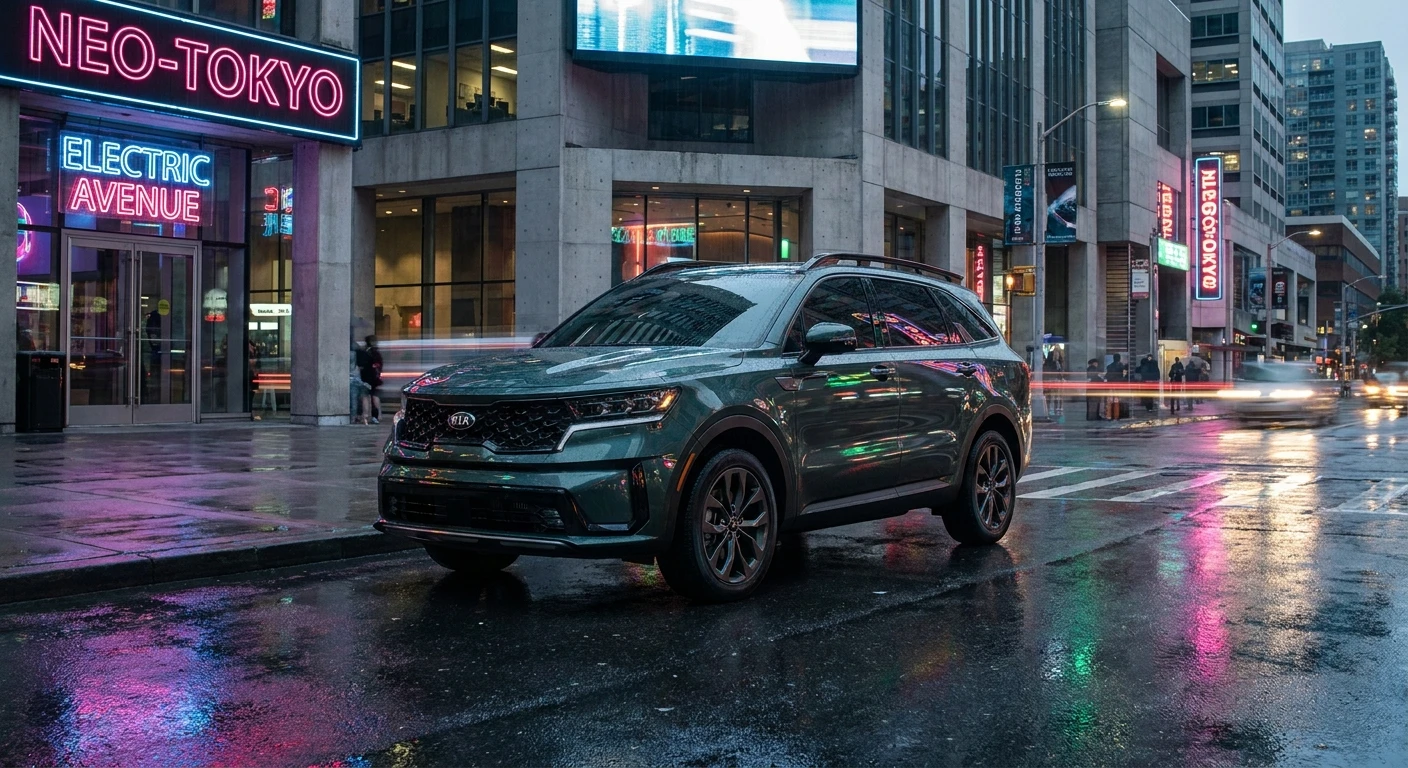
When you look at the midsize crossover market, the Kia Sorento 2022 immediately catches your eye as a compelling option that bridges the gap between compact efficiency and three-row practicality. It is not just another utility vehicle on the road; it represents a sweet spot for active families and daily commuters who need flexible space but do not want to pilot a massive land yacht through narrow city streets. The fundamental thesis here is simple: this specific model manages to pack premium interior technology, wildly diverse powertrain options, and an aggressive, head-turning styling aesthetic into a surprisingly accessible package. Whether you are running mundane daily errands, commuting across town in heavy traffic, or packing up the kids and the dog for a weekend getaway, this SUV aims to handle it all without breaking a sweat. It brings an immense amount to the table, from robust, standard safety suites to incredibly advanced, intuitive infotainment options. The vehicle design language speaks to a bolder, more rugged aesthetic, firmly stepping away from the softer, bubbly curves of its earlier predecessors. You get sharp character lines, a distinctive, commanding front grille, and an overall athletic stance that demands attention in any parking lot. By striking a careful, calculated balance between high-end utility, premium cabin comfort, and bold aesthetics, this iteration holds its ground effortlessly against heavy hitters in a highly competitive segment.
Understanding the actual value proposition of the vehicle means looking directly at what it offers in terms of everyday utility, long-term ownership, and pure driving dynamics. You have an SUV that provides a highly adaptable interior layout, making it incredibly versatile for both passenger transport and heavy-duty cargo hauling. The defining benefit here is the sheer variety of trim levels and powertrains available to the consumer. You can opt for a standard naturally aspirated engine for basic commuting, step up to a punchy turbocharged option for spirited highway driving, or go completely green with the highly efficient hybrid and plug-in hybrid variants. For instance, a family prioritizing fuel economy can easily choose the hybrid model to maximize their driving range between fill-ups, while someone looking for a bit more passing power might gravitate toward the robust turbocharged 2.5-liter engine. This flexibility ensures that there is a specific configuration tailored exactly to your lifestyle.
Read also: 2022 Mitsubishi Outlander: Complete Specs & Features Guide; Why the kia sportage 2023 Still Dominates; Why the kia carnival 2022 Rules.
| Trim Level | Engine Type | Key Feature Highlight |
|---|---|---|
| LX Base Model | 2.5L 4-Cylinder | 8-inch Touchscreen Display with Wireless Smartphone Integration |
| EX Mid-Tier | 2.5L Turbocharged 4-Cylinder | Premium SynTex Seating Materials & Smart Power Liftgate |
| SX Prestige Luxury | 2.5L Turbocharged 4-Cylinder | Blind-Spot View Monitor & 12.3-inch Digital Instrument Cluster |
The interior packaging and daily usability stand out as another massive benefit. While the third row is definitely tailored more for children or short trips rather than cross-country adult transport, having that extra seating capacity on demand is an absolute lifesaver for unexpected carpools. The cabin materials feel robust yet refined, proving you do not need a luxury badge to get a luxury feel.
- Unmatched Powertrain Variety: Choose between traditional internal combustion engines, a highly efficient hybrid system, or a plug-in hybrid depending entirely on your daily driving habits and home charging accessibility.
- Premium Interior Feel: Higher trims offer premium materials, open-pore wood accents, and soft-touch finishes that easily rival European luxury brands, giving you a quiet, comfortable, and highly upscale cabin experience.
- Advanced Driver Assistance: Standard and available safety tech, such as forward collision avoidance, blind-spot monitoring, and highway driving assist, provides serious peace of mind on hectic commutes.
The Origins of the Lineage
The nameplate did not start as the sleek, road-focused crossover you see on the streets today. Back in 2003, the very first generation debuted as a traditional, heavy body-on-frame SUV. It was highly rugged, built primarily for light off-roading, and carried a completely different mechanical identity. It functioned as a tough, truck-based utility vehicle intended to directly compete with the dominant domestic mainstays of that era. Buyers loved its towing capacity and durability, but the heavy chassis meant it drove much like a pickup truck, prioritizing raw toughness over smooth cornering or fuel efficiency.
Evolution to Unibody Construction
A massive, paradigm-shifting change occurred with the launch of the second generation in 2011. The manufacturer strategically moved away from the heavy body-on-frame architecture to a lighter, more car-like unibody construction. This mechanical change revolutionized the ride quality, vastly improved fuel efficiency, and created a much more spacious, passenger-friendly cabin. The engineering focus shifted permanently from off-road rock crawling to on-road comfort and safety, aligning perfectly with the changing demands of suburban families who desperately wanted SUV styling and space without suffering the harsh, truck-like ride penalties at the gas pump.
The Modern State of the Midsize Contender
Today, the current iteration sits comfortably in its highly refined fourth generation. The design language has fully matured, adopting a sharp, aggressive, and highly stylized exterior that turns heads. The modern state of the vehicle heavily emphasizes high-end digital technology, comprehensive safety networks, and electrified powertrains. It essentially redefined its own identity over two decades, proving beyond a doubt that a reliable family hauler can look tough and sophisticated while still delivering excellent aerodynamic efficiency and daily practicality. The long progression from a rugged, utilitarian box to a highly advanced, multi-powertrain crossover perfectly mirrors the evolution of the global automotive consumer market itself.
Engine Thermal Efficiency and Turbocharging
To truly understand the performance mechanics, you need to look at exactly how these modern powertrains operate under the hood. The highly popular turbocharged 2.5-liter engine utilizes advanced thermal management systems to maximize both fuel efficiency and power output. Turbocharging forces significantly more compressed air into the engine combustion chamber, which essentially allows the engine to burn more fuel efficiently and generate drastically higher torque at much lower RPMs. This means when you step on the gas pedal to merge onto a busy freeway, the mechanical response is immediate and incredibly robust, entirely bypassing the sluggish, lazy acceleration often found in heavy utility vehicles. Dual continuously variable valve timing (CVVT) dynamically optimizes the exact opening and closing of the intake and exhaust valves, ensuring the engine breathes perfectly across all engine speeds, reducing emissions and maximizing power delivery.
Hybrid Synergy and Battery Architecture
The electrified hybrid powertrain adds an entirely different, fascinating layer of technical complexity to the platform. It brilliantly pairs a smaller, highly efficient 1.6-liter turbocharged gasoline engine with a powerful permanent magnet synchronous electric motor. This dual-motive system is driven by a compact, high-density lithium-ion polymer battery pack that is strategically placed beneath the cabin floor to preserve precious rear cargo space and lower the vehicle’s overall center of gravity.
- Lithium-Ion Polymer Chemistry: This advanced battery design delivers a much higher energy density than older, heavier nickel-metal hydride batteries, resulting in lighter overall weight and far better long-term charge retention.
- Regenerative Braking Mechanics: The electric motor actively acts as a generator whenever you lift your foot off the throttle or press the brake pedal, capturing lost kinetic energy and instantly converting it back into usable electrical energy to recharge the battery pack on the fly.
- Seamless Power Transition: A highly specialized internal clutch seamlessly dictates the engagement of the electric motor and the traditional gas engine, allowing the vehicle to run quietly on pure electricity at low city speeds and smoothly blend both power sources together during heavy, demanding acceleration.
Day 1: Exploring the Infotainment System
Spend your very first day simply getting comfortable with the massive, high-resolution touchscreen interface. Sit in your driveway, pair your smartphone via the Bluetooth menu, set up Apple CarPlay or Android Auto, and take the time to customize the home screen widgets. Ensuring your most-used navigation and audio apps are always front and center will make your daily driving experience significantly more enjoyable.
Day 2: Dialing in the Perfect Driving Position
Take the necessary time to meticulously adjust the multi-way power seats. Save your preferred, exact settings using the electronic memory seat function if your specific trim includes it. Ensure your side and rearview mirrors are perfectly aligned to minimize blind spots, taking full advantage of the highly ergonomic, driver-centric cabin layout. Proper posture reduces fatigue on long trips.
Day 3: Testing the Advanced Driver Assistance
Hit the local highway to safely test out the adaptive cruise control and the lane-keeping assist functionalities. Feel exactly how the digital system gently nudges the steering wheel to keep you centered in the lane and automatically maintains a safe, pre-set following distance from the car ahead, drastically reducing your mental fatigue on long, monotonous drives.
Day 4: Experimenting with Drive Modes
Toggle through the different selectable drive modes available on the center console dial. Notice how engaging ‘Sport’ visibly sharpens the throttle response and holds the transmission gears much longer for better acceleration, while ‘Eco’ significantly softens the pedal inputs to maximize your overall fuel economy during relaxed, steady-state cruising.
Day 5: Configuring the Cargo Space
Familiarize yourself entirely with the physical folding mechanism of the second and third rows. Practice dropping the seats completely flat to understand exactly how much maximum cargo volume you have available for upcoming trips to the hardware store, hauling sports equipment, or packing bulky weekend camping gear.
Day 6: Utilizing the Connected Mobile App
Download the official companion application directly onto your smartphone. Set up the digital features like remote engine start, remote door lock/unlock, and climate control cabin presets so the interior is perfectly cooled in the summer or heated in the winter before you even step outside your front door.
Day 7: Planning a Weekend Getaway
Put all your new knowledge together for a real-world test. Pack the rear cargo area efficiently, dial in your destination on the integrated navigation, set your drive mode to Comfort, and enjoy the incredibly smooth, quiet ride that your newly mastered crossover confidently delivers on an extended road trip.
It is remarkably easy to find rampant misinformation online about midsize, three-row vehicles. Let us clear up some of the most common misconceptions directly.
Myth: The third row is spacious enough for full-sized adults on long, cross-country road trips.
Reality: The third row is strictly engineered and designed for small children or very short, emergency trips for average-sized adults. It is a fantastic, versatile pinch-hitter for extra seating, but it is definitely not a full-size minivan substitute.
Myth: Hybrid models inherently lack the necessary horsepower for safe, aggressive highway passing.
Reality: The hybrid specifically pairs a punchy turbocharged engine with an instant-torque electric motor, generating a high combined torque output that provides surprisingly quick, confident acceleration right when you demand it.
Myth: You absolutely need to purchase the highest, most expensive top trim to get good safety features.
Reality: Even the entry-level base models come incredibly generously equipped with crucial, life-saving active safety features like forward collision warning, automatic emergency braking, and lane departure assist straight from the factory.
Myth: Dual-clutch transmissions in these SUVs are jerky and difficult to drive smoothly in traffic.
Reality: The modern wet dual-clutch transmission used in the turbocharged models has been meticulously tuned for smooth, rapid shifts, providing excellent drivability without the harshness associated with older performance car gearboxes.
What is the overall fuel economy like?
Depending precisely on the chosen powertrain, you can easily expect anywhere from mid-20s combined miles per gallon in the standard gas models to an impressive high-30s mpg in the highly efficient hybrid versions, saving you significant money over time.
Does it have all-wheel drive capabilities?
Yes, an advanced, torque-vectoring all-wheel drive system is widely available across most of the trim levels, providing vastly better traction, stability, and driver confidence in adverse weather conditions like heavy rain or snow.
How much weight can it actually tow?
When properly equipped with the powerful turbocharged engine and the factory tow package, it can safely tow up to 3,500 pounds, which is more than enough capability for hauling a small boat, a utility trailer, or a pop-up camper.
Is the main infotainment system user-friendly?
Absolutely. The digital menus are highly intuitive, the glass screen is extremely responsive to touch inputs, and physical, tactile buttons fortunately remain for all your crucial climate control and audio volume adjustments.
What exactly is the factory warranty coverage?
It famously features an industry-leading 10-year/100,000-mile powertrain warranty, alongside a 5-year/60,000-mile basic warranty, offering tremendous long-term financial peace of mind for original owners.
Does it offer Apple CarPlay and Android Auto?
Yes, both major smartphone integration systems are absolutely standard across the entire vehicle lineup, with wireless connectivity surprisingly available on the lower-tier trims equipped with the 8-inch screen.
Are second-row captain’s chairs available?
Yes, the higher, more luxurious trims automatically replace the standard second-row bench seat with highly comfortable, individual captain’s chairs. This slightly reduces total seating capacity to six but massively increases passenger comfort and third-row access.
How does it handle off-road driving?
While the X-Line trims offer an extra inch of ground clearance and an upgraded all-wheel-drive system with a dedicated snow mode, it is primarily designed for dirt roads and snowy conditions rather than heavy, hardcore rock crawling.
The Kia Sorento 2022 remains a remarkably well-rounded, highly compelling package for absolutely anyone needing flexible passenger seating, cutting-edge modern tech, and striking, aggressive exterior design. It balances everyday daily drivability with immense family-friendly utility seamlessly. If you are currently in the market for a highly capable, stylish new crossover, you should absolutely schedule a comprehensive test drive at your local dealership to experience all of these fantastic features firsthand!

Leave a Reply