
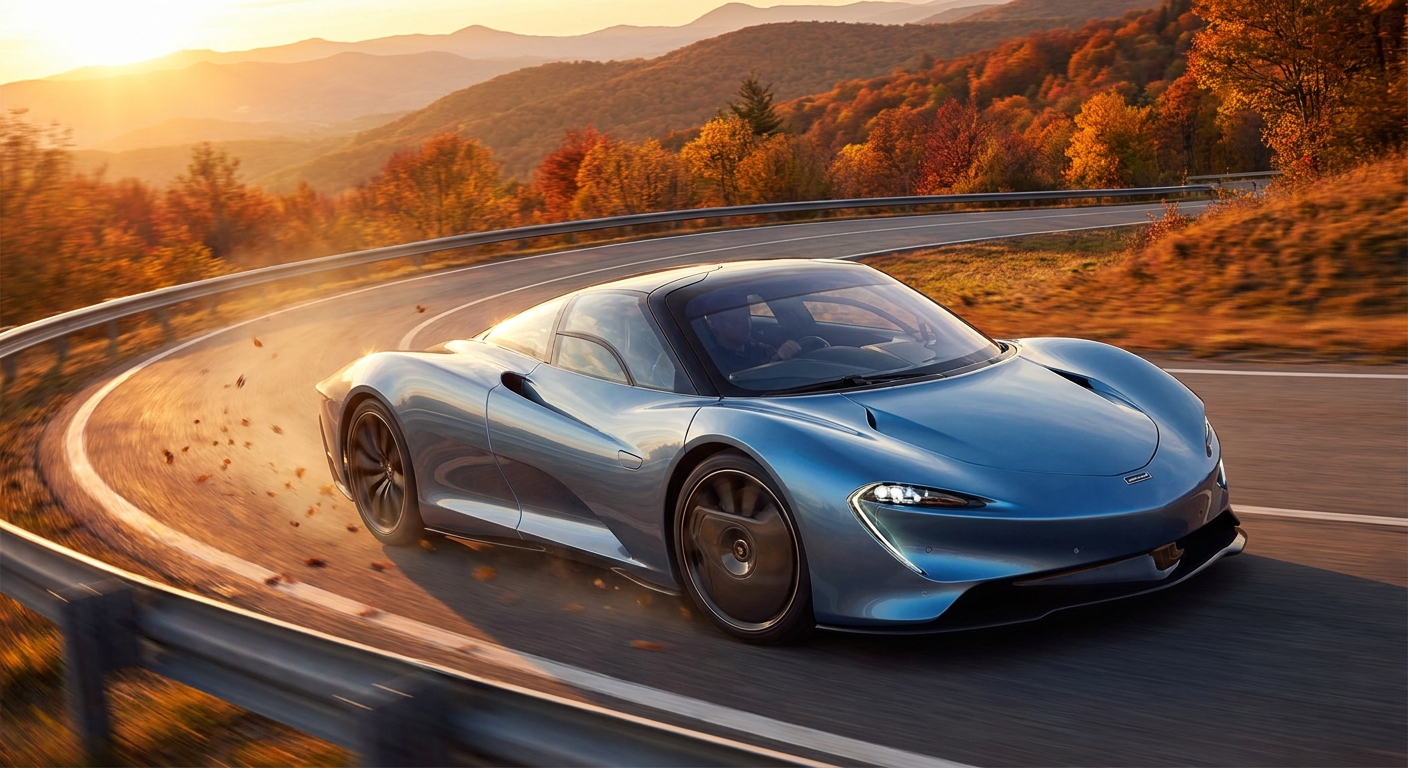
Why the lotus emira is the Ultimate Driver’s Car
Did you know the lotus emira completely changes what we expect from a daily-drive sports car? Hey guys, I have to be completely honest with you. Getting behind the wheel of a pure, unadulterated sports car is a rare treat these days. Most modern performance vehicles feel a bit numb, relying heavily on electronic safety nets and artificial steering feel. But this machine? It entirely rewrites the script. Last month, I took one on a massive road trip from Kyiv straight through to the winding roads of the Carpathian Mountains. If you know those roads, you know they are utterly unforgiving—full of unpredictable elevation changes, tight hairpin corners, and rough patches that will test any vehicle’s suspension.
I wanted to see if a mid-engine beauty could handle the grit of real-world Ukrainian terrain while still delivering that iconic driving thrill. The verdict? It absolutely crushed it. I spent hours navigating steep inclines, relying solely on that gorgeous tactile hydraulic steering, and I realized this isn’t just a weekend toy. This is a legitimate daily driver that just happens to look like a supercar. It brings the pure essence of driving back to the enthusiast without sacrificing the comfort you need for a long journey. Let me tell you exactly why this machine deserves a spot in your garage.
What Makes the Emira So Special
When you sit inside, you immediately notice that the brand has stepped up its game in terms of fit, finish, and overall usability. This isn’t the bare-bones, stripped-out cabin of the older Elise or Exige. You get premium materials, excellent digital displays, and actual creature comforts that make long trips enjoyable rather than an endurance test. Comfort and performance finally coexist beautifully in one package.
Let’s look at a quick breakdown of what you can expect under the hood depending on the configuration you choose.
| Engine Option | Horsepower | 0-60 mph Time |
|---|---|---|
| Toyota 3.5L Supercharged V6 | 400 hp | 4.2 seconds |
| AMG 2.0L Turbocharged I4 | 360 hp | 4.3 seconds |
| Track Pack V6 (Optional) | 400 hp (Tuned Suspension) | 4.1 seconds |
The value proposition here is massive. You are essentially getting supercar aesthetics, genuine track capabilities, and daily usability for the price of a high-end luxury sedan. For example, the hydraulic steering rack provides an insane amount of feedback, allowing you to feel every single pebble on the road without the steering wheel snapping out of your hands. Another great example is the suspension tuning; the ‘Tour’ chassis option soaks up bumps like a standard premium sedan, making a cross-country trip a breeze rather than a punishment.
If you are still on the fence, here are the top reasons why this specific model stands head and shoulders above its German and Italian rivals:
- Analog Engagement: It is one of the very last sports cars to offer a manual transmission paired with a pure hydraulic steering system.
- Exotic Design: It turns heads everywhere you go, featuring sculpted air intakes and aggressive proportions that mimic hypercars costing five times as much.
- Everyday Practicality: With decent storage behind the seats and a surprisingly accommodating trunk, you can actually take it grocery shopping or pack two overnight bags for a weekend getaway.
The Legacy of Lotus
The Origins of Lotus Lightweight Ethos
To really appreciate what we have here, you have to look back at the origins of the brand. Colin Chapman famously said, “Simplify, then add lightness.” This philosophy governed every single vehicle that rolled out of Hethel for decades. The cars were famously stripped down to the bare essentials. You didn’t get sound deadening, you didn’t get plush carpets, and you certainly didn’t get fancy infotainment screens. The singular focus was on lap times, cornering speeds, and a raw connection between the driver, the machine, and the asphalt.
The Evolution to Premium Comfort
Over the years, the market shifted. Enthusiasts still wanted the thrill of a lightweight sports car, but they started demanding air conditioning that actually worked, seats that didn’t destroy their lower backs, and a cabin that felt premium. The Evora was the first real step in this direction, proving that a mid-engine platform could be relatively comfortable. However, it still had its quirks and ergonomic compromises. The engineers took all the lessons learned from the Evora, refined them, and set out to build a vehicle that could genuinely compete with the Porsche Cayman on build quality and ergonomics.
The Modern State of the Emira Platform
Now that we are well into 2026, the current iteration represents the absolute pinnacle of this evolutionary process. It retains the bonded aluminum chassis architecture that gives it incredible torsional rigidity, but it wraps it in a shell that is undeniably modern and sophisticated. This is officially the final internal combustion engine vehicle the brand will ever produce, serving as a magnificent swan song for the era of gasoline-powered driving purity.
The Science of Speed
Aerodynamics and Downforce Explained
You might look at the sweeping lines of the exterior and think they are purely for aesthetic purposes. Far from it. Every single vent, scoop, and curve has a specific aerodynamic function. The front hood features massive cutouts that channel air over the top of the cabin to reduce front-end lift at high speeds. The side intakes feed cool air directly into the engine bay and intercoolers, ensuring the engine operates at peak efficiency even during hard track sessions. The rear diffuser works in tandem with the integrated spoiler to create substantial downforce, pushing the rear tires into the tarmac for maximum grip.
Powertrain Engineering Secrets
When you opt for the 3.5L Supercharged V6, you are getting an engine block originally designed by Toyota, which is legendary for its bulletproof reliability. However, the British engineers have heavily modified it. The supercharger provides linear power delivery without the lag typically associated with turbochargers. The alternative is the AMG-sourced 2.0L turbocharged inline-four, paired with an eight-speed dual-clutch transmission. This setup offers lightning-fast shifts and a punchy, aggressive torque curve.
- Bonded Aluminum Chassis: The frame is glued and riveted together rather than welded, saving weight while dramatically increasing structural stiffness.
- Double Wishbone Suspension: Utilizing a forged aluminum double wishbone setup at all four corners guarantees optimal tire contact patch during aggressive cornering.
- Center of Gravity: By placing the engine directly behind the driver and keeping the roofline exceptionally low, the polar moment of inertia is centralized, resulting in lightning-fast directional changes.
- Hydraulic Steering: Unlike EPS (Electric Power Steering) systems that use algorithms to simulate road feel, the hydraulic setup pushes physical fluid, giving the driver uncorrupted feedback from the front tires.
7-Day Ultimate Driving Plan
Day 1: City Cruising and Engine Break-In
When you first get the keys, keep the revs low and spend the day driving around town. This helps break in the engine components and lets you get a feel for the clutch bite point if you went with the manual transmission. It is also the perfect time to set up your Bluetooth, adjust the seating position, and get used to the surprisingly good visibility for a mid-engine car.
Day 2: First Highway Run
Take it out on the open highway. Keep it in ‘Tour’ mode. You will be shocked at how quiet the cabin is compared to older models. Enjoy the premium audio system and see what kind of fuel economy you can get when you settle into a steady cruising speed in top gear. This day is all about experiencing its Grand Touring capabilities.
Day 3: Mountain Pass Cornering
Now it is time to have some fun. Find a winding, twisty mountain road. Switch the drive mode to ‘Sport’, which sharpens the throttle response and opens up the exhaust valves. Focus on smooth steering inputs and trail braking. You will immediately feel the chassis communicating with you, pivoting perfectly around your hips.
Day 4: Track Day Prep
Before hitting the circuit, you need to prep the machine. Check your tire pressures, ensure your lug nuts are torqued correctly, and check the oil levels. Take a close look at your brake pads. Getting familiar with the maintenance points is part of the ownership experience. Clean the windshield inside and out for maximum visibility.
Day 5: Hitting the Apex
Book a track day. Switch the car into ‘Track’ mode to dial back the traction control and stability management systems. Push your braking markers deeper and get on the throttle earlier. The mechanical grip on offer is astounding. This is where the hydraulic steering truly shines, letting you know exactly when the front tires are starting to lose traction.
Day 6: Grand Touring Recovery
After a hard day at the track, you will be exhausted, but the car will be ready for more. Take a slow, scenic drive back home. Let the suspension soak up the bumps. Stop at a local cafe and just admire the bodywork cooling down in the parking lot. It is a piece of rolling art.
Day 7: Detailing and Maintenance
Spend your Sunday giving it a proper hand wash. Clean the intricate wheels, condition the leather or Alcantara interior, and inspect the paintwork. Taking care of a specialized sports car is deeply rewarding and guarantees it will be ready for your next big adventure.
Myths and Realities
Myth: British sports cars spend more time in the shop than on the road.
Reality: The engines are sourced from Toyota and AMG, two of the most reliable engine manufacturers on the planet. The electrical systems are thoroughly modernized, making this incredibly dependable for daily use.
Myth: The ride is far too stiff for normal roads.
Reality: If you select the ‘Tour’ suspension setup, the ride quality is genuinely compliant and smooth, rivaling standard premium sedans.
Myth: There is zero storage space.
Reality: There is a 151-liter trunk behind the engine, plus an additional 208 liters of space behind the seats, which is plenty for a week’s worth of groceries or soft luggage.
Myth: You need to be a professional racing driver to handle one.
Reality: It is incredibly forgiving. The chassis setup is designed to communicate loss of grip gradually, meaning it will not snap on you unexpectedly.
Frequently Asked Questions
Is the V6 better than the AMG I4?
It depends entirely on your preference. The V6 offers a traditional manual transmission and a supercharger whine, while the AMG I4 delivers rapid-fire dual-clutch shifts and massive low-end torque.
Does it come with Apple CarPlay and Android Auto?
Yes, standard across all trims. The central touchscreen is highly responsive and integrates seamlessly with your smartphone.
What kind of tires come standard?
Depending on the chassis setup, it comes with either Goodyear Eagle F1 Supersport tires for everyday performance or Michelin Pilot Sport Cup 2 tires for maximum track grip.
Can I daily drive it in the rain?
Absolutely. The traction control system features a dedicated wet mode that manages torque delivery beautifully in slippery conditions.
How expensive is routine maintenance?
Because the engines are sourced from mainstream manufacturers, routine maintenance like oil changes and spark plug replacements are surprisingly affordable compared to Italian exotics.
Does it have a backup camera?
Yes, a high-definition backup camera is standard, which is extremely helpful given the typical mid-engine rear visibility constraints.
Is the exhaust too loud for early mornings?
It features active exhaust valves. In ‘Tour’ mode, it is relatively subdued, so you won’t wake up your neighbors. In ‘Sport’ mode, it roars to life.
Ultimately, if you are looking for an analog, engaging, and breathtakingly beautiful vehicle, nothing on the market touches this masterpiece right now. Don’t wait until the internal combustion era is gone forever. Hit the dealership, schedule a test drive, and grab your piece of automotive history today!

Leave a Reply