
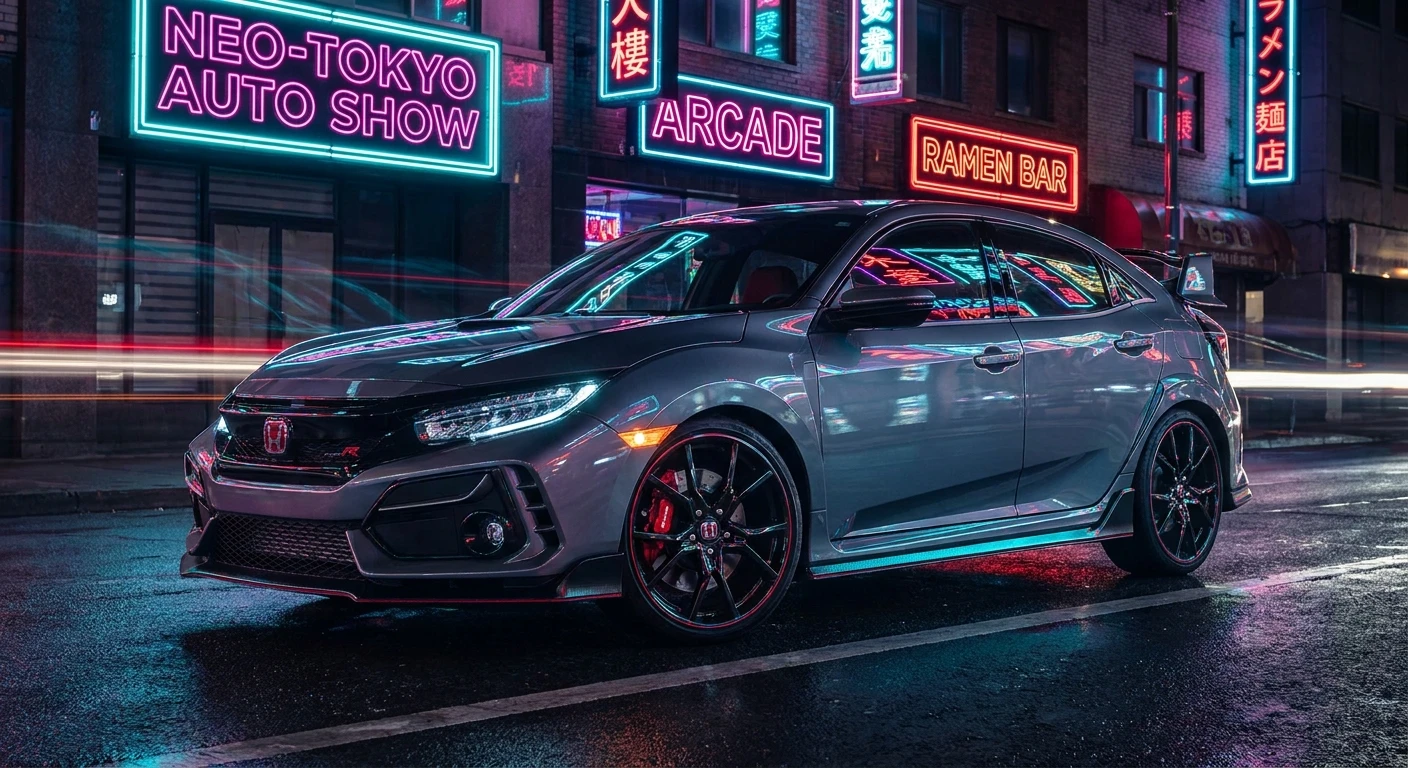
Why the Veloster N Remains a Legend for Enthusiasts
Getting behind the wheel of a Veloster N reminds you exactly why the hot hatch segment captured our hearts in the first place. You do not need to spend six figures to experience pure driving joy, and this quirky three-door marvel proves it. Whether you are attacking a canyon road or just making a mundane grocery run, the Veloster N delivers an aggressive, unfiltered experience that is increasingly rare to find. Even now in 2026, as the automotive landscape shifts heavily toward silent electric commuters, the raw, crackling exhaust note of this turbocharged beast continues to turn heads and dominate weekend track days.
Listen, if you are looking for a perfectly quiet, soft-riding commuter car, you are in the wrong place. The mission of this car was never to blend in. It was engineered specifically to put a massive smile on your face every single time you hit the push-to-start button. We are talking about a stiff chassis, highly responsive steering, and a level of mechanical grip that makes you feel like a driving hero. This is not just transportation; it is an entirely visceral experience. From the aggressive exterior styling featuring red accent lines to the heavily bolstered sport seats holding you in place, everything about this car screams performance. It is a dedicated driver’s car that forces you to engage, pay attention, and enjoy the absolute thrill of the open road.
Read also: The Ultimate Guide to the m340 Performance Sedan; The 2025 golf r Performance Guide; The Ultimate Review of the toyota gr86 Experience.
The Core Appeal: Why It Dominates the Competition
When you look at the performance compact market, the competition is notoriously fierce. However, the true value proposition of this machine lies in its unparalleled “fun-per-dollar” ratio. You are getting track-ready performance right off the showroom floor without needing immediate aftermarket modifications. Consider the adaptive suspension, the active exhaust, and the electronic limited-slip differential. These are premium features typically reserved for cars that cost significantly more, yet they are bundled perfectly into this compact chassis.
Let’s look at a few examples of how this translates to the real world. First, imagine driving in normal traffic. You keep the car in “Normal” mode, the exhaust is subdued, and the suspension absorbs bumps reasonably well. Now, imagine merging onto an empty highway or arriving at a twisting mountain pass. With the press of the steering-wheel-mounted N button, the suspension stiffens, the throttle response sharpens, and the exhaust opens up to deliver loud, aggressive pops and bangs on deceleration. It is a dual-personality vehicle.
| Feature / Model | Veloster N (DCT) | Golf GTI (Mk8) | Civic Type R (FK8) |
|---|---|---|---|
| Horsepower | 275 HP | 241 HP | 306 HP |
| 0-60 mph Time | ~5.1 Seconds | ~5.9 Seconds | ~5.1 Seconds |
| Factory Exhaust Sound | Aggressive & Popping | Subdued & Quiet | Moderate / Smooth |
Here are three core reasons why this specific model changed the game:
- The N-Grin Control System: This highly customizable driving mode system allows you to individually adjust the engine response, rev-matching, exhaust sound, differential, and suspension. You can literally tailor the car’s behavior to your exact mood.
- The Electronic Limited-Slip Differential (e-LSD): Dubbed the “N Corner Carving Differential,” this piece of engineering magically pulls the front end of the car toward the apex of a corner, completely eliminating the understeer typically found in front-wheel-drive cars.
- Unapologetic Character: Unlike competitors that try to be overly refined or mature, this car embraces a rowdy, juvenile spirit that makes every commute feel like a qualifying lap.
The Origins of the N Division
To understand the genius behind this car, you have to look at the birth of Hyundai’s N performance brand. The letter ‘N’ stands for Namyang, the brand’s global R&D network in South Korea, and the Nürburgring, the infamous German test track where the cars are honed. The turning point occurred when the company poached Albert Biermann, the former head of BMW’s legendary M division. Biermann was given essentially a blank check and a singular mission: build cars that prioritize driver engagement and emotional connection over mere numbers on a spreadsheet. His philosophy completely shifted the company’s trajectory, moving them from building reliable but uninspiring economy cars to creating legitimate track-day weapons.
The Evolution of the Three-Door Maverick
The original generation of the Veloster was a quirky, asymmetrical compact car that looked incredibly cool but severely lacked the performance to back up its aggressive styling. It was front-heavy and underpowered. When the second generation launched, the chassis was completely redesigned. The introduction of the N model marked a total paradigm shift. Initially offered exclusively with a 6-speed manual transmission, it catered strictly to driving purists. Later in its production cycle, an extremely advanced 8-speed wet dual-clutch transmission (DCT) was introduced, complete with a feature called “N Grin Shift” that provided an overboost function for 20 seconds of maximum torque, broadening the car’s appeal to an even wider audience.
The Modern State of the Hatchback
Today in 2026, the era of internal combustion engine hot hatches is heavily romanticized. Although production of this specific model eventually concluded to make way for the Elantra N and the all-electric Ioniq 5 N, its legacy is absolutely cemented. The used market for these vehicles is incredibly strong because enthusiasts recognize that we may never see another car quite like it. It perfectly captures a specific moment in automotive history where analog driving feel, aggressive turbocharging, and everyday practicality intersected flawlessly. It remains the gold standard for accessible, front-wheel-drive performance.
Under the Hood: The 2.0L Turbo Architecture
At the heart of the machine is a heavily reinforced 2.0-liter turbocharged inline-four engine, designated as the Theta IIi. This is not your standard commuter engine with a bigger turbo bolted on; it features structural reinforcements designed specifically to handle continuous high-stress track driving. The twin-scroll turbocharger spools up exceptionally fast, delivering peak torque incredibly early in the rev range. This translates to immediate, punchy acceleration pulling out of tight corners. Cooling was a massive priority for the engineering team. The front fascia features massive air intakes to feed the intercooler, and the engine oil cooling system is vastly superior to standard models, ensuring that oil temperatures remain stable even during back-to-back hot laps in the middle of summer.
Chassis Dynamics and Aero
Power is useless without a chassis that can handle it. The body structure features additional spot welds and extensive use of high-strength steel to maximize torsional rigidity. This stiffness allows the adaptive dampers to do their job properly without the body flexing over uneven surfaces. The suspension geometry features zero scrub radius up front, which enhances steering feedback and stability under heavy braking. Additionally, the aggressive rear wing is not just for aesthetics; it is fully functional, generating measurable downforce to keep the lightweight rear end stable during high-speed cornering.
- Engine Block Material: High-pressure die-cast aluminum for optimal strength-to-weight ratio.
- Exhaust Valve Actuation: Electronically controlled variable exhaust valve system that opens based on throttle position and selected drive mode.
- Boost Pressure: Peaks at approximately 18-19 PSI under heavy load, safely managed by an advanced ECU logic system.
- Transmission Thermal Management: The wet DCT utilizes an electric oil pump specifically for cooling clutch plates during aggressive launch control events.
Your 7-Day Master Plan to Experiencing the Car
So, you finally have the keys to your new hot hatch. Getting the most out of this machine requires a bit of familiarization. Here is a definitive step-by-step guide to mastering the platform over your first week of ownership.
Day 1: Perfecting Your Seating and Ergonomics
Before you even start the engine, spend time adjusting the aggressively bolstered sport seats. Proper driving posture is critical. You want your wrists to rest comfortably on the top of the steering wheel with your shoulders pinned against the seatback. Adjust the seat height so you have excellent visibility over the hood while sitting low enough to feel the car’s center of gravity. Dial in the mirrors to eliminate blind spots. Getting this right ensures maximum control when the driving gets spirited.
Day 2: Understanding Fluid Temps
Patience is key for longevity. Use this day to monitor the digital gauge cluster. Take note of how long it takes for the oil temperature to reach optimal operating range (around 190-210°F). Never push the car into high boost or aggressive cornering until the fluids are properly warmed up. The LED shift lights on the tachometer will dynamically adjust based on engine temperature, physically warning you to keep the RPMs low while the car is cold. Respect the warm-up process.
Day 3: Customizing the N-Custom Mode Settings
Navigate through the touchscreen and enter the N-Custom menu. This is where the magic happens. Spend the afternoon tweaking the parameters. A popular setup for bumpy back roads is setting the Engine and Exhaust to “Sport+”, the e-LSD to “Sport”, but keeping the Suspension in “Normal” or “Sport” (avoiding Sport+ suspension unless you are on a perfectly smooth racetrack). This gives you all the aggressive power and sound without shattering your spine over potholes.
Day 4: Testing the Corner Carving Differential
Find a safe, isolated, and twisty piece of pavement. Enter a tight corner at a moderate speed and, right at the apex, apply the throttle aggressively. In a normal front-wheel-drive car, you would immediately understeer toward the outside of the turn. Instead, feel how the e-LSD shifts torque to the outside wheel, physically dragging the nose of the car precisely where you point the steering wheel. It takes time to trust this mechanical witchcraft, but once you do, it completely changes your driving style.
Day 5: Launch Control Calibration
If you have a safe, legal environment, it is time to test the launch control system. Navigate the menus to set your preferred launch RPM. Put the car in N mode, press the brake firmly with your left foot, pin the throttle to the floor with your right foot, and let the computer build boost. Release the brake and feel the violent, aggressive acceleration as the traction control dances just at the limit of tire grip to propel you forward.
Day 6: Exhaust Valve Etiquette and Fun
Take a long drive through a tunnel or a valley where sound echoes. Downshift aggressively and let the car decelerate naturally to experience the signature crackles and pops of the exhaust. However, use this day to also practice being a good neighbor. Switch the car back to “Normal” mode when driving through residential neighborhoods late at night. The ability to flip a switch and make the car completely silent is one of its best daily-driving features.
Day 7: Hitting the Local Track or Autocross
The ultimate test. Sign up for a local autocross event or an open track day. Ensure your tire pressures are set correctly (usually lower than street pressures as they will expand with heat) and check your brake fluid. Out on the track, you will finally understand the brilliance of the engineering. The car communicates exactly what the tires are doing, the brakes provide immense stopping power, and you will quickly find yourself keeping up with cars that cost three times as much.
Myths vs. Reality
Myth: The 3-door design is just a useless gimmick.
Reality: The asymmetrical design actually adds a layer of safety and convenience. Having a rear door only on the passenger side means that if you are street parking, your rear passengers will always exit onto the safety of the sidewalk rather than into moving traffic. It also maintains the structural rigidity of a coupe on the driver’s side.
Myth: Front-wheel drive means terrible understeer and poor handling.
Reality: Thanks to the advanced e-LSD, bespoke Pirelli or Michelin tires, and aggressive suspension geometry, this car handles neutrally. It actually allows for lift-off oversteer, meaning you can easily rotate the rear end of the car by simply lifting off the throttle mid-corner, completely defying traditional front-wheel-drive stereotypes.
Myth: The ride is far too stiff for daily commuting.
Reality: While the “Sport+” suspension setting is indeed incredibly stiff and meant only for glass-smooth tracks, the “Normal” mode softens the adaptive dampers significantly. It is absolutely manageable for daily driving and grocery runs, provided you dodge massive potholes.
Frequently Asked Questions
What does the N stand for?
The N represents Namyang (the global R&D center in Korea) and the Nürburgring (the famous German track where the performance vehicles are rigorously tested). The logo itself is designed to look like a track chicane.
Does it come in an automatic?
Yes. Initially launched as a 6-speed manual only, an advanced 8-speed wet dual-clutch transmission (DCT) was introduced later. The DCT is actually slightly faster in acceleration tests due to lightning-quick gear changes.
Is the Veloster N fuel efficient?
It is reasonable for a performance car. Driven mildly on the highway, you can see upper 20s MPG. However, if you are constantly in high boost on back roads, expect that number to drop significantly into the high teens.
How much horsepower does it have?
The standard output for the performance package (which became standard in later years) is 275 horsepower and 260 lb-ft of torque, pushing out of the 2.0-liter turbocharged engine.
What is the N Grin Shift feature?
Available on the DCT models, pushing this button on the steering wheel gives you an overboost function. It temporarily increases maximum torque and sharpens transmission response for 20 seconds, perfect for overtaking.
Are there common maintenance issues?
Overall reliability has proven to be quite robust. The most common wear items are tires and brake pads due to the nature of how people drive them. Consistent oil changes are mandatory for turbo longevity.
Is it a good first car?
While it is packed with safety features, 275 horsepower in a lightweight, front-wheel-drive chassis requires respect. It is better suited for someone who has a bit of driving experience under their belt rather than a brand-new teenage driver.
How does it compare to the Elantra N?
The Elantra N is essentially the spiritual successor, utilizing an upgraded version of the same powertrain in a longer, sedan chassis. The Elantra is slightly more refined and has updated interior tech, but the Veloster retains a shorter, punchier, and more playful wheelbase.
Final Thoughts
The Veloster N will go down in history as a pivotal vehicle. It proved that passion, aggressive engineering, and driving purity could still exist at an attainable price point. Whether you love the eccentric three-door styling or simply crave the sound of a rowdy exhaust bouncing off canyon walls, this hatchback delivers an unforgettable ride. If you are on the fence, do yourself a favor: go find one, press that N button, and experience the thrill for yourself before these analog masterpieces are gone forever!

Leave a Reply