
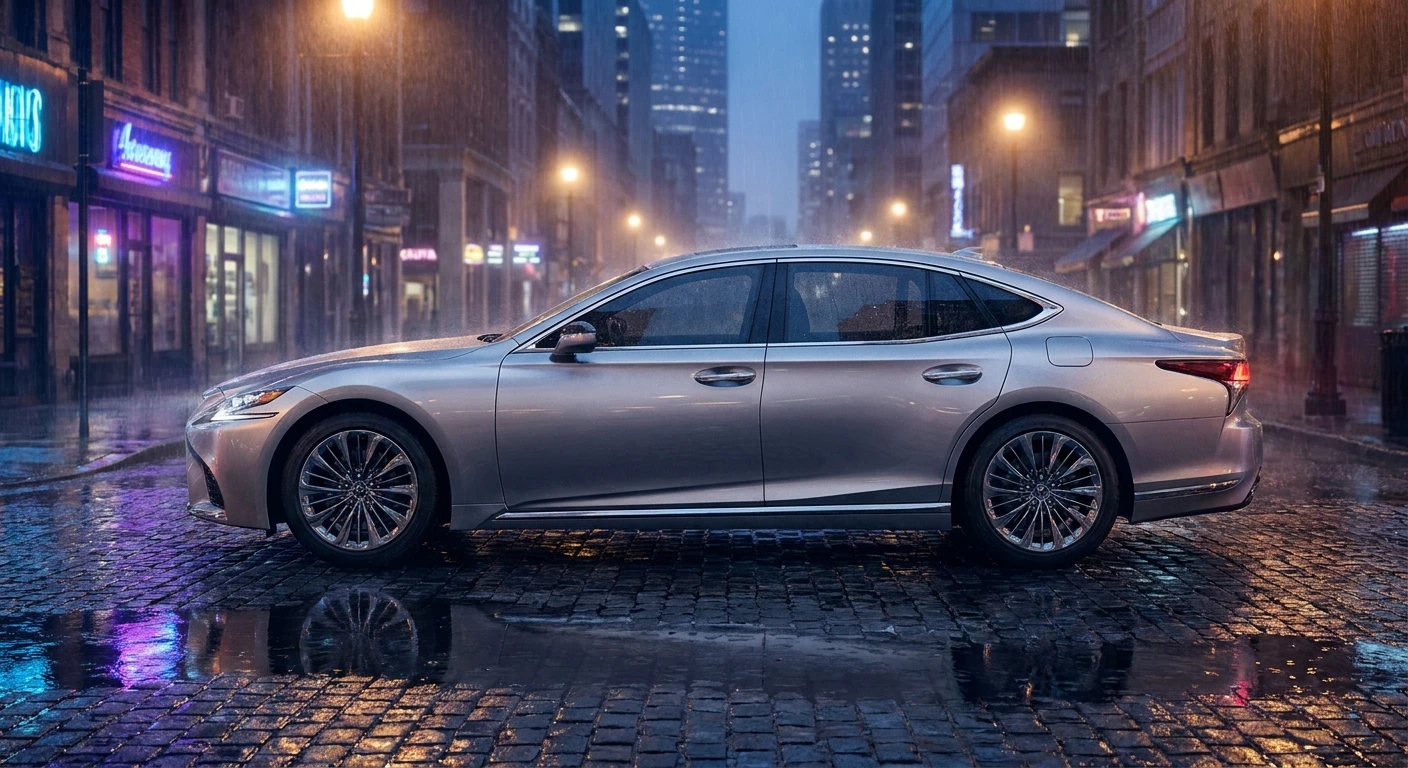
The Complete 2023 Honda Accord Breakdown
If you are looking at the midsize sedan market, the 2023 Honda Accord stands out as a serious benchmark for practical, everyday driving. You want a reliable car that does not feel like a compromise, and this exact model year marks a significant shift in automotive design. Launching the eleventh generation of a legendary nameplate, the manufacturer decided to dial back the aggressive styling of the previous iteration in favor of a much sleeker, more mature, and aerodynamic profile. It is the kind of vehicle that quietly commands respect without needing to shout for attention in a crowded parking lot.
When evaluating a vehicle just a few years after its release, the dust has settled on the initial marketing hype. We now have hard data on how this chassis performs, how the interior materials hold up to daily wear and tear, and whether the hybrid powertrain actually delivers the promised fuel economy. You are not just buying a badge; you are investing in a daily workhorse designed to handle long highway commutes, chaotic school runs, and weekend road trips with equal ease. The shift toward a hybrid-heavy lineup meant that buyers had to adjust their expectations regarding performance, trading raw horsepower numbers for smooth, uninterrupted torque. This approach pays massive dividends at the gas pump. Getting to know the exact specifications and trims available for this specific year gives you the upper hand when deciding if this sedan fits your lifestyle and budget.
Read also: 2021 Ford Escape: Complete Specs, Trims, and Honest Review; Why You Need the 2024 honda pilot; Nissan Versa 2024: Complete Review, Specs, and Features.
Core Features and Everyday Value
Understanding the value proposition of this specific model year requires looking at the actual equipment provided across the lineup. The manufacturer streamlined the offerings to heavily favor electrified driving. The lower trims stuck with a traditional turbocharged gas engine, while the upper echelon moved entirely to a dual-motor hybrid setup. This was a deliberate choice to push efficiency to the forefront. The value becomes instantly apparent when you experience the quiet cabin and the immediate throttle response. You are paying for refined engineering rather than gimmicky add-ons.
To give you a clear picture of how the lineup is structured, here is a breakdown of the primary configurations and what they offer:
| Trim Level | Engine Powertrain | Standout Feature |
|---|---|---|
| LX / EX | 1.5L Turbocharged 4-Cylinder | 7-inch Color Touchscreen |
| Sport / EX-L | 2.0L Hybrid Dual-Motor | 12.3-inch Touchscreen Display |
| Touring | 2.0L Hybrid Dual-Motor | Google Built-In & Head-Up Display |
The true value of this vehicle shines through in a couple of specific scenarios. For instance, if you face a grueling stop-and-go commute, the hybrid system’s ability to operate extensively on electric power at low speeds dramatically cuts your fuel expenses. Additionally, the resale value remains exceptionally strong. Sedans with proven reliability records hold their equity far better than obscure models with questionable electronics. You are securing financial peace of mind alongside a comfortable ride.
Here are the top three definitive benefits of choosing this specific model:
- Unmatched Fuel Efficiency: The hybrid trims regularly achieve upwards of 46 to 51 miles per gallon, effectively minimizing your trips to the gas station.
- Class-Leading Rear Space: Passengers enjoy over 40 inches of rear legroom, making it perfectly suitable for adults on long journeys.
- Advanced Standard Safety: Every unit comes equipped with a comprehensive suite of radar and camera-based driver assistance technologies, ensuring premium protection regardless of the trim level you purchase.
Origins of the Accord Lineage
To appreciate where the current design language comes from, you have to look back at the origins. The nameplate debuted in 1976 as a humble, compact hatchback. It was introduced during a time of fuel crises, offering an economical alternative to massive, gas-guzzling land yachts. Over the decades, it built an ironclad reputation for refusing to break down. This foundational philosophy of sensible, reliable transportation has never wavered, even as the vehicle physically grew larger with every passing decade.
Evolution into the 11th Generation
The jump to the eleventh generation was highly anticipated. The preceding tenth generation was known for its aggressive, fastback-style roofline and punchy 2.0-liter turbocharged engine option. When the manufacturer unveiled the 2023 design, it polarized some enthusiasts. The styling became more conservative, featuring straight body lines, a longer hood, and a more traditional sedan silhouette. The punchy high-output turbo engine was retired. Instead, the focus pivoted heavily to refinement, ride comfort, and sophisticated hybrid technology. The car grew slightly longer, providing an even more cavernous trunk and a planted, stable feel at highway speeds.
Modern State on the Used Market
Fast forward a few years from its launch, and this sedan occupies a incredibly sweet spot in the pre-owned market. Early lessees are returning their vehicles, creating a robust inventory of well-maintained, low-mileage examples. Buyers now have the opportunity to acquire essentially modern, current-generation technology—including massive infotainment screens and advanced hybrid drives—at a depreciated price point. It remains one of the most heavily searched vehicles for practical buyers who want a near-luxury experience without the luxury repair bills.
Hybrid Powertrain Architecture
The engineering behind the propulsion system deserves specific attention. The two-motor hybrid system does not operate like a traditional drivetrain. Instead of a conventional transmission with gears, one electric motor serves strictly as a generator, while the second motor drives the front wheels. The 2.0-liter Atkinson-cycle gas engine mostly acts as a power plant to feed the generator. At higher cruising speeds, a lock-up clutch engages to connect the gas engine directly to the wheels for maximum efficiency. This architecture eliminates the rubber-band feeling typical of older continuously variable transmissions, resulting in a driving experience that mimics a pure electric vehicle in urban environments.
Chassis and Aerodynamics
Beneath the skin, the structural integrity received massive upgrades. Engineers implemented new laser-brazing technology along the roofline, which eliminated the need for roof molding and smoothed out airflow. The front fascia uses active grille shutters that close at high speeds to reduce aerodynamic drag, pushing the air seamlessly over the elongated hood. The suspension utilizes a MacPherson strut front setup and an independent multi-link rear, tuned specifically to absorb harsh road imperfections while keeping the chassis perfectly flat through tight corners.
- The standard 1.5-liter turbocharged engine generates 192 horsepower and 192 lb-ft of torque.
- The advanced hybrid powertrain produces a combined system output of 204 horsepower and a robust 247 lb-ft of torque.
- Overall chassis torsional rigidity was increased by 16% compared to the previous generation, improving both handling and crash safety.
- The steering column features friction-reducing materials to provide clearer, more direct feedback from the front tires to the driver’s hands.
Step 1: Verify the Trim Identity
When evaluating one of these vehicles, the first critical step is confirming exactly which trim you are looking at. Because the exterior styling is quite similar across the board, buyers sometimes confuse a lower-tier EX for an EX-L. Check for leather seating and the larger center screen to quickly verify you are getting the features you are paying for.
Step 2: Check the Infotainment System
Turn the car on and interact with the screen. For Touring trims, ensure the Google Built-In functionality responds quickly and that the system has been properly reset from the previous owner’s accounts. Test the wireless Apple CarPlay or Android Auto connection to verify the internal Wi-Fi antenna is functioning properly.
Step 3: Inspect the Hybrid Battery Health
If you are looking at a hybrid model, review the energy flow screen on the dash while taking a test drive. Make sure the battery charges properly under braking and deploys energy during acceleration. A healthy system will seamlessly transition between gas and electric power without harsh shuddering.
Step 4: Test the Safety Suite
Take the vehicle onto a well-marked highway and engage the adaptive cruise control and lane-keeping assist. The radar and camera systems should smoothly keep the vehicle centered. If the system frequently disengages or throws warning lights, the front radar unit may require expensive recalibration.
Step 5: Examine the Tires and Alignment
Due to the instant torque of the electric motors on hybrid trims, front tire wear can occur faster if the previous owner had a heavy foot. Inspect the tread depth across the entire width of the front tires. Uneven wear indicates a need for immediate alignment and potentially new rubber.
Step 6: Review Maintenance Records
Even highly reliable vehicles require basic upkeep. Ask for documentation showing regular oil changes, especially for the 1.5L turbocharged engine, which is sensitive to degraded oil. Ensure the brake fluid and cabin filters have been swapped according to the factory schedule.
Step 7: Finalize the Warranty Transfer
Check the original in-service date. These cars come with a 3-year/36,000-mile bumper-to-bumper warranty and an 8-year/100,000-mile warranty on hybrid components. Verify exactly how much time and mileage remains, and ensure the paperwork is officially transferred to your name to protect your investment.
Myths and Reality
Myth: The hybrid battery will completely die after three years and cost a fortune to replace.
Reality: The manufacturer utilizes highly durable lithium-ion packs designed to last well over a decade, backed by an extensive 8-year or 100,000-mile factory warranty for total peace of mind.
Myth: The newer generation is drastically slower because they removed the 2.0L turbo engine.
Reality: While the peak horsepower number is lower, the hybrid motor’s instant torque actually makes the vehicle feel punchier and more responsive at typical city driving speeds.
Myth: The continuously variable transmission is fragile and whiny.
Reality: The hybrid models do not use a traditional belt-and-pulley CVT. They use a highly robust electronic drive unit that has proven to be incredibly reliable over millions of accumulated miles.
Is it purely front-wheel drive?
Yes, every single unit produced for this model year is strictly front-wheel drive. All-wheel drive is not available on any trim level.
Does it feature wireless Apple CarPlay?
Wireless Apple CarPlay and Android Auto are standard, but only on the higher-tier trims equipped with the 12.3-inch display. Base trims require a USB cable.
What is the exact trunk capacity?
The trunk offers a massive 16.7 cubic feet of cargo space, making it one of the largest and most accommodating trunks in the entire midsize sedan segment.
Does the engine require premium fuel?
No. Both the turbocharged gas engine and the hybrid powertrain are optimized to run perfectly on standard 87-octane regular unleaded gasoline.
Are there any manual transmission models?
No. The manual transmission option was permanently discontinued several years prior to this generation. All models use automatic or electronic continuously variable setups.
How many passengers can it hold?
The vehicle comfortably seats five adults. The rear bench is notably spacious, easily accommodating tall passengers without compromising headroom or knee space.
Is the Touring trim worth the extra money?
If you prioritize premium audio, ventilated seats, a head-up display, and integrated Google navigation technology, the Touring trim offers a genuine luxury car experience at a mainstream price point.
To wrap things up, the 2023 Honda Accord remains an absolute powerhouse of logic and comfort in the sedan segment. It blends sophisticated styling with bulletproof engineering and remarkable fuel efficiency. If you are ready to upgrade your daily commute with a vehicle that asks for little but gives a lot, check local listings and schedule a test drive today to secure a practical, long-lasting automotive companion.

Leave a Reply