
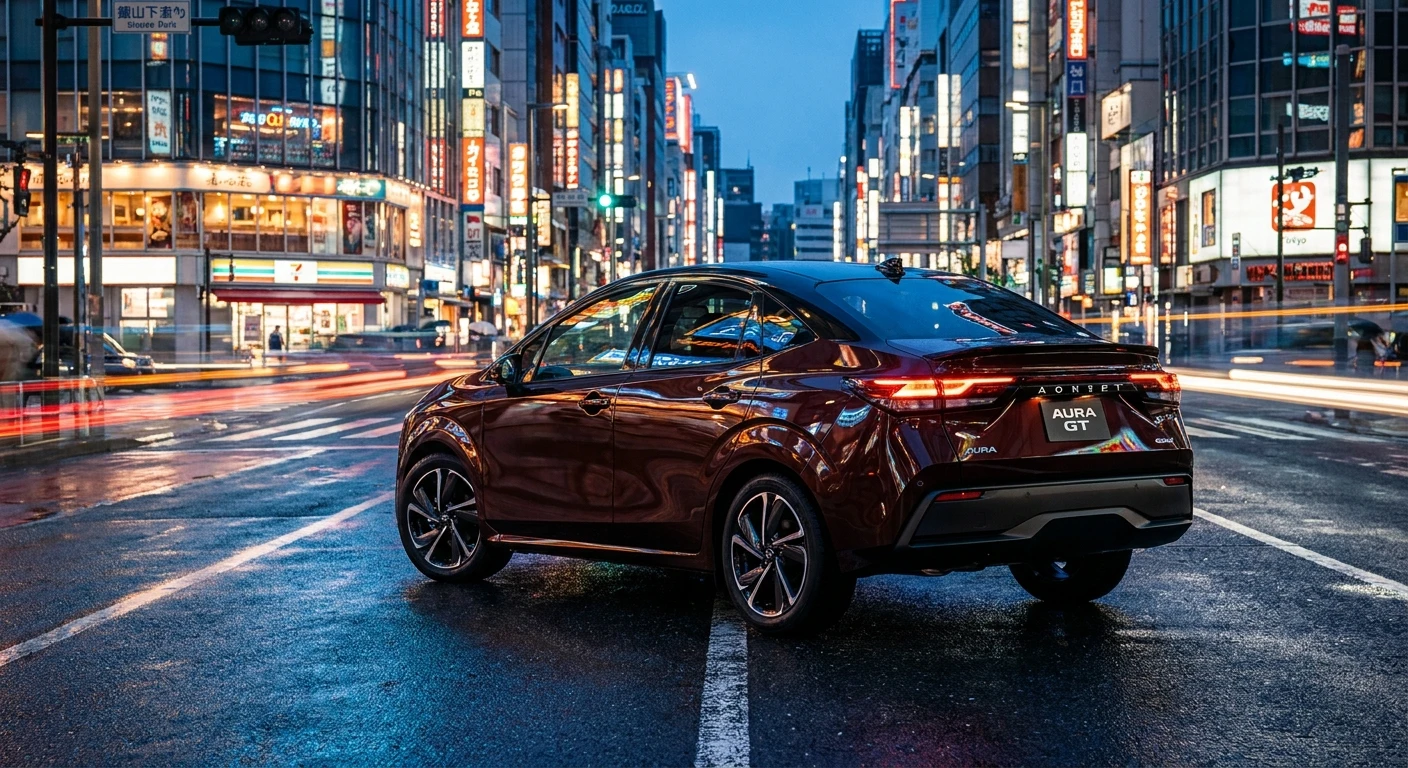
Nissan Versa 2024: A Compact Sedan That Defies Expectations
If you are looking for a highly practical, efficient, and surprisingly upscale daily driver, the Nissan Versa 2024 stands out as one of the most intelligent choices on the used or new car market. As vehicle prices have soared globally, the demand for accessible, reliable transportation has never been higher. You might assume that choosing an entry-level compact sedan means sacrificing comfort, technology, and visual appeal, but this specific model completely rewrites that narrative. The engineering team behind the vehicle prioritized standard safety equipment and fuel efficiency, ensuring that budget-conscious buyers do not have to compromise on peace of mind or modern conveniences. By combining a sleek exterior design with a remarkably roomy interior, this car easily accommodates both single commuters and small families navigating dense urban environments or embarking on long highway road trips. Our extensive breakdown of this model will highlight exactly why it remains a top contender in its class, detailing everything from its mechanical underpinnings to everyday usability.
Core Benefits and Exceptional Value Proposition
When analyzing the true value of the 2024 iteration, you have to look beyond the attractive purchase price and evaluate the long-term cost of ownership, which is where this sedan truly shines. The vehicle delivers exceptional fuel economy that drastically reduces your monthly transportation budget, while the legendary Japanese engineering ensures maintenance costs stay incredibly low over the lifespan of the car. Furthermore, the inclusion of the Nissan Safety Shield 360 as standard equipment across all trim levels adds thousands of dollars in value compared to competitors that lock active safety features behind expensive premium packages. Whether you opt for the base model with its straightforward utility or the top-tier version with sporty accents and larger alloy wheels, you get a solid, well-built machine that feels much more expensive than it actually is. The value proposition is evident in two major areas: first, the premium interior materials on higher trims that emulate luxury vehicles, and second, the class-leading trunk capacity that offers genuine utility for luggage, groceries, and sporting equipment.
Read also: Is the nissan sentra 2024 Still Worth Buying?; Ford Escape 2019: The Complete Buyer’s Guide and Review; Why the chevrolet trax 2024 Is Unbeatable.
| Trim Level | Engine Specifications | Defining Key Feature |
|---|---|---|
| S (Base) | 1.6L 4-Cylinder (122 hp) | Standard Automatic Emergency Braking with Pedestrian Detection |
| SV (Mid-level) | 1.6L 4-Cylinder (122 hp) | 16-inch Alloy Wheels and Wireless Smartphone Charging Pad |
| SR (Premium) | 1.6L 4-Cylinder (122 hp) | 8-inch Touchscreen Display and Sport Cloth Seat Trim |
There are several distinct reasons why drivers continue to gravitate toward this specific model year:
- Unbeatable Fuel Efficiency: The optimized powertrain consistently delivers outstanding miles per gallon, making it the perfect companion for high-mileage commuters.
- Comprehensive Safety Suite: Features like blind-spot monitoring, rear automatic braking, and lane departure warning create a protective cocoon for all occupants.
- Unexpected Interior Space: Thanks to clever packaging and intelligent design, front passengers enjoy best-in-class legroom, while the trunk swallows up cargo with ease.
- Aggressive Styling: The V-Motion grille and floating roofline give the exterior a dynamic, premium look that shatters the boring economy car stereotype.
Origins of the Versa Nameplate
To fully appreciate the current model, we must trace the origins of this iconic nameplate. The badge was first introduced to the North American market in 2006 for the 2007 model year, serving as a replacement for the outgoing Sentra which had moved up in size and price. Globally known as the Tiida in many markets, the original philosophy was simple: provide the maximum amount of interior volume within the smallest possible exterior footprint. This boxy, utilitarian approach won over buyers who prioritized headroom and rear-seat space above all else, quickly establishing the car as a dominant force in the subcompact segment.
Evolution Through the Generations
As consumer tastes evolved, so did the vehicle. The second generation, introduced in 2012, shifted focus heavily toward affordability, famously becoming the least expensive new car you could buy in America. While it succeeded in volume sales, critics noted its lack of refinement and uninspired styling. Everything changed with the debut of the third generation in 2020. The manufacturer completely overhauled the design language, adopting the striking Emotional Geometry styling seen on their larger sedans. The car became longer, lower, and significantly wider, drastically improving its stance and driving dynamics while shedding its bare-bones reputation entirely.
The Modern State of the 2024 Edition
Building upon the massive success of the third-generation redesign, the Nissan Versa 2024 carries forward the bold mid-cycle refresh introduced the previous year. The front fascia boasts a highly aggressive iteration of the signature V-Motion grille, flanked by sharp headlights that give it an imposing presence on the road. The interior technology has been thoroughly modernized, bridging the gap between budget transportation and connected smart mobility. By retaining its core values of affordability and efficiency while elevating its aesthetic and technological appeal, the modern iteration stands as a testament to the fact that entry-level vehicles can still inspire pride of ownership.
Under the Hood: Powertrain Dynamics
The mechanical heartbeat of this sedan is a highly refined 1.6-liter naturally aspirated four-cylinder engine. Designated internally as the HR16DE, this power plant utilizes an advanced sequential multi-point fuel injection system and dual injector design to maximize fuel vaporization and combustion efficiency. The result is a highly responsive throttle pedal and a remarkably smooth power delivery curve. This engine is expertly mated to an Xtronic Continuously Variable Transmission (CVT) that utilizes special D-Step Logic Control software. This intelligent programming mimics the step-gear shifts of a traditional automatic transmission under heavy acceleration, eliminating the drone typically associated with older CVTs while maintaining the infinite gear ratios required for peak highway efficiency.
Aerodynamics and Structural Integrity
Beyond the engine bay, the engineering brilliance extends to the vehicle’s structural and aerodynamic profile. The sleek, sloping roofline is not just for show; it significantly reduces aerodynamic drag, allowing the car to slip through the air effortlessly at highway speeds. This reduces wind noise inside the cabin and directly contributes to the stellar fuel economy ratings. Structurally, the vehicle employs the proprietary Zone Body construction, utilizing high-strength steel in critical areas to create a rigid passenger safety cell. This stiffness not only protects occupants during a collision but also improves the handling characteristics by minimizing chassis flex during tight cornering.
- Maximum Horsepower: 122 hp @ 6,300 rpm, providing adequate thrust for merging and passing maneuvers.
- Peak Torque: 114 lb-ft @ 4,000 rpm, tuned for accessible low-end grunt in stop-and-go city traffic.
- Suspension System: Independent MacPherson strut front suspension paired with a torsion beam rear axle for a balanced, comfortable ride.
- Braking System: Vented front disc brakes combined with rear drum brakes, supplemented by a four-channel Anti-lock Braking System (ABS).
Day 1: Mastering the Infotainment System
When you first take possession of your new sedan, dedicate your first day exclusively to the digital ecosystem. Start by pairing your smartphone via Bluetooth to ensure seamless hands-free calling. If you have the SV or SR trim, plug in your device to activate Apple CarPlay or Android Auto, taking time to organize your digital dashboard, set up your preferred navigation application, and customize the audio equalizer settings to get the best sound out of the multi-speaker audio system.
Day 2: Testing the Safety Shield 360 Limits
On the second day, carefully familiarize yourself with the active safety technology. Take a drive on a multi-lane highway to observe how the Blind Spot Warning system illuminates the indicators on the A-pillars when a vehicle enters your blind zone. Test the Lane Departure Warning system by safely drifting near the lane markers on an empty road to feel the steering wheel vibration, helping you build trust in the digital co-pilot watching over you.
Day 3: Evaluating City Fuel Economy
Day three is all about urban efficiency. Reset your trip computer and navigate through stop-and-go city traffic. Practice smooth acceleration and gentle braking to maximize your miles per gallon. You will quickly notice how the lightweight chassis and responsive low-end torque make darting between traffic lights effortless, all while keeping the fuel consumption gauge impressively low.
Day 4: Highway Cruising and CVT Behavior
Take the car on a longer highway journey on day four to evaluate its high-speed cruising capabilities. Pay close attention to how the Xtronic CVT adjusts the engine RPMs to keep the cabin quiet at 70 miles per hour. This is the perfect time to test the cruise control features and appreciate the surprisingly robust sound insulation that blocks out tire roar and wind turbulence, making long trips much less fatiguing.
Day 5: Exploring Cargo Capacity and Versatility
On the fifth day, test the practical limits of the interior. Open the trunk and inspect the deep, wide cargo area. Fold down the 60/40 split-folding rear seats and practice loading bulky items, such as flat-pack furniture or large sporting goods. You will be amazed at the sheer volume of space available, proving that you do not necessarily need a large SUV for weekend utility.
Day 6: Checking Night Visibility and LED Headlights
Wait until the sun goes down on day six to evaluate the exterior lighting. If your model is equipped with the brilliant LED headlights, note how the crisp, white beam cuts through the darkness, illuminating the road shoulders perfectly. Test the high-beam assist function on a dark, winding road, watching the car automatically toggle between high and low beams when it detects oncoming traffic.
Day 7: First Wash and Paint Inspection
Conclude your orientation week by giving the vehicle a thorough hand wash. This physical interaction allows you to closely inspect the paint quality, panel gaps, and exterior trim. Appreciate the sharp character lines running along the doors and the intricate details of the rear taillight housings. Applying a good layer of wax now will protect the clear coat and keep your sedan looking showroom fresh for years to come.
Myths and Realities
Myth: Subcompact sedans are inherently unsafe on fast-moving highways.
Reality: The modern engineering standard has evolved drastically. The Nissan Versa 2024 boasts an incredibly rigid chassis, advanced airbag systems, and standard active collision-avoidance technology that rival luxury cars from just a decade ago, making it highly secure at any speed.
Myth: Continuously Variable Transmissions (CVTs) are loud and sluggish.
Reality: While early CVTs suffered from rubber-band sensations, the latest Xtronic system utilizes D-Step Logic Control to simulate traditional gear changes, offering crisp acceleration and a quiet cabin experience during normal driving conditions.
Myth: Buying an entry-level car means enduring a cheap, uncomfortable interior.
Reality: By utilizing high-quality textured plastics, available premium cloth styling, and advanced Zero Gravity front seats inspired by space travel engineering, the cabin delivers an exceptionally comfortable and visually pleasing environment.
Does the car support Apple CarPlay and Android Auto?
Yes, Apple CarPlay and Android Auto integration are available on the SV and SR trim levels, allowing you to seamlessly project your smartphone’s navigation, music, and messaging applications directly onto the central touchscreen display.
Is there a manual transmission option available?
Yes, the base S trim can still be found with a 5-speed manual transmission for drivers who prefer a traditional shifting experience, though the Xtronic CVT is by far the most popular and fuel-efficient option.
What is the total trunk capacity?
The trunk offers an impressive 14.7 cubic feet of cargo space in the SV and SR trims, which is exceptionally large for the subcompact segment and perfectly capable of handling multiple large suitcases.
Does this model offer all-wheel drive?
No, the vehicle is exclusively front-wheel drive. This configuration keeps the overall weight down, maximizes interior cabin space, and ensures the highest possible fuel economy ratings.
How reliable is the 1.6L four-cylinder engine?
The HR16DE engine is a tried-and-true power plant that has been refined over many years. With regular oil changes and basic maintenance, it is renowned for its incredible long-term reliability and durability.
What kind of factory warranty does it come with?
It typically includes a standard 3-year/36,000-mile limited bumper-to-bumper warranty and a 5-year/60,000-mile limited powertrain warranty, providing excellent peace of mind for the first several years of ownership.
Can the rear seats comfortably fit adult passengers?
While it is a subcompact car, the rear seats offer adequate headroom and legroom for average-sized adults on short to medium journeys, though taller passengers might find long road trips slightly restrictive.
Is the suspension tuned for comfort or sportiness?
The suspension is heavily biased toward daily driving comfort. It effortlessly absorbs city potholes and rough pavement, providing a smooth ride rather than harsh, aggressive cornering performance.
In conclusion, the Nissan Versa 2024 remains an undeniable triumph of automotive engineering, successfully combining affordability, advanced safety, and everyday practicality into one highly attractive package. It proves that you do not have to spend a fortune to drive a stylish, reliable, and technologically advanced vehicle. Whether you are commuting to work, running errands, or embarking on a highway adventure, this sedan is engineered to exceed expectations at every turn. If you are ready to upgrade your daily drive with a car that respects both your comfort and your budget, head down to your local dealership for a comprehensive test drive today!

Leave a Reply