
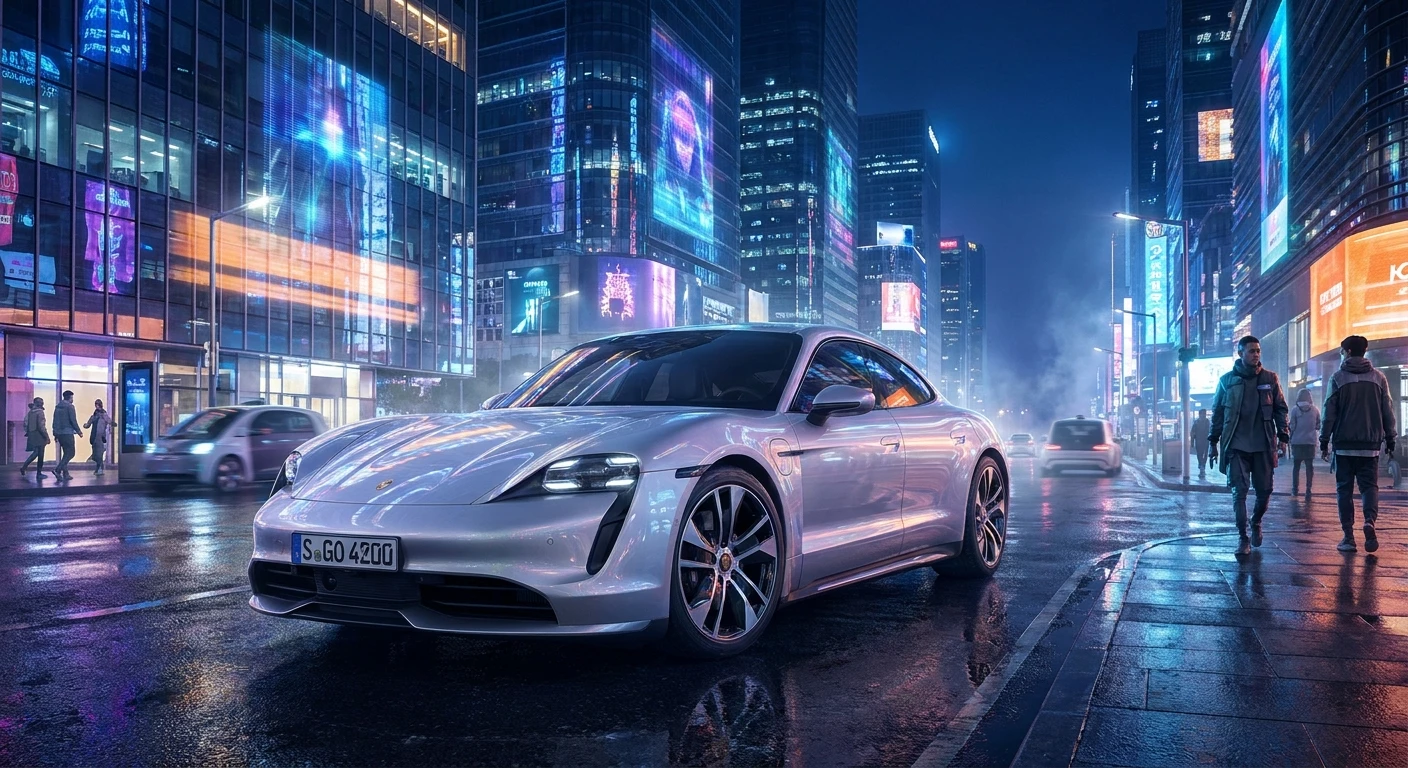
The 2025 BMW M5 Changes Everything You Know About Speed
You cannot ignore the 2025 BMW M5 when talking about the absolute pinnacle of modern automotive engineering. The 2025 BMW M5 has arrived, and it brings a seismic shift to the luxury performance segment. Right off the bat, you need to understand that this is not just an incremental update over the previous generation. The engineers in Munich threw out the conventional playbook to create a machine that balances two entirely different worlds. On one hand, you have a silent, eco-conscious commuter capable of running pure electric errands. On the other hand, you have a fire-breathing track monster powered by a twin-turbocharged V8 engine. The debate surrounding high-performance hybrids is loud, but getting behind the wheel of this specific model completely resets your expectations of what a heavy luxury sedan can do. We are talking about a car that pushes the boundaries of physics. It uses advanced torque vectoring, adaptive suspension magic, and raw electric power to mask its weight and deliver an incredibly sharp driving experience. If you are a driving enthusiast looking at the current landscape of sports sedans, you absolutely must pay attention to how this specific vehicle manages its power delivery, chassis dynamics, and everyday usability. The hybridization of the M brand starts here, and it is a massive leap forward for automotive technology.
Core Dynamics: What Makes the 2025 BMW M5 Tick?
When you look closely at the mechanical grip and straight-line acceleration of the G90 generation, the numbers are simply staggering. By combining a 4.4-liter twin-turbo V8 with a powerful electric motor integrated directly into the transmission, this vehicle produces a combined 717 horsepower and 738 lb-ft of torque. You might hear complaints about the increased curb weight, which sits around 5,390 pounds, but the reality of driving this car is totally different. The instant torque from the electric motor fills in any turbo lag, giving you immediate thrust the second you touch the throttle. Let us look at a quick comparison between this new generation and its predecessor to see exactly where the advancements lie.
Read also: Real Talk About The bmw m4 For Driving Purists; honda prelude 2025: Ultimate Hybrid Coupe; Ultimate Guide to the audi rs3: Specs & Review.
| Feature | 2025 BMW M5 (G90) | Previous Generation (F90) |
|---|---|---|
| Powertrain Type | 4.4L V8 Plug-in Hybrid (PHEV) | 4.4L V8 Twin-Turbo (ICE) |
| Total Output | 717 HP / 738 lb-ft Torque | 617 HP / 553 lb-ft Torque |
| Drivetrain Options | M xDrive with Selectable 2WD Mode | M xDrive with Selectable 2WD Mode |
This massive jump in technology brings a highly specific value proposition for owners. For example, if you live in a city with strict emissions zones or you simply want to leave your neighborhood quietly early in the morning, the electric-only mode offers approximately 25 miles of silent driving. Another example is on the race track, where the active cooling systems for both the battery and the combustion engine ensure consistent lap times without the aggressive heat soak typically associated with heavy turbocharged cars. Here are the three biggest benefits you get with this new architecture:
- Instantaneous Torque Delivery: The electric motor features a pre-gearing stage that multiplies its torque before it hits the transmission, providing immediate acceleration from a standstill.
- Enhanced Weight Distribution: Placing the heavy battery pack low in the floor lowers the overall center of gravity, which drastically improves cornering stability despite the added mass.
- Ultimate Daily Drivability: The adaptive M suspension system has been completely retuned to offer a significantly more comfortable ride in Comfort mode, making it an incredible daily driver.
The Legacy of the M5
Origins of the Super Sedan
To truly appreciate this modern marvel, you have to look back at where the concept of the fast four-door originated. Back in 1984, the E28 generation debuted at the Amsterdam Motor Show, featuring the M88 engine derived straight from the iconic M1 supercar. It was a completely wild idea at the time: taking a practical family sedan and giving it the beating heart of a race car. It effectively created a brand-new segment in the automotive market. Nobody expected a boxy luxury car to keep up with purpose-built sports cars, but it did exactly that, cementing a legacy of sleeper performance.
Evolution Through the Decades
Over the years, the formula evolved dramatically to keep pace with an ongoing horsepower war. The E34 generation brought more refinement and a larger straight-six engine. Then came the legendary E39, which introduced V8 power to the lineup and is still widely regarded as one of the best driver cars ever made. The E60 generation shocked everyone with its Formula 1-inspired naturally aspirated V10 engine, a screaming masterpiece that sounded like nothing else on the road. The F10 generation marked the shift to forced induction, utilizing twin turbochargers to deliver massive midrange punch, while the F90 introduced the M xDrive all-wheel-drive system to actually put all that power to the ground effectively.
Modern State of M Performance
Now, we arrive at the current state of M Performance, where hybridization is no longer just for fuel economy; it is a dedicated tool for outright speed. The G90 generation takes everything learned from the radical XM SUV and refines it into a much more cohesive, driver-focused package. This modern era proves that adding electric assistance does not dilute the driving experience; rather, it broadens the operating window of the car. It can be a comfortable cruiser, an electric commuter, and an absolute weapon on a canyon road all on the same day.
Technical Deep Dive: Under the Skin of the Beast
The V8 PHEV Architecture Explained
The mechanical heart of the car is the S68 engine, a 4.4-liter twin-turbocharged V8 that utilizes a hot-vee configuration where the turbochargers sit nestled between the cylinder banks. This setup significantly reduces the distance exhaust gases have to travel, improving throttle response. But the real magic happens inside the eight-speed M Steptronic transmission, where a synchronous electric motor is housed. This motor draws power from a 18.6 kWh high-voltage lithium-ion battery pack. Because the motor sits upstream of the transmission gears, its torque is multiplied by the transmission ratios, making the car feel impossibly light on its feet during initial acceleration.
Aerodynamics and Thermal Management
Managing the heat generated by a V8 and a high-discharge battery pack requires serious engineering. The front fascia features massive air intakes dedicated to routing cool air to multiple radiators, while the underbody is almost completely flat to reduce aerodynamic drag and lift. A dedicated cooling loop keeps the battery pack at its optimal operating temperature, which is crucial for delivering maximum electrical boost during repeated hard accelerations. Let us look at some of the hardcore scientific facts regarding this setup:
- The battery pack features a usable capacity of 18.6 kWh, utilizing advanced cell chemistry to prioritize rapid discharge rates over maximum range.
- Integral Active Steering (rear-wheel steering) can turn the rear wheels up to 1.5 degrees, virtually shortening the wheelbase at low speeds for better agility.
- The electric motor alone generates 194 horsepower and 206 lb-ft of torque, but an innovative pre-gearing stage effectively boosts the torque felt at the transmission input shaft to 332 lb-ft.
- The combined system pressure of the high-pressure fuel injection system has been increased to ensure ultra-precise fuel atomization in the combustion chambers.
7-Step Guide to Mastering Your M5
Step 1: Customizing the M Hybrid System
The very first thing you need to do is familiarize yourself with the M Hybrid drive modes. You have Hybrid, Electric, and eControl. Take the time to set up your default startup mode so the car behaves exactly how you want it to when you first push the ignition button. For daily commuting, leaving it in standard Hybrid mode lets the computer seamlessly juggle between gas and electric power.Step 2: Dialing in the Suspension
Next, you must explore the adaptive M suspension settings. Comfort mode is softer and more compliant than any previous generation, completely soaking up rough city streets. However, Sport and Sport Plus significantly stiffen the dampers. Set your suspension to Comfort for your daily route and reserve the stiffer settings strictly for smooth tarmac or track days.
Step 3: Configuring the M1 and M2 Buttons
Those bright red buttons on the steering wheel are your best friends. Program the M1 button for a spirited street setup: engine in Sport, suspension in Comfort, steering in Sport, and M xDrive in 4WD Sport. Program the M2 button for maximum attack mode: everything in Sport Plus, DSC in M Dynamic Mode, and the transmission in its most aggressive shift logic.
Step 4: Managing Brake Regeneration Settings
Because this is a plug-in hybrid, you get regenerative braking. You can adjust how aggressively the car slows down when you lift off the accelerator. Setting it to the maximum regeneration level allows for near one-pedal driving in traffic, saving your massive carbon ceramic brakes for when you really need them.
Step 5: Optimizing the Infotainment System
You are going to want to spend a solid twenty minutes exploring the iDrive 8.5 system. The massive curved display holds a wealth of telemetry data. Configure your home screen widgets to show things like tire pressure, battery temperature, and your current media. Having quick access to these stats keeps you focused on the road ahead.
Step 6: Setting Up Advanced Driver Assistance
While you bought this car to drive it yourself, the highway assistant features are incredible for long road trips. Go into the driver assistance menu and calibrate the lane-keeping and adaptive cruise control sensitivities. The car can handle hands-free driving at highway speeds, which drastically reduces fatigue on long cross-country journeys.
Step 7: Perfecting the Launch Control Sequence
Finally, when you find a safe, closed course, you have to try the launch control. Put the car in its most aggressive settings, press the brake firmly with your left foot, floor the accelerator past the kick-down point with your right foot, wait for the checkered flag icon to appear on the dash, and release the brake. Hold on tight, because the combined electric and V8 torque will pin you aggressively to your seat.
Separating Fact from Fiction
Myth: The new hybrid architecture makes the car too heavy to be a real driver’s car.
Reality: While the scale shows a heavier number, the implementation of rear-axle steering, active roll stabilization, and instant electric torque completely masks the mass. The vehicle changes direction with incredible urgency.
Myth: You cannot drift a hybrid all-wheel-drive sedan.
Reality: The M xDrive system still features a dedicated 2WD mode. When activated, it completely disconnects the front axle and turns off traction control, allowing you to easily perform massive rear-wheel drifts.
Myth: The plug-in hybrid system means the V8 has been neutered and sounds quiet.
Reality: The S68 V8 retains its aggressive cross-bank exhaust manifold and active exhaust valves. When you push the throttle in Sport Plus, it delivers a loud, menacing V8 roar that sounds better than ever.
Frequently Asked Questions
How fast is the 2025 BMW M5?
It can accelerate from 0 to 60 mph in roughly 3.4 seconds, though independent testing often shows even quicker times. The top speed is electronically limited to 155 mph, but the optional M Driver’s Package raises that limit to 190 mph.
Can you drive it on electric power alone?
Yes, the dedicated Electric mode allows you to drive up to approximately 25 miles on battery power alone, at speeds up to 87 mph, without waking up the V8 engine.
What is the charging time for the battery?
Using a standard Level 2 AC charger (up to 7.4 kW), you can charge the 18.6 kWh battery from zero to full in just over three hours.
Are the carbon bucket seats standard?
No, the standard seats are highly bolstered M Multifunction seats designed for maximum comfort and support. The aggressive carbon fiber bucket seats remain an optional extra for track enthusiasts.
Does it have rear-axle steering?
Yes, Integral Active Steering comes standard, turning the rear wheels in the opposite direction of the front wheels at low speeds to improve turning radius, and in the same direction at high speeds for stability.
Is a Touring wagon version available?
Yes, for the first time in over a decade, the Touring (station wagon) variant is making its way to the global market, including North America, offering massive cargo space alongside supercar performance.
Can you turn off the traction control completely?
Absolutely. You can fully disable the Dynamic Stability Control (DSC) for track use, which is also a prerequisite for engaging the pure rear-wheel-drive (2WD) mode.
In conclusion, this masterclass of German engineering redefines exactly what a heavy, luxury four-door can achieve. It manages to be a serene daily commuter and a ferocious track weapon all rolled into one highly advanced package. Do not just take our word for it—head down to your local dealership, schedule a test drive, and experience the immense capability of the 2025 BMW M5 for yourself today!

Leave a Reply