
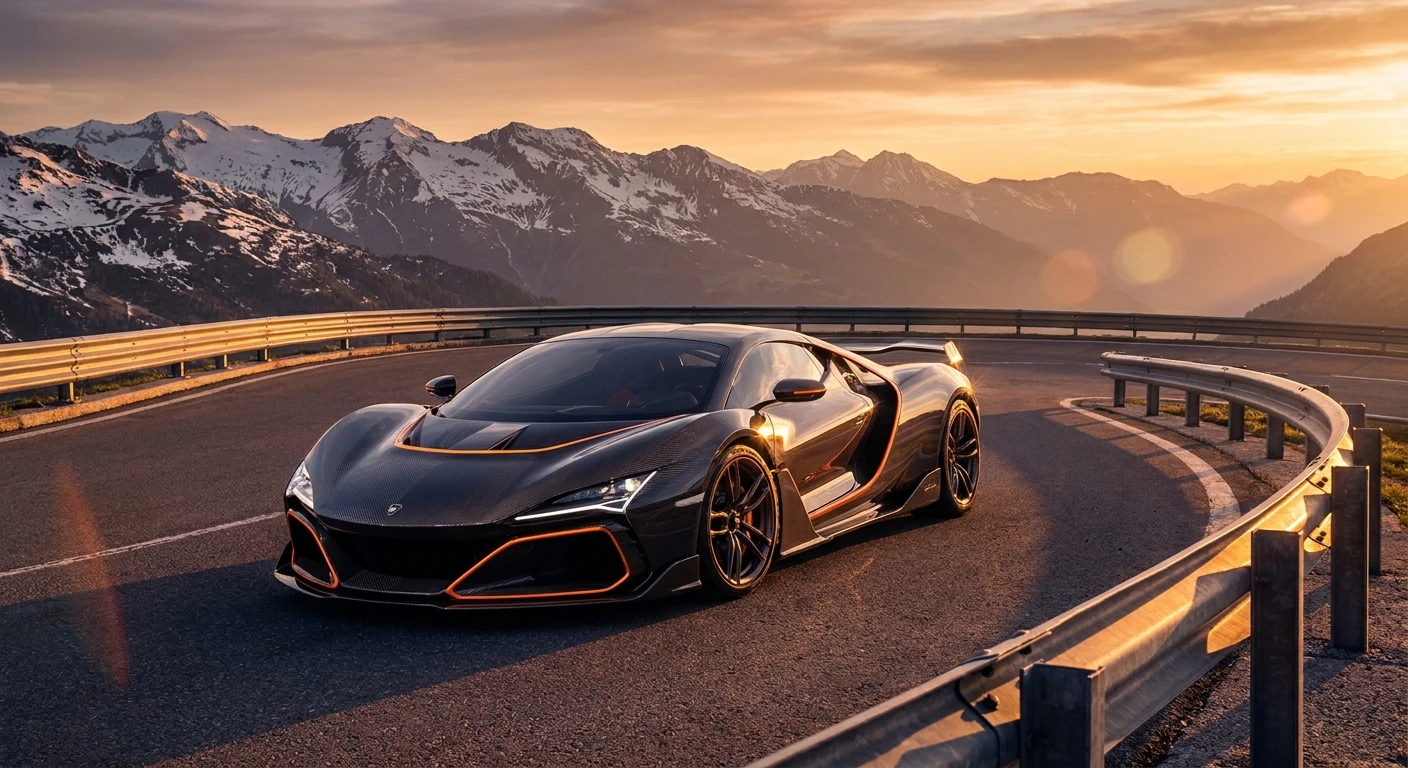
KTM X Bow GT XR Price: The Ultimate Hypercar Value Breakdown
When you start researching the exact KTM X Bow GT XR price, you are immediately stepping into a totally different realm of high-performance automotive engineering. You might be accustomed to the standard dealership models from established Italian or German brands, but this Austrian machine breaks every conventional rule. The KTM X Bow GT XR price represents your entry ticket to what is essentially a street-legal GT2 race car. Have you ever wondered what it costs to pilot a carbon-fiber tubbed, jet-fighter-canopied track monster to your local grocery store? That is exactly the reality this vehicle provides. Instead of just paying for a badge, your money goes directly toward pure performance, aerodynamic mastery, and undeniable road presence. Evaluating the cost involves looking past the base sticker and understanding the immense engineering value packed into this specialized hyper-machine. By breaking down the components, the history, and the daily livability of this vehicle, you will quickly see why driving enthusiasts view its cost not as an expense, but as a heavily justified investment in unparalleled driving dynamics. It is a masterpiece that demands attention, and understanding the financial side of owning one is the first step toward putting this carbon-fiber weapon in your garage.
Understanding the value proposition behind the KTM X Bow GT XR price requires looking closely at what you actually get for your hard-earned money. Unlike traditional supercars that heavily pad their MSRP with luxury marketing budgets and premium leather interior trim, KTM invests almost every single euro into mechanical grip, weight reduction, and aerodynamic efficiency. You are paying for uncompromising performance. For example, the bespoke carbon fiber monocoque chassis developed in partnership with Dallara is a feature typically reserved for hypercars costing well over a million dollars. Another prime example is the motorized jet-fighter canopy roof, which completely eliminates the need for conventional doors and provides an unobstructed panoramic view of the road ahead, creating an experience you literally cannot buy from mainstream manufacturers.
Read also: The 2025 golf r Performance Guide; McLaren 765LT: The Ultimate Track-Focused Supercar; Audi RS6 GT: The Ultimate High-Performance Estate.
| Performance Feature | Standard Industry Cost | Included in GT-XR Base Price? |
|---|---|---|
| Bespoke Carbon Monocoque Tub | $100,000+ (Hypercar tier only) | Standard |
| Motorized Canopy Roof System | Custom commissioned builds only | Standard |
| Integrated Aerodynamic Flat Floor | $30,000+ aftermarket conversion | Standard |
To truly grasp why the price tag is justified, you have to break down the core advantages that separate this machine from everything else on the road.
- Unmatched Power-to-Weight Ratio: By utilizing extensive carbon fiber, the car maintains a dry weight of just 1,130 kilograms, meaning the 500 horsepower engine accelerates the chassis with terrifying immediacy.
- Dependable Powertrain Servicing: Because the vehicle utilizes a heavily tuned version of the legendary Audi 2.5-liter five-cylinder engine, your routine engine maintenance costs are dramatically lower than a bespoke Italian V12.
- Unprecedented Exclusivity: With production numbers extremely limited, seeing another one on the road is highly unlikely, ensuring your investment retains a level of rarity that mass-produced supercars simply cannot match.
Think about it like this: you are paying the price of a well-equipped Porsche 911 Turbo S, but you are receiving the mechanical architecture of a Le Mans prototype. The value is inherently baked into the carbon fiber shell.
Origins of the X-Bow Concept
To fully appreciate where the KTM X Bow GT XR price originates, we have to look back at the company’s radical automotive debut. Originally renowned globally for their dominant off-road and track motorcycles, KTM shocked the automotive industry in 2008 by releasing the original open-cockpit X-Bow. That early model was a stripped-down, visceral track toy with no roof, no windshield, and absolutely no compromises. It was a pure manifestation of the brand’s ‘Ready to Race’ philosophy, bringing motorcycle-level exposure to a four-wheeled platform. The raw nature of that first car established the foundation for everything that would follow, proving that a lightweight carbon tub paired with a reliable forced-induction engine could decimate cars with double the horsepower.
Evolution into Professional Racing
As the years progressed, customers demanded more aerodynamically sophisticated versions capable of professional endurance racing. This led to the development of the closed-cockpit GT4 and eventually the mighty GTX and GT2 race cars. KTM partnered deeply with Dallara, a legendary chassis manufacturer, to ensure these race cars could withstand the brutal forces of international GT racing. By developing the cars entirely on the race track, KTM absorbed millions of dollars in research and development costs. The aerodynamic data gathered during grueling 24-hour endurance races allowed engineers to perfect the airflow, cooling, and structural rigidity of the platform, setting the perfect stage for a street-legal adaptation.
Modern State: The GT-XR Masterpiece
The transition from the GT2 race car to the street-legal GT-XR is what truly justifies the current KTM X Bow GT XR price. Engineers essentially took the championship-winning GT2 race car, added a lift system for speed bumps, installed a surprisingly effective air conditioning system, and fitted road-legal tires. They did not water down the driving dynamics; they simply made it possible to drive to the track, set blistering lap times, and drive home comfortably. This modern iteration stands as a testament to engineering perseverance, offering hypercar aesthetics, GT-racing aerodynamics, and grand touring comfort in one incredibly aggressive package.
Aerodynamic Excellence and Carbon Core
From a technical perspective, the car is an absolute marvel of fluid dynamics. The exterior shape is not just designed to look aggressive; every single crease, vent, and wing element serves a critical aerodynamic purpose. The front splitter channels air underneath the completely flat carbon fiber floor, speeding up the airflow to create massive low-pressure zones. This ground-effect aerodynamic philosophy sucks the car into the tarmac, generating immense downforce without creating excessive drag. The signature jet-fighter canopy acts as an aerodynamic teardrop, allowing turbulent air to cleanly reattach over the rear engine deck and flow straight into the massive rear wing. This level of aerodynamic manipulation requires wind tunnel testing usually reserved for aerospace engineering.
Audi’s 2.5 TFSI Heartbeat
Sitting directly behind the driver is a mechanical masterpiece provided by Audi: the legendary 2.5-liter TFSI turbocharged inline-five cylinder engine. Famous for its distinctive 1-2-4-5-3 firing order that mimics the sound of Group B rally cars from the 1980s, this engine is the perfect powerplant for a lightweight chassis. It delivers relentless torque across the entire rev range, seamlessly mated to a rapid-shifting 7-speed direct-shift gearbox (DSG) that sends power exclusively to the rear wheels via a mechanical limited-slip differential.
- Maximum Downforce: Generates up to 900 kilograms of aerodynamic pressure at top track speeds.
- Dry Weight: An incredibly light ,130 kilograms, achieved through full carbon fiber construction.
- Performance Output: 500 horsepower and 581 Newton-meters of torque from the turbocharged five-cylinder.
- Acceleration: Capable of sprinting from 0 to 100 km/h in an astonishing 3.4 seconds.
- Structural Rigidity: The Dallara carbon tub provides torsional stiffness exceeding professional FIA safety standards.
Step 1: Budgeting for the Base MSRP
When calculating the KTM X Bow GT XR price for your own purchase, the first step is understanding the base manufacturer’s suggested retail price. Historically sitting around the €284,900 mark, this baseline covers the core carbon fiber chassis, the Audi powertrain, and the standard aerodynamic package. You must secure this base funding before looking at the extensive options list.
Step 2: Factoring in Import Taxes and VAT
The sticker price is never the final price. Depending on your country of residence, you must meticulously calculate Value Added Tax (VAT), import duties, and luxury vehicle taxes. In some European countries, emissions taxes can add a significant percentage to the final cost, while buyers in the United States must navigate specific importation fees and show-and-display legalities.
Step 3: Customizing the Carbon Fiber Trim
KTM offers an extensive array of exposed carbon fiber options. Choosing naked carbon fiber for the aerodynamic appendages, interior panels, and engine bay surrounds is a popular choice among buyers. However, these bespoke clear-coated carbon components require hundreds of hours of manual labor to perfectly align the weave, rapidly increasing the final purchase price.
Step 4: Selecting the Center-Lock Wheels
For track enthusiasts, standard wheels simply will not suffice. Upgrading to the forged center-lock wheel package reduces unsprung mass and allows for lightning-fast tire changes during track days. This step usually involves pairing the wheels with ultra-sticky track-focused tires, which should be factored into your immediate automotive budget.
Step 5: Planning for Specialized Maintenance
While the Audi engine drastically reduces typical supercar engine maintenance costs, the GT-XR still requires specialized care. The carbon-ceramic brakes, complex aerodynamic underbody, and bespoke suspension components must be inspected by certified technicians. Budgeting for annual check-ups ensures the vehicle retains its peak dynamic capabilities.
Step 6: Securing High-Performance Insurance
Standard auto insurance will not adequately cover a limited-production, carbon-tubbed hypercar. You must secure an agreed-value specialty insurance policy. Because the replacement parts, such as the single-piece motorized canopy, are incredibly expensive to manufacture, insurance premiums will reflect the high cost of potential structural repairs.
Step 7: Executing the Purchase and Delivery
The final step is managing the allocation and delivery process. Because production is strictly limited to around 100 units per year, securing a build slot requires patience. The factory handover experience in Austria is highly recommended, allowing you to meet the engineers and receive personalized instruction on operating the canopy, lift system, and track telemetry before shipping the car home.
Myths and Realities of the GT-XR
Myth: The car is just a heavily modified Audi with a fancy body kit. Reality: While the powertrain is supplied by Audi, the entire chassis, suspension geometry, carbon monocoque, and aerodynamic profile are entirely bespoke Dallara and KTM designs, offering a totally distinct driving dynamic.
Myth: The KTM X Bow GT XR price is far too high for a weekend track toy. Reality: Unlike previous generations, this model is a fully homologated road car with a 160-liter trunk, air conditioning, and Bluetooth connectivity. It competes with cars costing three times as much.
Myth: The vehicle is unmanageable and uncomfortable on public roads. Reality: Thanks to a progressive electric power steering system, adjustable suspension, and a hydraulic front lift system to clear speed bumps, it is surprisingly compliant during regular city driving.
Myth: You cannot drive a canopy car in hot weather. Reality: The climate control system is aggressively calibrated to keep the cabin cool, mitigating the greenhouse effect of the large glass area.
What is the base KTM X Bow GT XR price?
The base price generally starts around €284,900, though this fluctuates slightly based on regional pricing structures and factory updates.
Does the price include carbon ceramic brakes?
High-performance steel brakes are standard, but the highly recommended carbon-ceramic braking system is an optional extra that increases the final cost.
How many units are built per year?
To maintain extreme exclusivity and high quality control, KTM limits production to approximately 100 units annually.
Can I buy this vehicle in the United States?
Purchasing one in the US requires navigating specific import regulations, often utilizing the ‘Show or Display’ exemption depending on your state’s specific laws.
What engine is included for the cost?
You receive a robust and thrilling 2.5-liter turbocharged inline-five cylinder engine sourced from Audi Sport, producing 500 horsepower.
Is the jet-fighter canopy roof standard?
Yes, the motorized canopy is the defining architectural feature of the vehicle and is included in the base purchase price.
Does the car come with a factory warranty?
Yes, despite its race-car roots, it comes with a standard manufacturer warranty covering the powertrain and chassis for peace of mind.
Is there any luggage space for road trips?
Surprisingly, yes. The vehicle features a custom-designed 160-liter luggage compartment located between the engine and the passenger cell.
Ultimately, analyzing the KTM X Bow GT XR price proves that you are not just buying a car; you are buying an exclusive piece of track-derived engineering adapted for the street. The blend of Dallara carbon fiber, aggressive aerodynamic downforce, and a reliable, roaring five-cylinder engine creates an unmatched automotive experience. If you are ready to command a vehicle that stops traffic and dominates track days alike, it is time to contact your nearest certified KTM luxury dealer and secure your build slot today!

Leave a Reply