
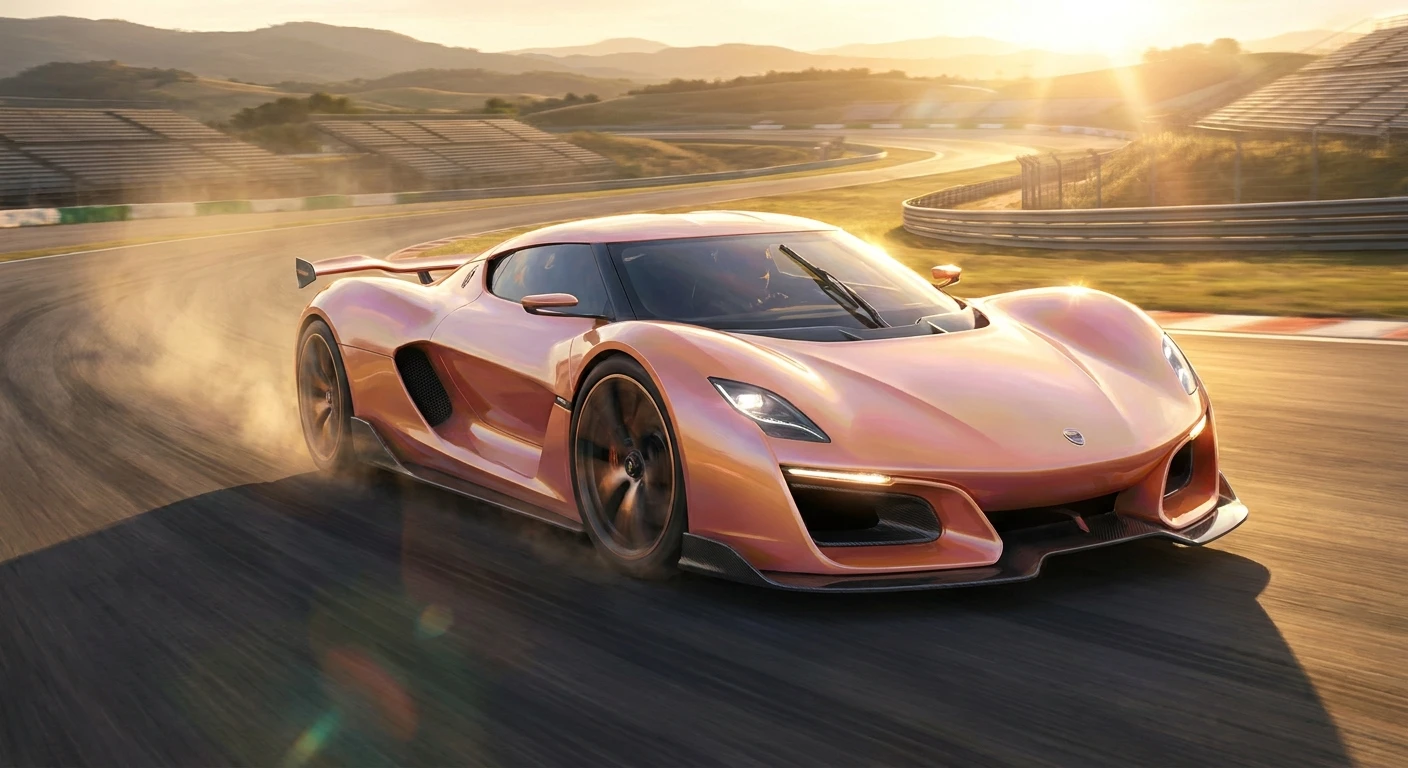
McLaren 765LT: Raw Aerodynamics and Unbridled Power
You hear the roar before you see the sheer aggression of the McLaren 765LT cutting through the apex of a corner. The McLaren 765LT stands as one of the most ruthless, track-focused supercars ever to leave the factory in Woking. Stripped of excess weight and engineered with a single-minded dedication to driver engagement, it represents the absolute pinnacle of modern automotive performance. This machine does not just look fast; it backs up its aggressive aesthetic with a blistering 765 horsepower output and a relentless twin-turbocharged V8 engine that responds instantly to your foot.
Sitting inside the cabin, you immediately notice the minimalist approach. Bare carbon fiber lines the floor, the seats are stripped-back racing buckets, and the steering wheel is completely free of buttons. The focus is purely on the act of driving. Pushing the boundaries of what a road-legal vehicle can achieve, the vehicle commands respect on both tight canyon roads and high-speed racing circuits. When you grip the alcantara wheel, you feel the entire chassis communicating the texture of the road directly to your hands. Every design choice, every shaved gram of weight, and every aerodynamic tweak serves a distinct, factual purpose. You are not just driving a car; you are managing a finely tuned aerospace-grade weapon built entirely for speed, downforce, and tactile feedback.
Read also: BMW M3 CS: Pure Performance Specs and Track Guide; Audi RS6 GT: The Ultimate High-Performance Estate; The Ultimate Review of the toyota gr86 Experience.
Core Dynamics: Engineering an Apex Predator
To truly grasp the capabilities of the McLaren 765LT, you need to look at the numbers and the structural philosophy that separates it from standard supercars. The engineers took an already class-leading chassis and systematically removed weight while increasing aerodynamic grip. This creates a distinct value proposition for driving purists. You get a machine that out-accelerates practically anything in its class, combined with steering that feels almost telepathic. For those considering track day weapons, the choice often comes down to forced-induction aggression versus naturally aspirated purity, but this vehicle bridges the gap by offering zero turbo lag and immediate throttle response.
When comparing this model to its siblings and predecessors, the numbers speak for themselves. The aggressive gear ratios mean in-gear acceleration is 15% quicker than standard models, making straight-line overtakes brutally efficient.
| Specification | McLaren 720S | McLaren 765LT |
|---|---|---|
| Horsepower (PS) | 720 | 765 |
| Dry Weight (kg) | 1,283 | 1,229 |
| 0-200 km/h (sec) | 7.8 | 7.0 |
The mechanical advantages of this platform fall into several distinct categories:
- Ruthless Weight Reduction: The extensive use of carbon fiber body panels, titanium exhaust systems, and ultra-lightweight forged alloy wheels reduces unsprung mass and improves overall agility.
- Aerodynamic Downforce: An active rear wing, extended front splitter, and redesigned carbon fiber floor work in harmony to produce 25% more downforce, keeping the tires glued to the tarmac at high speeds.
- Transmission Calibration: Formula 1-grade materials in the gearbox combined with bespoke software mapping deliver violently fast gear shifts, ensuring optimal power delivery out of every corner.
The Origins of the Longtail Badge
The “Longtail” or LT designation holds a legendary status in motorsport history. It originally traces its roots back to 1997 with the McLaren F1 GTR Longtail. Engineers realized that to dominate the 24 Hours of Le Mans, they needed a vehicle with significantly less drag and higher top-end speed. They stretched the rear bodywork to smooth out the airflow, resulting in the iconic elongated silhouette. That original F1 GTR Longtail was a pure-bred racing machine, prioritizing aerodynamic efficiency over aesthetics. The concept of extending the bodywork for functional performance gains became a core part of the manufacturer’s racing heritage, setting the standard for future track-focused iterations.
Evolution Through the Decades
For nearly two decades, the Longtail name lay dormant until it was revived in 2015 with the 675LT. This marked a shift in philosophy: the LT badge was no longer just about physically stretching the car for Le Mans, but about applying the Longtail ethos—less weight, more power, enhanced aerodynamics, and absolute driver focus—to road-going models. The 675LT was a massive success, proving that there was a huge demand for hardcore, limited-production track variants. This was followed by the 600LT in 2018, which brought the Longtail philosophy to the Sports Series, featuring top-exit exhausts and a notoriously playful chassis. Each iteration refined the formula, increasing the use of carbon fiber and stripping away non-essential luxury features.
The Modern State of McLaren Track Cars
Today, the McLaren 765LT represents the culmination of this evolutionary process. Introduced in 2020, it sits at the pinnacle of the Super Series lineup. It is a strictly limited production vehicle, with only 765 individually numbered units built for the global market. In the modern automotive landscape, where heavy hybrid systems and digital driving aids are becoming the norm, the 765LT remains a bastion of analogue feel paired with digital precision. It captures the raw essence of motorsport while maintaining just enough compliance to be legally driven to the track. The modern Longtail is less about a physical measurement of the rear bumper and entirely about a measurable improvement in lap times and driver engagement.
Aerodynamics and Downforce Mechanics
The aerodynamic package on this vehicle is a masterclass in fluid dynamics. The extended front splitter forces high-pressure air over the top of the vehicle, while channeling low-pressure air efficiently under the flat carbon fiber floor. This creates a vacuum effect, pulling the chassis closer to the ground. The most visually striking component is the active rear wing, which sits 9mm higher than standard models even in its resting position. This wing is dynamically controlled by the onboard telemetry system, constantly adjusting its angle of attack. Under heavy braking, it flips nearly vertical in a fraction of a second, acting as a massive airbrake to stabilize the rear end and assist the carbon-ceramic rotors in shedding speed.
Powertrain Engineering
At the heart of the chassis sits the M840T engine, a 4.0-liter twin-turbocharged V8 featuring a flat-plane crankshaft and dry-sump lubrication. To extract the additional 45 horsepower over standard models, engineers utilized forged aluminum pistons, a higher capacity fuel pump, and a completely recalibrated engine management system. The power delivery is brutal and linear, completely overwhelming the rear tires if not managed correctly. Heat management is equally critical; advanced cooling channels route air directly to the high-temperature radiators to prevent heat soak during extended track sessions.
- The full-titanium exhaust system saves 3.8 kg compared to a steel equivalent and features a unique quad-pipe layout that acoustically amplifies the V8 frequencies.
- The braking system utilizes Senna-derived calipers with integrated cooling ducts to reduce brake pad temperatures by up to 50 degrees Celsius during track driving.
- The suspension utilizes Proactive Chassis Control II, a hydraulically interlinked damper system that eliminates the need for traditional mechanical anti-roll bars.
- The engine features unique twin-scroll turbochargers equipped with electronic wastegates for instantaneous boost pressure regulation.
Day 1: Understanding the Ergonomics
Your first day with the McLaren 765LT should be entirely static. Sit in the carbon fiber racing seats and learn the exact placement of the steering column and pedals. The driving position is slightly offset, and the visibility is exceptional thanks to the narrow A-pillars. Take the time to understand the digital instrument cluster and how it folds away into a minimalist strip when track mode is engaged, reducing visual distractions.
Day 2: Mastering the Active Dynamics Panel
On day two, familiarize yourself with the Active Dynamics Panel located on the center console. You have separate dials for Handling (H) and Powertrain (P). Practice switching between Comfort, Sport, and Track modes. Understand that activating the “Active” button is required before any of these dials will alter the vehicle’s characteristics. Learn how the throttle map changes aggressively in Track mode.
Day 3: Low-Speed Handling Drills
Move to a large, empty tarmac space. Practice low-speed steering inputs. The electro-hydraulic steering rack provides incredible feedback, but it requires a firm grip. Feel how the chassis responds to sudden weight transfers. Practice your low-speed trail braking to understand how the nose dives and how the rear end rotates around the vehicle’s central pivot point.
Day 4: Braking Point Calibration
The carbon-ceramic brakes require significant heat to operate at peak efficiency. Spend this day doing progressive braking runs. Accelerate to a moderate speed, then apply firm, consistent pressure to the left pedal. Feel the ABS engage and watch the active rear wing deploy in your rearview mirror. You must train your brain to trust the massive stopping power available.
Day 5: Managing the Titanium Exhaust Heat
Understand the thermal dynamics of the vehicle. After hard driving runs, the quad titanium exhaust will radiate immense heat. Practice proper cool-down procedures. Never turn the engine off immediately after a heavy run; allow the fluids to circulate at low speeds to prevent heat soak and protect the turbocharger bearings.
Day 6: Advanced Cornering and Downforce Trust
Take the vehicle to a certified circuit with sweeping, high-speed corners. This is where aerodynamic downforce comes into play. You must learn to carry more speed than feels natural. The faster you go, the harder the air presses the tires into the track. Build your speed incrementally, trusting the mechanical grip provided by the bespoke Pirelli Trofeo R tires.
Day 7: The Full Track Attack
On your final day of the plan, put all the elements together. Engage Track mode for both Handling and Powertrain, fold down the instrument cluster, and string together a complete lap. Focus on smooth inputs, hitting your apexes, and managing the relentless torque delivery on corner exit. Record your telemetry data and analyze your braking zones to continuously improve your lap times.
Myths vs. Reality
Myth: The McLaren 765LT is just a 720S with a body kit.
Reality: The vehicle features unique suspension geometry, a wider front track, totally revised transmission gearing, and an extensive weight reduction program that fundamentally changes its driving dynamics.
Myth: It is far too stiff and uncomfortable for public roads.
Reality: Thanks to the advanced Proactive Chassis Control II hydraulic suspension, keeping the Handling dial in ‘Comfort’ mode allows the dampers to absorb bumps incredibly well, making it surprisingly compliant.
Myth: The top-exit quad exhaust is purely for visual flair.
Reality: The exhaust design minimizes pipe length, reducing weight, improving backpressure for engine performance, and directly expelling extreme heat away from the sensitive aerodynamic components at the rear.
Myth: The lack of an electronic limited-slip differential (e-LSD) hurts its cornering.
Reality: The manufacturer relies on a highly advanced open differential paired with a brake-steer system that nips the inside rear brake, offering faster and lighter vectoring than a heavy mechanical or electronic LSD.
What is the top speed of the McLaren 765LT?
The vehicle is electronically limited to a top speed of 330 km/h (205 mph), prioritizing acceleration and downforce over outright maximum velocity.
How many 765LT models were produced?
Production was strictly capped at exactly 765 individually numbered units globally for the coupe variant.
Does it have a front lift system?
Yes, a front axle lift system is available as an option, allowing you to raise the nose to clear speed bumps and steep driveways without scraping the carbon splitter.
What engine is in the 765LT?
It utilizes the M840T engine, a 4.0-liter twin-turbocharged flat-plane crank V8 that produces 765 PS (755 bhp).
Is the 765LT street legal?
Yes, despite its extreme track focus and aggressive aerodynamics, it is fully homologated and street legal in all major global markets.
What does LT stand for?
LT stands for “Longtail,” a historic racing designation indicating an extended rear bodywork for aerodynamic efficiency, now symbolizing the brand’s most track-focused models.
How much does it weigh?
In its lightest configuration, the dry weight is just 1,229 kg (2,709 lbs), making it significantly lighter than its direct competitors.
What transmission does it use?
It features a 7-speed Seamless Shift Gearbox (SSG) dual-clutch transmission with uniquely shortened gear ratios.
Conclusion
The McLaren 765LT is a masterclass in automotive engineering, blending horrifying speed with intricate tactile feedback. It demands focus, rewards precision, and delivers an experience that few vehicles on earth can match. If you are ready to experience the pinnacle of track-day performance, reach out to your local specialist and configure your dream specifications today!

Leave a Reply