
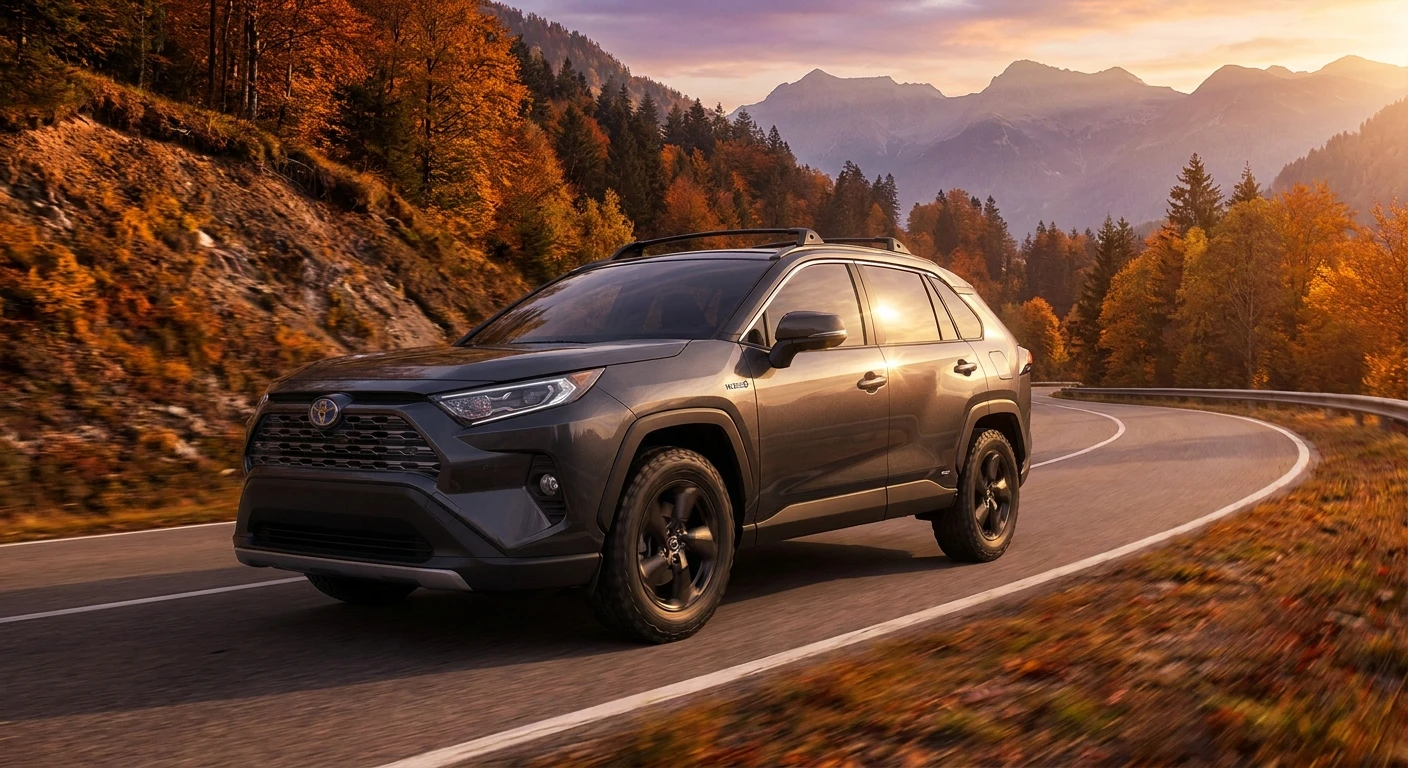
The Mazda CX 50 Hybrid: Power Meets Efficiency
Finding a vehicle that balances authentic outdoor capability with impressive fuel economy often means settling for a compromise. The Mazda CX 50 Hybrid changes that equation entirely by blending aggressive styling and trail-ready dynamics with an incredibly efficient electrified powertrain. As drivers increasingly demand vehicles that can handle weekday commutes and weekend wilderness runs without burning excessive fuel, this specific model steps up as an optimal solution. You get the signature driving dynamics that engineers have perfected over decades, paired with a sophisticated energy management system that significantly reduces your footprint.
Understanding exactly how the Mazda CX 50 Hybrid achieves this balance requires a closer look at its underlying architecture. Instead of just dropping a battery into an existing frame, the engineering team carefully calibrated the chassis to handle the different weight distribution of the hybrid components. This ensures that the steering feel remains sharp and responsive. Whether you are navigating tight city streets or cruising down a long dirt road heading toward a remote campsite, the vehicle feels planted, confident, and highly refined. It is a compelling option for those who refuse to sacrifice driving enjoyment for the sake of better gas mileage.
Read also: Honda Passport 2025: Complete Review and Buying Guide; Honest honda crv 2024 Review: A True Daily Driver; Why You Need the 2024 honda pilot.
Core Advantages of the Electrified Powertrain
The transition to a hybrid setup brings a host of functional benefits that fundamentally change the ownership experience. The most obvious advantage is fuel economy, but the perks extend far beyond the gas pump. The instant torque provided by the electric motors dramatically improves low-speed responsiveness, which is particularly useful when climbing steep grades or navigating tricky off-road obstacles.
| Feature Category | Standard Combustion Model | Hybrid Electrified Model |
|---|---|---|
| City Fuel Efficiency | Moderate efficiency during stop-and-go | Excellent efficiency via battery assist |
| Torque Delivery | Peaks at higher engine RPMs | Instant torque from electric motors |
| Brake Wear | Standard friction wear and tear | Reduced wear via regenerative braking |
To understand the true value proposition, consider two distinct driving scenarios. First, imagine your daily commute through heavy, stop-and-go traffic. In a traditional vehicle, this is where fuel economy plummets. However, the hybrid system allows the engine to shut off while the electric motor smoothly handles low-speed crawling, saving immense amounts of fuel and providing a quieter, more serene cabin experience. Second, picture a weekend trip to a mountain trail. The intelligent electric all-wheel-drive system actively monitors traction on loose gravel, sending immediate power to the rear wheels the moment slip is detected, ensuring you never lose momentum.
Maximizing the benefits of this advanced platform requires a slight adjustment in how you operate the vehicle on a daily basis. Here are three distinct ways to optimize your driving experience:
- Master the driving modes: Switch to specialized eco modes during highway cruising to prioritize battery usage, and utilize off-road modes only when the terrain genuinely demands altered traction control parameters.
- Anticipate your stops: By lifting off the accelerator earlier when approaching a red light, you allow the regenerative braking system to capture maximum kinetic energy and funnel it directly back into the battery pack.
- Monitor your power flow: Use the infotainment display to watch how the vehicle shifts between electric and gasoline power. This visual feedback trains you to apply the throttle more smoothly over time.
Historical Origins and Platform Evolution
Origins of Mazda’s Electrification Strategy
For many years, the primary focus for engineers at the company was maximizing the thermal efficiency of traditional internal combustion engines through the famous Skyactiv program. They believed that before adding heavy batteries and complex electrical systems, the base gasoline engine needed to be as efficient as physics would allow. This philosophy served them well, creating some of the most engaging and efficient non-hybrid cars on the market. However, as global emissions regulations tightened and consumer demand shifted toward electrification, a new strategy was required. Rather than starting from scratch and spending billions on entirely new hybrid architectures, the company made a highly strategic move.
Evolution of the CX-50 Platform
They formed a deep alliance with a long-time industry leader in hybrid technology, resulting in a joint-venture manufacturing plant in Huntsville, Alabama. This state-of-the-art facility became the birthplace of the CX-50 line. Initially launched with naturally aspirated and turbocharged gasoline engines, the platform was intentionally designed from day one with the physical space necessary to accommodate a hybrid battery pack and electric motors. The rugged, wide stance of the vehicle was not just for aesthetics; it provided a stable base for the eventual integration of heavier electrified components without compromising the vehicle’s center of gravity.
Modern State of the Electrified Lineup
Today, the hybrid iteration represents the pinnacle of this collaborative engineering effort. It seamlessly marries the aggressive, outdoor-focused design language of the brand with a proven, highly reliable hybrid powertrain sourced from their joint-venture partner. This modern state of affairs allows the manufacturer to offer a vehicle that appeals to its core demographic of driving enthusiasts while simultaneously attracting environmentally conscious buyers. The resulting vehicle feels remarkably cohesive, proving that collaborative engineering can yield a product that is greater than the sum of its parts.
Scientific and Technical Deep Dive
Understanding the Hybrid Synergy Architecture
At the heart of the system is a highly complex power control unit that dictates exactly how and when power is deployed. The system operates as a series-parallel hybrid. This means the vehicle can be driven by the electric motor alone, the gasoline engine alone, or a combination of both simultaneously. An electronically controlled continuously variable transmission (eCVT) uses a planetary gearset to blend the output from the 2.5-liter Atkinson-cycle engine and the primary electric traction motor. The Atkinson cycle is crucial here; it leaves the intake valve open slightly longer during the compression stroke, sacrificing a bit of low-end torque for a massive gain in thermal efficiency. The electric motor effortlessly fills in the missing low-end torque, creating a perfectly balanced power band.
Intelligent All-Wheel Drive Mechanics
Unlike traditional all-wheel-drive systems that use a heavy mechanical driveshaft to send power from the front engine to the rear wheels, this platform utilizes an independent electric motor mounted directly on the rear axle. This eAWD system responds significantly faster than mechanical differentials. When sensors detect that a front wheel is slipping on ice or mud, the rear motor can instantly apply torque to the rear wheels to stabilize the vehicle. This lack of a mechanical link also reduces drivetrain friction and overall weight, further enhancing efficiency.
Here are several key technical facts regarding the system’s operation:
- The high-voltage battery pack is strategically positioned low in the chassis to maintain an optimal center of gravity, preserving the vehicle’s agile cornering characteristics.
- Regenerative braking can capture up to 70 percent of the kinetic energy normally lost as heat during deceleration, converting it back into usable electrical current.
- The internal combustion engine operates at peak thermal efficiency nearly 40 percent of the time, a remarkably high figure made possible by the hybrid system’s load-balancing capabilities.
- The power control unit features dedicated liquid cooling to ensure consistent electrical performance even during demanding uphill climbs or towing scenarios.
- A sophisticated power split device constantly calculates the most efficient power route, making micro-adjustments hundreds of times per second without the driver ever noticing.
7-Step Guide to Transitioning to a Hybrid SUV
Step 1: Assess Your Daily Driving Range
Before optimizing your driving habits, you must evaluate your typical daily route. Take note of how much of your commute consists of low-speed city driving versus high-speed highway cruising. The hybrid system thrives in stop-and-go environments where the electric motor handles the heavy lifting of getting the vehicle moving from a dead stop. Understanding your route helps you anticipate when the gasoline engine will likely engage.
Step 2: Understand Hybrid Battery Dynamics
The high-voltage battery in this vehicle operates differently than a smartphone battery. It is programmed to never fully charge to 100% or fully deplete to 0%. The computer keeps the battery within a strict state-of-charge window, usually between 20% and 80%, to maximize its lifespan over hundreds of thousands of miles. Do not panic if the battery display never shows completely full; this is by design to ensure long-term reliability.
Step 3: Master the Regenerative Braking System
Traditional friction brakes waste energy by turning momentum into heat. To maximize efficiency, train yourself to look further down the road and lift your foot off the accelerator much earlier than you normally would. The vehicle will naturally slow down as the electric motors reverse their function to act as generators. Smooth, early deceleration captures the most energy and saves immense wear on your brake pads.
Step 4: Optimize Climate Control for Efficiency
Heating and cooling the cabin requires significant energy. In winter, utilize the heated seats and heated steering wheel to stay warm, as these localized contact heaters draw far less electrical power than the main cabin forced-air heater. In summer, try venting the windows to let hot air escape before running the air conditioning at maximum output, which will help keep the hybrid battery focused on propulsion.
Step 5: Adapt Your Highway Cruising Habits
While the hybrid system is incredibly efficient in the city, aerodynamic drag becomes the primary enemy of fuel economy at highway speeds. The 2.5-liter engine will do most of the work above 60 miles per hour. To maintain high efficiency on road trips, use the adaptive cruise control system. The computer is much better at maintaining a steady throttle position than a human foot, preventing unnecessary downshifts and fuel spikes.
Step 6: Explore the Off-Road Driving Modes
When you take the vehicle off the pavement, engage the specific off-road drive modes. This alters the traction control system, allowing a little more wheel slip so the tires can dig through loose dirt or snow to find hard traction underneath. It also changes the power split, ensuring the rear electric motor is proactively engaged rather than waiting for the front wheels to slip first.
Step 7: Schedule Specialized Powertrain Maintenance
While hybrids actually require less maintenance in some areas, such as brake pads, they do have specific needs. Ensure you follow the manufacturer’s timeline for changing the eCVT fluid and the inverter coolant. These fluids are critical for keeping the high-voltage electrical components operating at safe temperatures. Always use a certified technician who understands the specific safety protocols for working around high-voltage systems.
Common Misconceptions
The automotive industry is filled with outdated information regarding electrified vehicles, leading to several persistent myths that need to be addressed directly.
Myth: Hybrids lack the power to handle rough off-road trails or steep inclines.
Reality: The immediate torque delivery of electric motors actually provides superior low-speed control. Instead of needing to rev a gas engine to overcome an obstacle, the electric motor provides instant, precise pushing power exactly when you need it.
Myth: The massive battery pack ruins the interior cargo space.
Reality: Clever engineering and chassis integration mean the battery pack is hidden completely flat beneath the floor. The cargo volume remains virtually identical to standard combustion models, ensuring you can still fit all your camping gear.
Myth: Hybrid systems are fragile and incredibly expensive to maintain.
Reality: The combination of a proven naturally aspirated engine and an eCVT with very few moving mechanical parts results in a highly robust powertrain. Furthermore, regenerative braking often extends the life of traditional brake components by tens of thousands of miles.
Frequently Asked Questions
Does the vehicle need to be plugged into a wall?
No, this is a traditional self-charging hybrid. The battery is recharged entirely through regenerative braking and by the internal combustion engine acting as a generator while you drive. You simply fill it with gas and drive normally.
What is the maximum towing capacity?
While exact figures depend on the specific trim and equipment loadout, the hybrid platform is generally rated to tow light loads such as small utility trailers or personal watercraft, making it highly versatile for weekend adventures.
Is the hybrid system reliable in extreme cold?
Yes. While all batteries experience a slight drop in efficiency during freezing temperatures, the system is fully weather-sealed and features advanced thermal management to ensure the vehicle starts and operates reliably in harsh winter conditions.
How long is the hybrid battery expected to last?
Modern hybrid batteries are engineered to last the lifetime of the vehicle. They are backed by substantial factory warranties, often covering the high-voltage components for 8 years or 100,000 miles, providing significant peace of mind.
Can the vehicle operate on electricity alone?
Yes, but only for very short distances at low speeds, such as navigating a parking lot or creeping through heavy traffic. The system is designed to blend power sources for maximum overall efficiency rather than act as a pure electric vehicle.
Does cold weather negatively affect fuel economy?
Yes, all vehicles suffer reduced fuel economy in the cold due to denser air and longer engine warm-up times. The internal combustion engine will run more frequently in winter to generate heat for the cabin, slightly reducing the hybrid efficiency.
Is premium grade fuel required for the engine?
No, the Atkinson-cycle engine is specifically tuned to operate cleanly and efficiently on standard regular unleaded gasoline, keeping your daily operating costs as low as possible.
In summary, the Mazda CX 50 Hybrid represents a brilliant convergence of rugged utility, engaging driving dynamics, and forward-thinking efficiency. It proves that you do not need to abandon your love for outdoor adventure to drive an environmentally responsible vehicle. If you are ready to experience the seamless power and quiet efficiency of this advanced powertrain, check local inventory and take one out for a comprehensive test drive today.

Leave a Reply